

Far-Flung Semester and Year Abroad Experiences Immerse Students in International Cultures

Kristie Throckmorton ’24 set her sights on visiting South Korea when she was 13 and first became interested in languages.
On a whim, she taught herself the Korean alphabet in 30 minutes. “I just fell in love with it from there,” Throckmorton explained. “Then I got into the history and the culture, and ever since I was like ‘that’s where I’m going to go.’”
The chance to live and study there last year as an exchange student at Yonsei University in Seoul was a dream come true. “It was everything that I loved,” said Throckmorton, who is double-majoring in Asian studies and arts management with a focus on music. “Getting to do all of the arts, and then studying some of the history and the philosophy, learning about Buddhism and Taoism, it was incredible. I loved going to class every day.”
Throckmorton is one of a growing number of students who have taken advantage of opportunities to spend a semester or a year studying abroad in East Asia over the last decade. Though Europe remains the most frequent host region for U.S. students as well as students at RMC, the number of students studying on other continents has steadily increased over the decades.
“I’m a huge proponent of the long-term study abroad programs because you really get to know the place and immerse yourself in the culture,” said Lauren Devan, RMC’s Assistant Director of International Education.
Living in Seoul enabled Throckmorton to make direct connections from the history she was studying in the classroom to the experiences she was having in person, like visits to nearby shrines and palaces from the Joseon dynasty. She also fully embraced being a citizen of the South Korean capital, frequenting the city’s many cafés and attending music festivals and concerts–even welcoming a visitor in Emily Argust ‘24, who traveled to Seoul from Hirakata, Japan where she was studying for the spring semester.
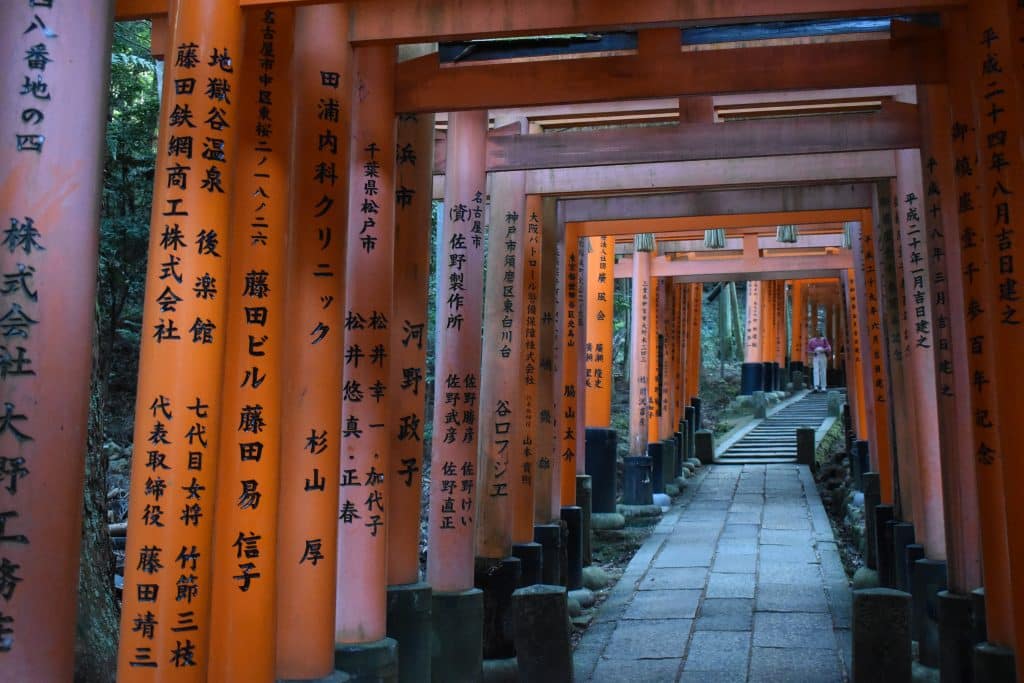
Argust is also an Asian studies student and spent her spring 2023 semester at Kansai Gaidai University in Hirakata, where she took classes in Japanese language and culture and ceramics. She also visited various temples and shrines and made a point to see kofun, an ancient Japanese burial site which related to her second major in archaeology. Argust says her spring break trip to Seoul to visit Throckmorton further enriched her experience in East Asia and let her flex her independence, which was a central part of her growth abroad. “Being able to say that I’ve lived in another country on the opposite side of the planet for four and a half months, completely alone, was very big for me,” explained Argust, who had never left the U.S. before her semester in Japan.
Thanks to the Office of International Education’s relationships with program providers and international universities that offer study abroad opportunities, RMC students study abroad across the world, reaching locales like Morocco, France, and the Netherlands. The top destination for RMC students spending a semester or year abroad is Spain, where many take classes to help complete Spanish majors or minors. Spanish students have increasingly also extended their study abroad experiences to other Spanish-speaking countries like Uruguay, Costa Rica, and Argentina.
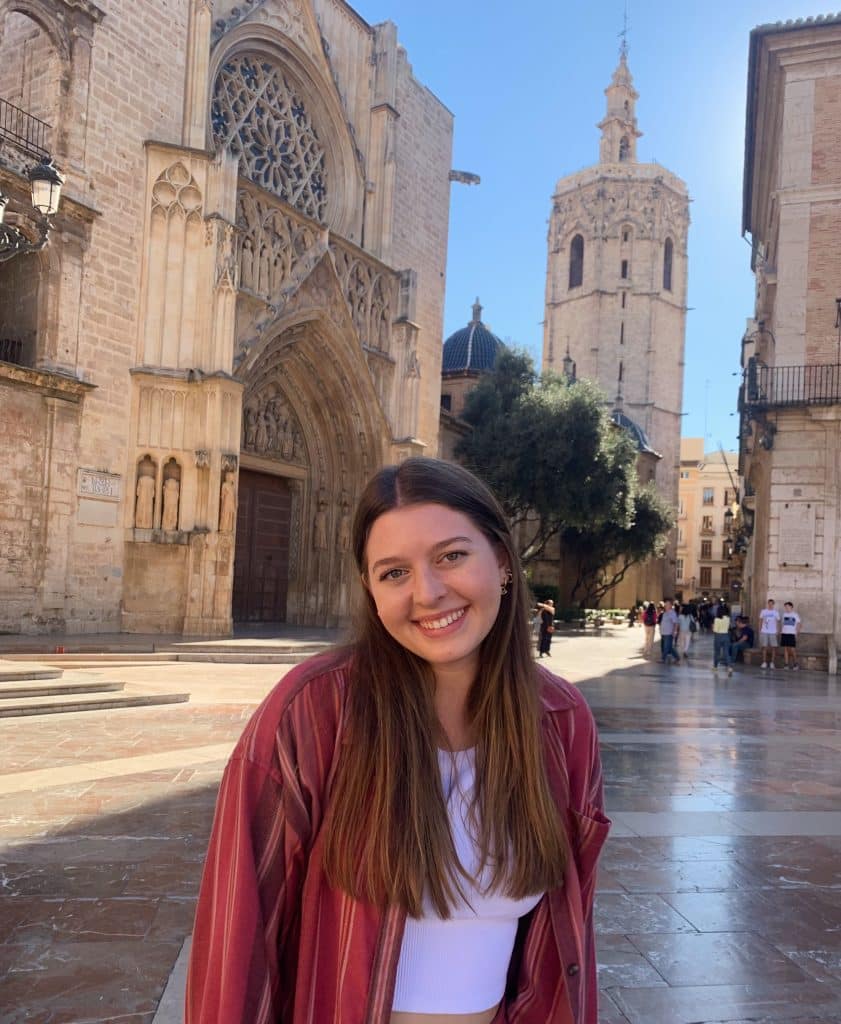
Many students who spend the semester abroad also participate in a January term study-travel course, led by an RMC professor. In fact, Peyton Steele ’24 says that the opportunity to preview her semester abroad with a shorter, faculty-led course was part of why she chose to attend Randolph-Macon. She traveled to Barcelona with RMC faculty before her fall semester abroad in Alicante, Spain. Steele took several Spanish classes to nearly complete her Spanish major requirements while abroad, while also serving as a teacher’s assistant for an English class at the University of Alicante.
The semester was one that perfectly set up Steele for her plan to become a Spanish teacher after graduation. “It was nice to have the teaching assistant internship to get both my areas of study while I was there,” she explained. “Before I went to Spain, I wouldn’t say I was fluent. But since I’ve come back, I can say that I am, which is exciting, and I’ll be able to tell my students about the culture and the things I experienced and learned.”
The impact on graduates’ employability is another key benefit to the experience of studying abroad. Devan, the Assistant Director of International Education, explains, “you look good to employers as well, because you get a lot of those intercultural competency skills, learning how to talk to people who are different than you and navigate ambiguous situations.” OIE guides students through the application process, as well as through the preparation for their travel. Visit OIE’s semester abroad page for more information on how to get started.