

Behavioral Neuroscience Students SURF Through Summer Research
Students who participate in Randolph-Macon College’s Schapiro Undergraduate Research Fellowship (SURF) program learn a lot about the research process—and about themselves. Betsy Rhoads ’20, Kiana Nwachukwu ’20 and Sarah Meek ’22 experienced this firsthand recently when they conducted full-time research in RMC’s Neuroscience Laboratory.
Under the guidance of Behavioral Neuroscience Professor Massimo Bardi, the trio explored several natural treatments to reduce stress in laboratory animals—Long-Evans rats—including environmental enrichment, positive social interactions (play behavior) and herbal treatment.
Meet the Researchers
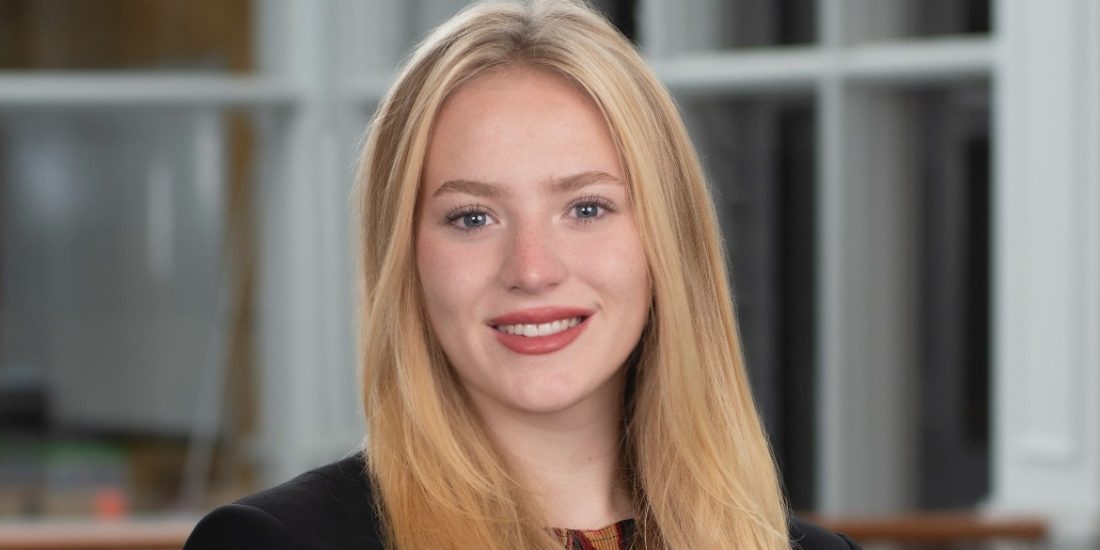
Betsy Rhoads ’20 (behavioral neuroscience major; psychology and Asian studies minor)
Research: Herbal medicine as a natural treatment for reducing stress in Long-Evans rats
When she traveled to Florida during January Term 2019 in conjunction with Bardi’s Comparative Animal Behavior course, Rhoads conducted research at the DuMond Conservancy for Primates and Tropical Forests, home to nearly 400 primates. That experience piqued her interest in pursuing additional research opportunities.
“Professor Bardi mentioned the SURF research that had been done on campus,” says Rhoads. “He excitedly described the intensive work students accomplish in the SURF program, including post-graduate-level lab experience and extensive practice with the scientific writing process.”
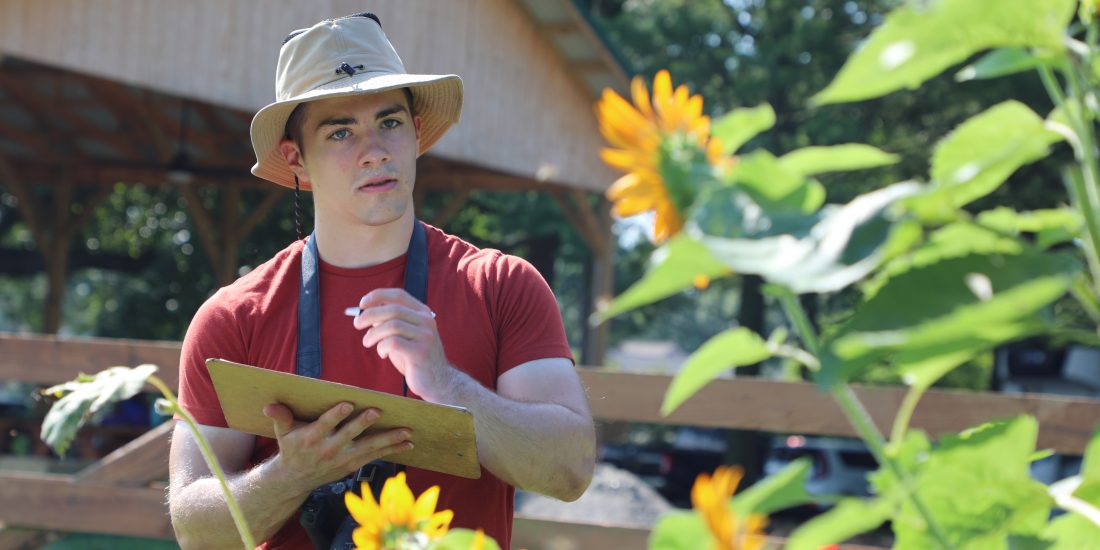
Kiana Nwachukwu ’20 (behavioral neuroscience major; chemistry minor)
Research: The role of social play and environmental stimuli on physiological and neural plasticity in rats
“I loved hearing faculty and peers talk about what they were researching,” says Nwachukwu. “This sparked the idea that I might want to do research. When I told this to Professor Bardi—my advisor—he listed the opportunities I could choose from: a semester project, a senior project, or the SURF program. SURF interested me because it would allow me to completely focus on one project.”
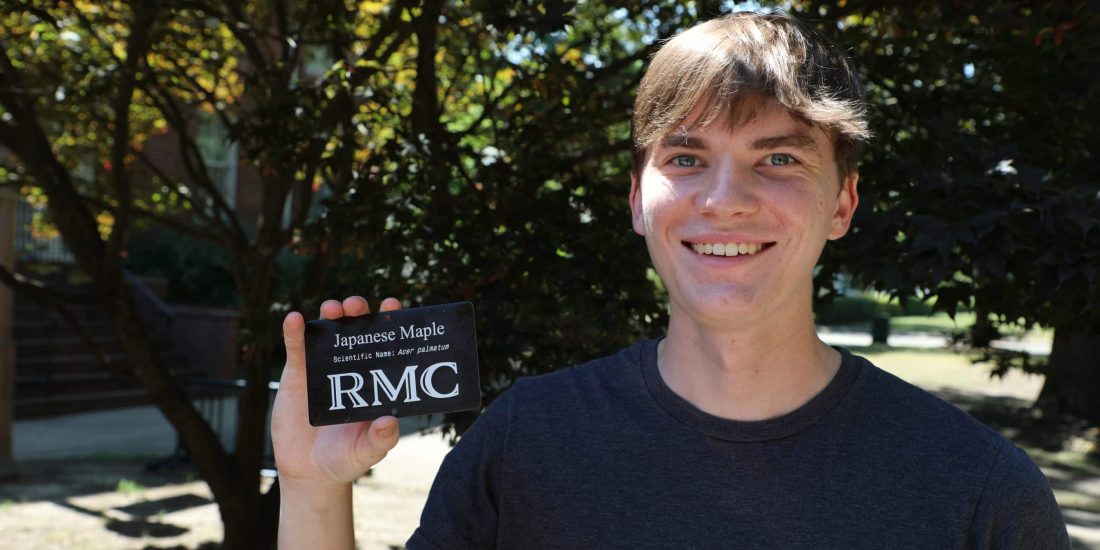
Sarah Meek ’22 (behavioral neuroscience major; pre-med track)
Research: The effects of naturally enriched environments on stress coping mechanisms for Long-Evans Rats
“The SURF program influenced my decision to come to Randolph-Macon,” says Meek, who, after taking an introductory behavioral neuroscience class, became intrigued. “Neuroscience proved to be incredibly captivating, and I was eager to delve into the world of research.”
Using Research to Study Stress
“Our overarching goal is to use the results of this research as a model to study several issues related to stress in humans,” explains Rhoads, who tested to see if icariin, an active compound extracted from a plant used for centuries in Chinese traditional medicine, can reduce the negative effects of unpredictable stress, such as neural degeneration. “I used the preliminary data from a project carried out by Kayla Johnson ’19 to know exactly what dose to administer to Long-Evans rats in order to maximize the positive effects of the treatment.”
Rhoads’ work tested if both the cognitive and emotional regulation of rats are enhanced by icariin. She then compared her results with the effects of play and environmental enrichment carried out by Meek and Nwachukwu. “We searched for evidence that icariin may have health benefits, including the possibility of it being used as a neuroprotective medicinal treatment against neurodegenerative disorders and diseases,” says Rhoads.
Lab + Rats
The three researchers started each weekday at 8 a.m. in the Behavioral Neuroscience Lab by checking on the rats’ well-being. They fed the 60 rats, gave them fresh water and checked the temperature of the room. Next, each rat was given a form of unpredictable stress (smells or sounds of predators). Then, the rats in the icariin group were administered icariin based on their weekly weight.
“After lunch, I videotaped the play behavior of 20 of the rats,” says Nwachukwu. “My focus was on positive social play interactions that can lead to a decrease in stress. In addition, play behavior can be a form of stress management, and it regulates emotion in humans. Although my research used an animal model, the results from this study can be used to help humans decrease their stress levels while improving their learning and memory.”
Meek studied how a naturally enriched environment might counteract the negative effects of chronic stress. “This is an important topic because chronic stress has been proven to result in a multitude of physical and mental health problems, like anxiety, depression and weight gain,” she explains. “Since chronic stress is so prevalent, it is important that we find ways to combat it. I am particularly interested in natural enrichment because studies have shown that exposure to nature might make people calmer and healthier. I hope that my research will help encourage people to get outside.”
Beyond the Classroom
“Thanks to SURF, I learned new research techniques outside of a typical classroom setting,” says Nwachukwu, a Higgins Academic Center (HAC) tutor in chemistry and behavioral neuroscience. She also serves as a New Student Transition Captain and is a member of Kappa Alpha Theta, the Leadership Fellows program, and the Pre-health Society. Her future plans include dental school.
Meek, a member of the choir and the Pre-health Society and the recipient of the Presidential Scholarship, says, “SURF taught me to be a better team player. It was encouraging to work alongside two hardworking women and a devoted mentor! I also made connections with upperclassmen and alumni who offered insight on the major and post-graduate options.”
Rhoads is inspired by her professors—and by the SURF program.
“I wasn’t sure if I could pursue a degree in such a challenging subject as behavioral neuroscience,” she says. “However, knowing that the SURF program was a possibility for me sparked hope that I would be able to do extraordinary things at RMC. I’ve acquired skills that will give me the most immersive trial for exactly what I hope to do in my future career.”
A philosophy and Chinese tutor for the HAC, Rhoads is the recipient of The Richard T. Abernathy Scholarship, The Alma Winslow West Scholarship, and the Dean’s Award. Her future plans include pursuing a Ph.D. in behavioral neuroscience.