

The Double Life of Professor Marisa Cull

It was a Thursday morning in her 8 a.m., 200-level English course titled “Dangerous Women: Romance Heroines in the Modern Age” when Dr. Marisa Cull, the Jean Renner Short Professor in the Liberal Arts, shared a part of herself that she has never revealed to students.
Her carefully curated lecture slides pictured side-by-side headshots: on the left, a cropped photo featuring Cull in a blazer and dress on RMC’s campus, and on the right, a photo of her in a white t-shirt and trendy jeans on a pink bench with what she self-deprecatingly described as “fabulous lighting, hair, and make-up—obviously.”
The trendy headshot is Cull, but not exactly. It’s Cull as Kate Clayborn, the bestselling author of nine novels. Kate Clayborn is a pseudonym under which Dr. Cull has amassed both critical acclaim and commercial success in the red-hot fiction genre of romance.
As she shared her secret in her Haley Hall classroom, mouths dropped. An excited murmur went through the room. At one point, the whole class began to clap.
Cull explained to her students—the first students with whom she has shared the details of her parallel career—that she has sought to keep her professor and author lives separate in order to keep focus in both. “It is NOT because I am ashamed,” she said emphatically, referencing the very course in which they are enrolled. “I think I’ve made very clear to you in this class that I love and respect romance as a genre.”
Cull’s journey as a fiction author wasn’t exactly planned. A respected Shakespeare scholar, her academic publications focus on British literature, with a particular interest in postcolonial and feminist theory. She joined the RMC faculty in 2008, shortly after earning her Ph.D. from Ohio State University. She earned tenure in 2014, was promoted to full professor in 2019, and was honored with the endowed Jean Renner Short Professorship in 2021.
Perhaps unsurprisingly, she has always been a reader. But if you thought English professors only enjoy a certain kind of literature, Cull is quick to disabuse you of this stereotype. “I believe all kinds of books can be worthy of careful study.”
She started reading romance novels as her academic work began exploring questions of gender, and as she developed her first course on feminist theory. Personally and professionally, their strong female characters appealed to her.
“It made me feel less alone, more empowered, and more happy,” she explained. She found surprisingly complicated stories that tackled questions about race, history, and gender stereotypes, which appealed to her intellectually.
Cull began wondering what it would be like to create the kind of books that meant so much to her. And then, she started writing.
Her first draft of a novel called Beginner’s Luck led her to an agent, and then to her first publishing contract in 2017 with Kensington Books. The title was perhaps prescient. Whether by luck or skill, her ebook edition found an audience. Two more books followed, and then her fourth novel Love Lettering was released widely in trade paperback. With each subsequent book, she enjoyed greater commercial success and a higher profile as an author. Her latest, The Paris Match, was released by multinational publisher Penguin Random House and immediately landed Kate Clayborn on the USA Today and IndieNext Paperback’s bestseller list.
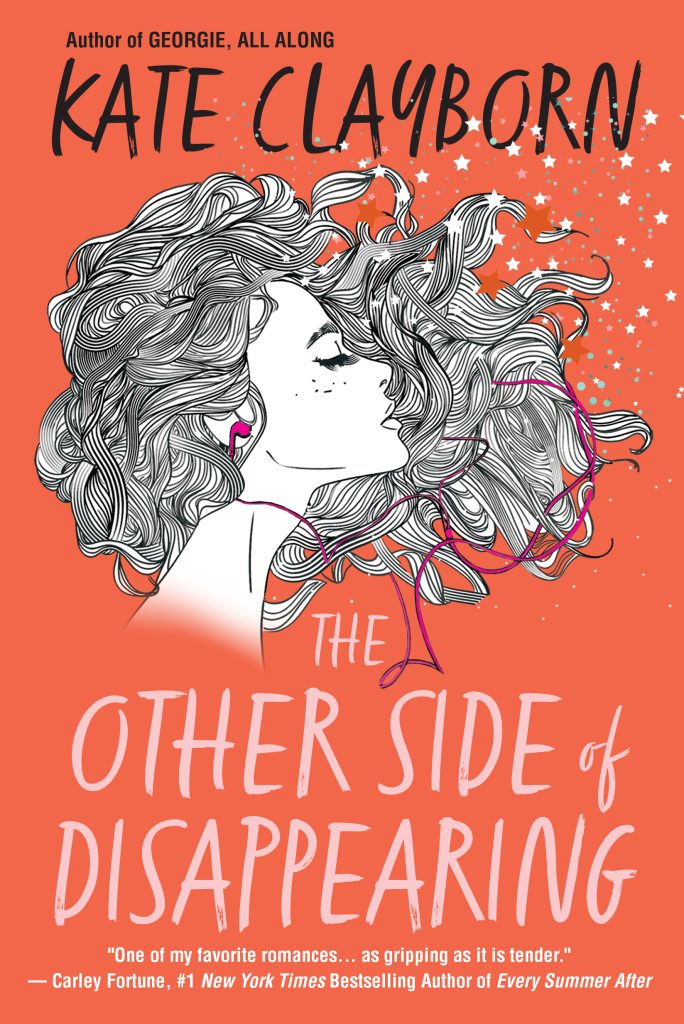
To say Cull is modest about this success is understating her instinct to fly under the radar. While she does publicity as Kate Clayborn, she has very intentionally tried to avoid attention on campus, fearing a distraction from teaching and work she cares deeply about. She disclosed her publishing plans only to administrators at first. But as the years passed and Kate’s work received increasingly high-profile press attention, including coverage in The New York Times, People magazine, and more, she knew that the time of flying under the radar was limited. When her eighth book won a coveted spot on the Kirkus Best Books of the Year list in 2024, she decided—with the encouragement of the Provost—to share the news more broadly with faculty colleagues.
“From my first Kate Clayborn novel,” explained Dr. Alisa Rosenthal, who served as RMC Provost from 2019–2026. “I’ve been struck by how the questions that animate Marisa’s teaching and scholarship are right there in the novels: how social and gender norms shape our lives and what forms resistance takes; how fulfillment can be had beyond the institutions that govern our daily lives; how literature helps us think more capaciously about the varied kinds of relationships through which we find deep connection with others. Professor Cull and Author Kate are not in tension but in conversation — two ways of pressing readers, and students, toward more careful thought about the relationships, norms, and possibilities that shape a life.”
Cull’s creative life, paired with her commitment to her teaching, means she often works a punishing schedule with two full-time jobs. She sometimes writes at 4 a.m. (before 8 a.m. class), and often on weekends, breaks, and during the summer. She has been prolific as an author, but has very intentionally remained highly engaged at RMC, where she serves as vice chair of the Executive Committee of the faculty and recently chaired a special committee on the faculty handbook, in addition to her full schedule as a tenured and endowed English professor.
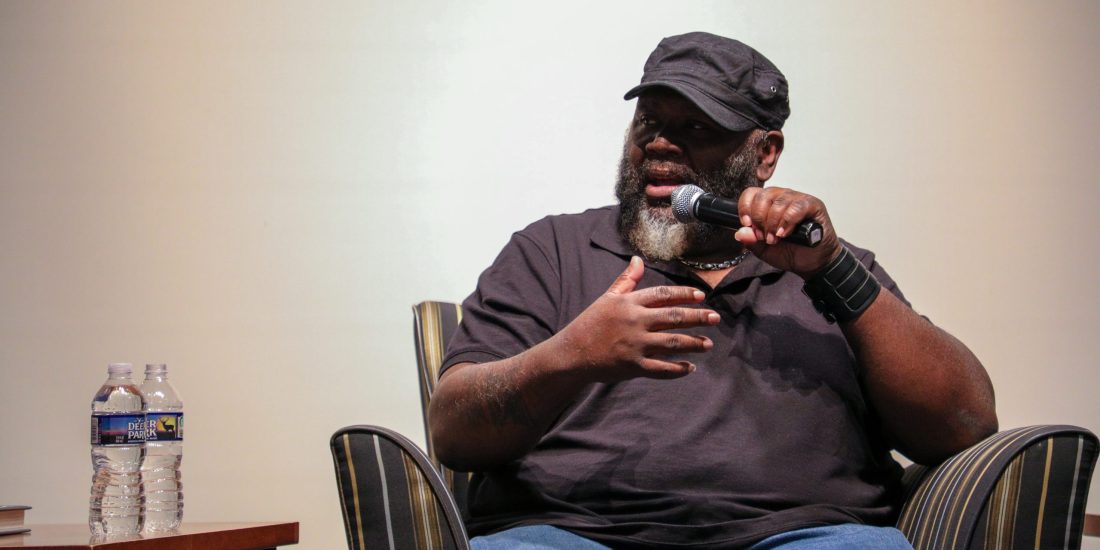
Cull’s spring 2026 course Romance Heroines is her first to focus so directly on a genre she sees as widely misunderstood and unfairly maligned. Her syllabus does not include any of her novels, but rather some of the titles that first gave her an appreciation for the way romance’s heroines were advancing feminist ideals in modern literature. For example, the first book students read, is Indigo, a 1996 historical romance by Beverly Jenkins, a trailblazing author in the genre who paved the way for Black authors and Black-centric romances. With discussion about topics like body image, relationship dominance, and wedding culture, the class tackles the stereotypes and criticisms of the genre head-on and explores the very boom that has helped fuel her success.

“We have baggage we bring to any text we read. The baggage we have for romance happens to be very misogynist, very classist, and very intellectually elitist,” Cull explains. “At Randolph-Macon, we talk often about how we want to help students be lifelong learners, and, in my field, that means lifelong readers. I want students to find things they love to read, and to be able to think critically about the things they love to read. Romance is a great example of a genre that can do both of those things for you.”
Her choice to reveal her pseudonym to her students halfway through the semester could have made the spring feel like a tale of two courses—the first half, taught by a passionate literary expert, and the latter, taught by a famous practitioner in the field.
Unsurprisingly, it only added to her classroom mystique.
“We already thought Professor Cull was cool,” Linsea Martz ’27 laughed on the day Cull shared her creative journey. “But now we think she is soooo cool!”
More importantly though, her students say Cull’s full story deepened their experience with the depth of the romance genre.
“It teaches us to think about [romance novels] at a deeper level,” explained student Caroline Smith ‘26. “It’s not just marriage and kids and love as an end goal. There are lots of different kinds of novels. Just because they have similar covers doesn’t mean what’s on the inside is the same.”
Her story also personalized her central argument—that romance does not deserve the shame that is so often heaped upon it.
“Seeing that romance can be both fun and academic—it’s really inspiring to me as an aspiring author,” reflected Martz, “I feel so encouraged when I see Dr. Cull talk about this work in an academic context.”
That lesson, Cull might say, is at the heart of both halves of the life she has led for nearly a decade. In her classroom, as on the page, she believes no book should be judged by its cover.