

RMC Establishes New Major in Engineering
Randolph-Macon College President Robert R. Lindgren is pleased to announce that the faculty has approved a new major in Engineering. The Engineering major is pending approval by the Southern Association of Colleges and Schools Commission on Colleges.
“RMC’s Engineering program will be an exciting new academic offering for our students,” says Lindgren. “We expect engineers educated at Randolph-Macon will be both exceptionally well prepared and well positioned to make important contributions as leaders in the field of Engineering.”
Engineering is in high demand for prospective students. The major will integrate engineering courses with a rigorous liberal arts curriculum—an important hallmark of a Randolph-Macon education.
The new engineering major is designed to satisfy the Accreditation Board for Engineering and Technology (ABET) requirements and earn accreditation when the first students graduate in 2023. This designation will allow RMC Engineering graduates to advance their careers more quickly.
Distinctions and Benefits of Engineering at Randolph-Macon
The new major in Engineering will include courses focusing on engineering mechanics as well as courses incorporating project-based design and analysis that apply foundation principles to complex real-world problems.
“Engineering is part science, part art, and part creative design,”says Dr. James T. McLeskey Jr., Head of Engineering Programs at Randolph-Macon. “Engineers must create while understanding the fundamental science that constrains their ideas. The Engineering program at Randolph-Macon will focus on students’ technical proficiency and encourage imagination in their designs.”
The Same Small Class Sizes, Faculty Mentorship and Analytical Skills
RMC’s Engineering program is designed to mirror all other current RMC majors in preparing graduates to communicate effectively, think critically; engage global and industry challenges, and thrive as team members and leaders.
Likewise, students in the Engineering program will receive close, personal attention from experienced faculty preparing them for specialization in areas ranging from civil to mechanical to biomedical engineering. Collaboration and teamwork will be key components of the RMC Engineering program and prepare our Engineering graduates to be leaders in their field.
New Major will Complement Successful Engineering Physics Major
In 2012, RMC established an Engineering Physics major, which has become one of the College’s most popular majors. Since its creation, Randolph-Macon has graduated 36 Engineering Physics students, with more than 40 students as current majors.
The Randolph-Macon College Macon Women Engineers club earned Affiliate status with the national Society of Women Engineers (SWE) in 2017.
The new Engineering program, complementing historically excellent humanities and social science programs, furthers RMC’s commitment to providing students a world-class STEM (Science, Technology, Engineering & Mathematics) education.
The Same Student Experiences in and out of the Classroom
Engineering students, like all RMC students, will enjoy the full college experience, including opportunities to participate in athletics, campus activities, internships, ground-breaking research, study abroad programs, and more.
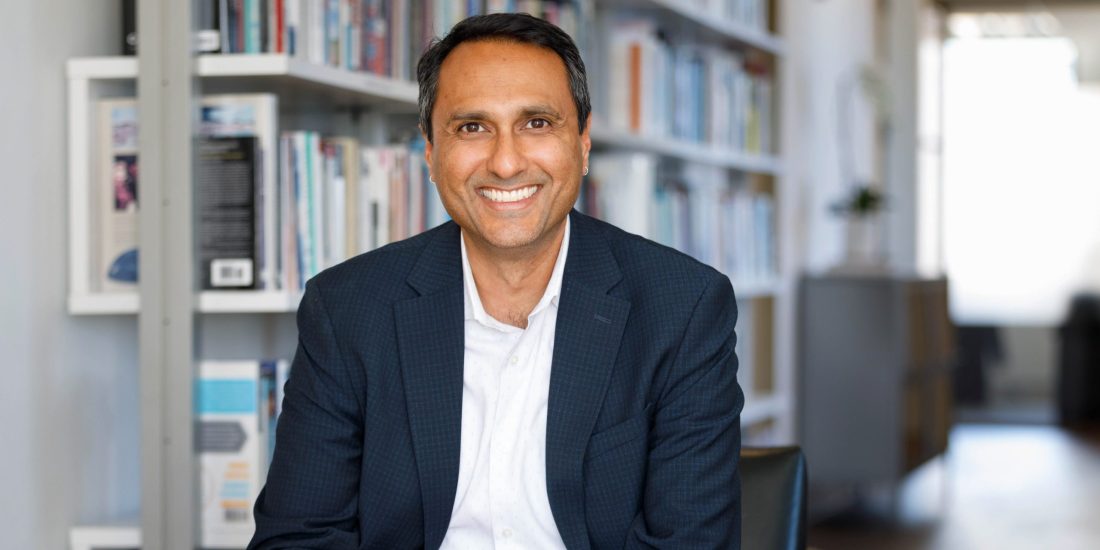
Dr. James T. McLeskey Jr.
McLeskey earned his B.S. in Physics from the College of William & Mary, his M.S. in Mechanical Engineering from the University of Illinois at Urbana-Champaign, and his Ph.D. in Mechanical Engineering from the University of Virginia.
His research is focused largely in the areas of renewable energy and clean water. His lab was the first to report the fabrication of solar cells made using a water-soluble polymer, and his background includes six years in industry working on the design and repair of large turbo-generator rotors. McLeskey has authored 40 peer-reviewed journal publications as well as two book chapters and served as Principal Investigator (PI) or Co-Investigator on more than $1.5M in funded research. He has numerous international collaborators and has given invited talks in India, Egypt, and China as well as the United States. Most recently, he served as the PI on a grant from the Qatar National Research Fund for developing optimized membranes for saltwater desalination.
McLeskey has received numerous teaching awards, including the 2006 Outstanding Faculty Award from the State Council of Higher Education for Virginia (SCHEV). In addition to his eighteen years of teaching at the college level, he taught high school science for four years and held a Commonwealth of Virginia Teaching Certificate with endorsements in Physics and Chemistry. He served as the Co-PI on a grant entitled “The Experiential Engineering Library” sponsored by the National Science Foundation for bringing hands-on projects to the Engineering curriculum.