

Netherlands Day by Day: A January Term I’ll Never Forget

During January Term, I studied abroad in the Netherlands as part of SOCI 293–CRIM 293: Human Rights: Culture and Conflict. The course focused on how human rights are shaped by culture, power, law, and social institutions, both historically and today. Rather than learning only through lectures, the study-travel class allowed us to learn through site visits, workshops, museums, and conversations with local students, professionals, and residents. Traveling through cities like The Hague, Amsterdam, Delft, Rotterdam, and Haarlem allowed us to see how human rights and conflict are addressed in real-world settings.
Tuesday – Arriving in The Hague

We arrived in The Hague and spent our first day getting oriented to the city. After settling into our housing, we explored the surrounding neighborhood and observed everyday life, including how people navigate public transportation and shared spaces. This first day introduced the course’s emphasis on observation and awareness, encouraging us to notice cultural norms and social interactions as part of our fieldwork.
Wednesday – Seeing Global Justice Up Close
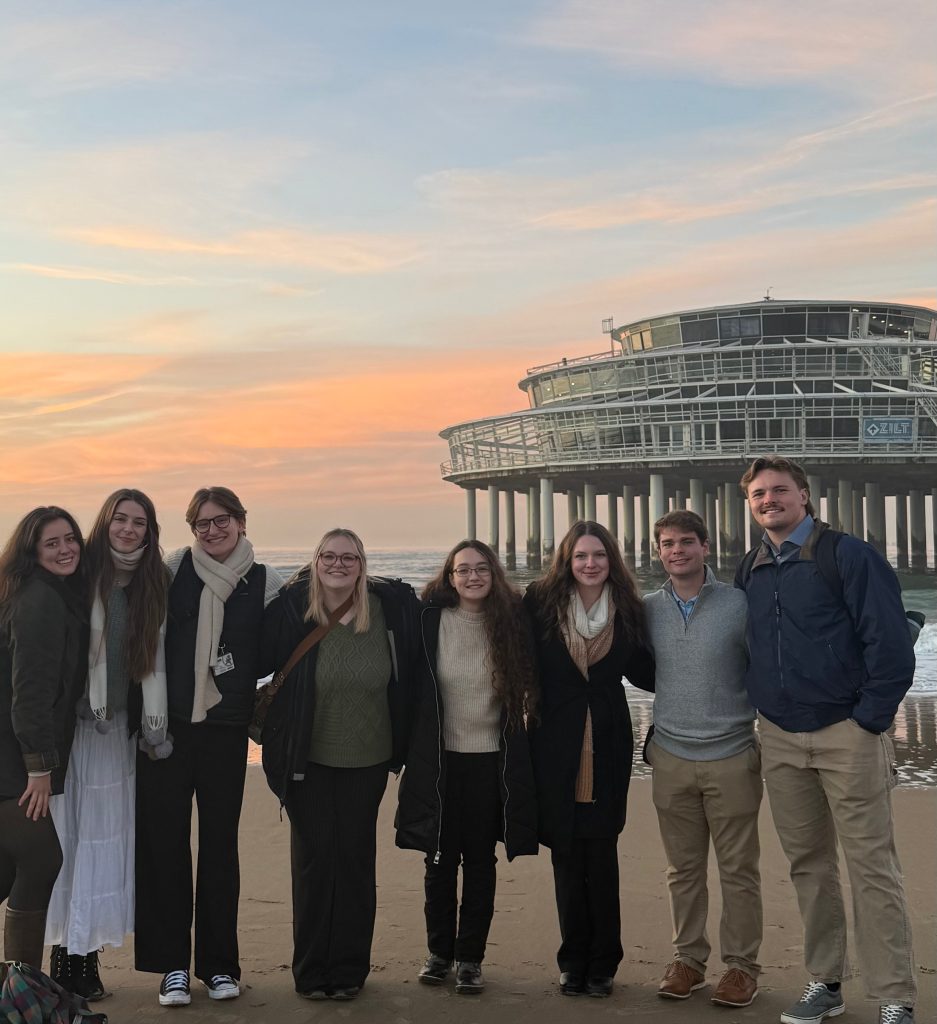
Wednesday focused on international law and human rights institutions. We visited the Peace Palace and learned about the International Court of Justice through exhibits and guided explanations. We also toured the Dutch House of Representatives and a local university. These visits were connected directly to course discussions about global justice, state power, and how international institutions attempt to resolve conflict and uphold human rights. Afterwards, a group of us decided to walk along the beach and have dinner at one of the traditional Dutch restaurants before heading back to the hostel for the night.
Thursday – Learning Through Photography
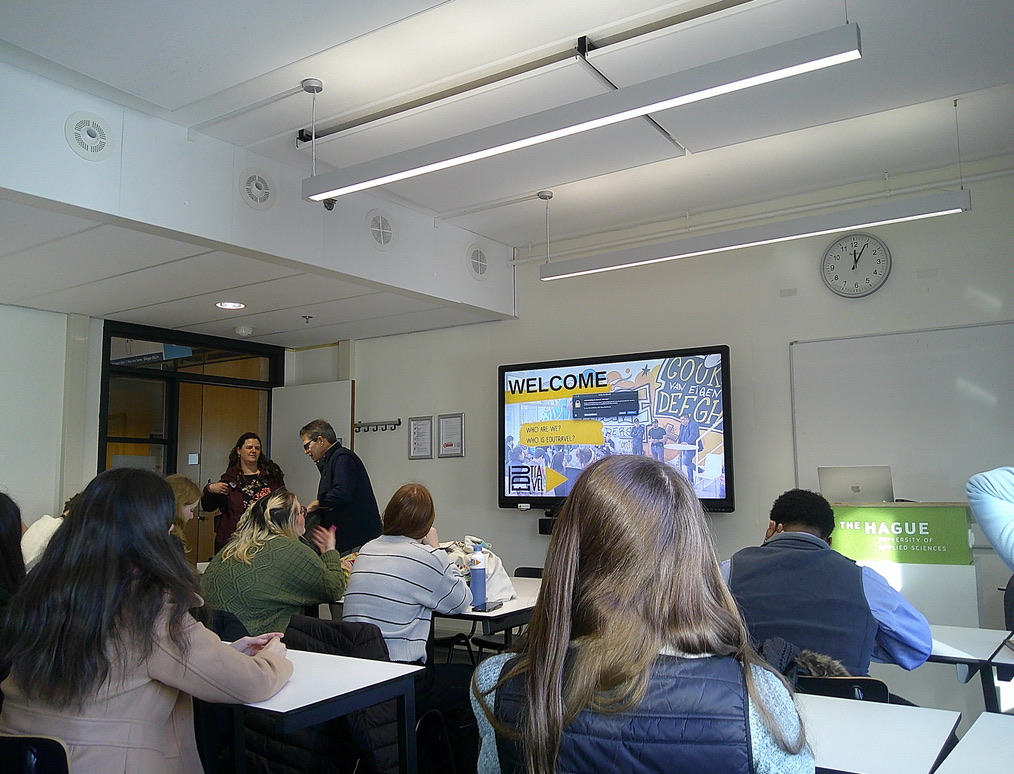
As a class, we participated in a photography workshop to bolster our fieldwork. The goal was to document social environments and interactions connected to themes of culture and conflict, rather than simply capturing landmarks. After class, we spent time on a university campus, observing student life, language diversity, and group dynamics, all of which tied into our discussions of globalization and cultural exchange. It was great to work with the teachers and express our ideas and questions about Dutch culture and the sites we had already visited.
Friday – Meeting Students and Learning About Refugees
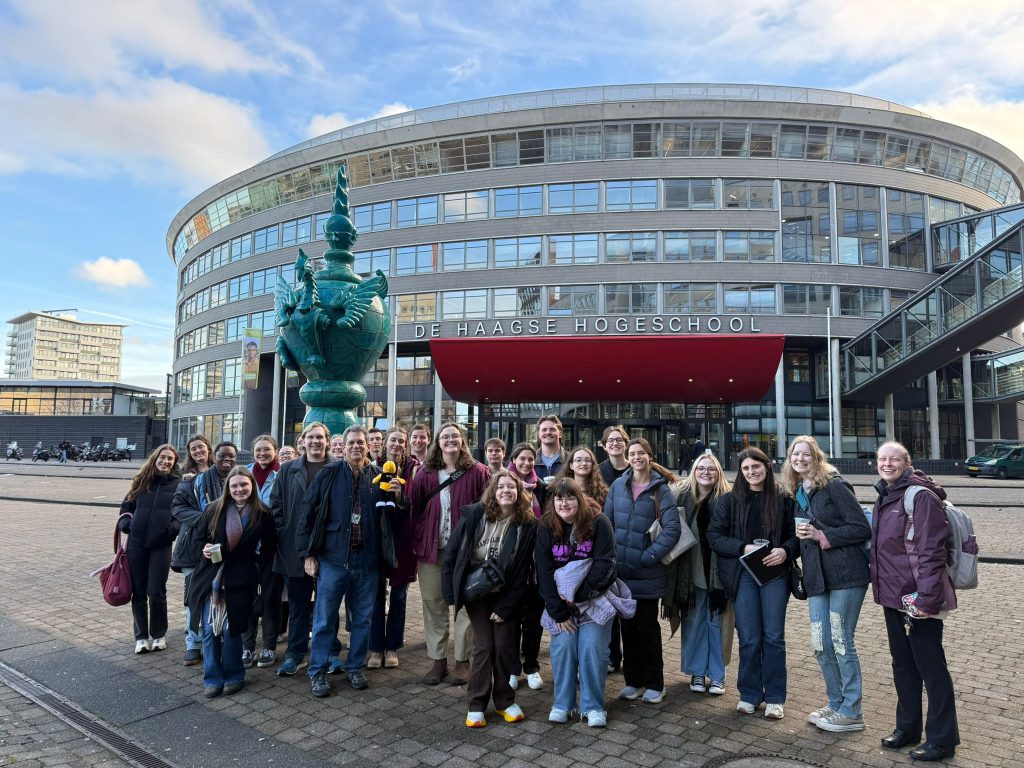
We visited a local university class and spoke with Dutch students about education, media, and global awareness. Many students shared how closely they follow U.S. news, highlighting the global reach of American media. Later, we toured refugee housing facilities and learned about the Netherlands’ approach to supporting displaced individuals through housing, employment assistance, and social services. This visit provided a real-world example of how human rights policies affect people navigating conflict and resettlement.
Saturday – Exploring the City

Saturday, we started out in class talking about the experiences from the previous day and going over our plans for later in the week. Then, some of us went shopping for souvenirs and explored the Hague’s Chinatown. After a break, we did laundry and caught up on our readings and schoolwork, then spent the evening grabbing dinner and visiting a light show at one of the historic churches.
Sunday – Exploring Delft and Rotterdam
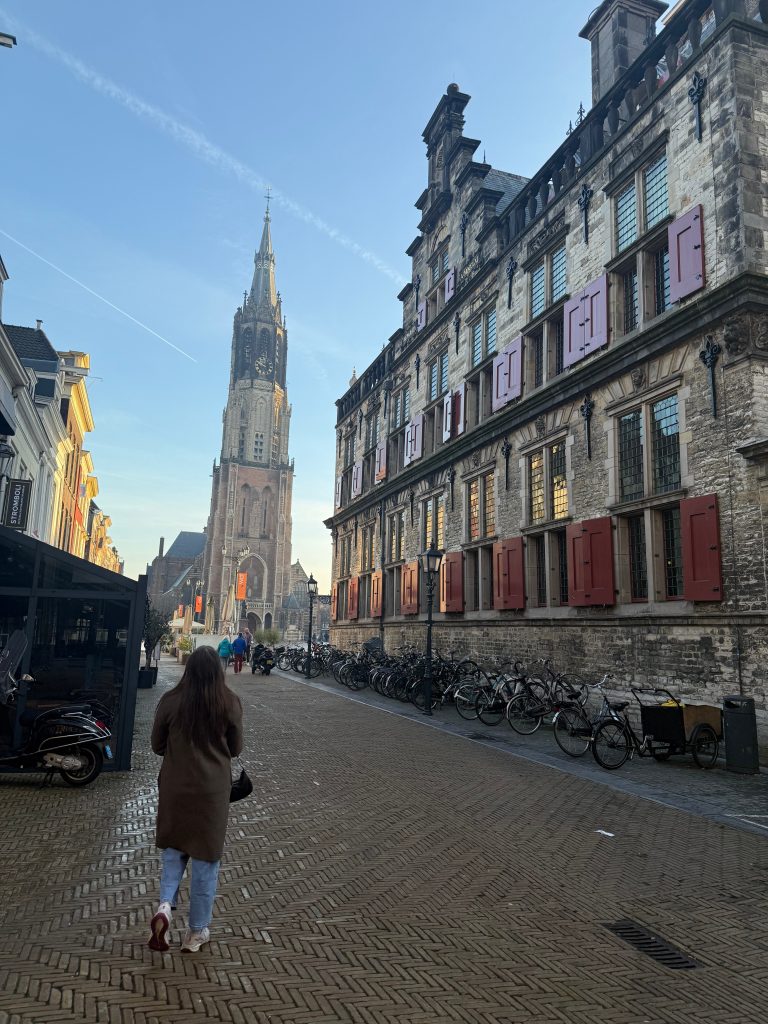
We decided to wake up early in the morning to take the train to Delft, where we explored historic streets and toured a church while listening to a choir rehearsal. Later, we went to Rotterdam, where a couple we had met previously showed us around the city. It was so different from all of the other places we visited, feeling more like an American city due to its modern buildings. It was great having locals show us around the city and all of the best spots.
Monday – Thinking About Justice Then and Now

We visited a prison museum that explained historical punishment practices in the Netherlands and changing ideas about incarceration. Later, we toured the International Criminal Court, where guides from various countries described how international crimes are investigated and prosecuted. It was really interesting to see a court on such a worldwide scale. We were able to look around the ICC’s museum section and see all of the cases they had worked on and conflicts they had resolved in the past.
Tuesday – History Told Honestly in Amsterdam

After leaving the Hague, we started the second leg of our journey in Amsterdam. We first visited the Wereldmuseum, which focuses on storytelling and historical context. I was particularly interested in an exhibit on Dutch colonization of Indonesia that examined exploitation and violence rather than glorifying the empire. It was different from other museums that I have visited; the exhibits included mostly photographs and videos from interviews because they opted to give most of their exhibits’ artifacts back to the original owners.
Wednesday – Power, Expression, and Policing

We participated in a workshop with our guides at EduTravel called the “Theatre of the Oppressed,” which used movement and role-playing to explore power dynamics, inequality, and resistance. These exercises helped us form more solid views on ideas about oppression and conflict. Later, we met with Dutch police officers who explained law enforcement practices, including their strict protections around privacy and surveillance. There are cameras everywhere in the Netherlands, which put us all on edge, but the officers shared that the police force isn’t allowed to access them without a warrant, which really made us think. Comparing these systems to those in the U.S. deepened our understanding of how different societies balance security and freedom.
Thursday – Human Rights in Real Life

Thursday, we visited a center that supports survivors of human trafficking. Staff explained how rehabilitation focuses on housing, education, and long-term independence, allowing survivors to “start fresh” and get back on their feet before going back to the real world. In the afternoon, we visited the Anne Frank House. Walking through the space provided a powerful reminder of the human consequences of persecution and conflict, reinforcing why human rights education remains essential. It was so much deeper than visiting a museum, as we were able to walk through each room while hearing her story, to really be able to look at this from a deeper view.
Friday – Harm Reduction Center & A Historic Tour
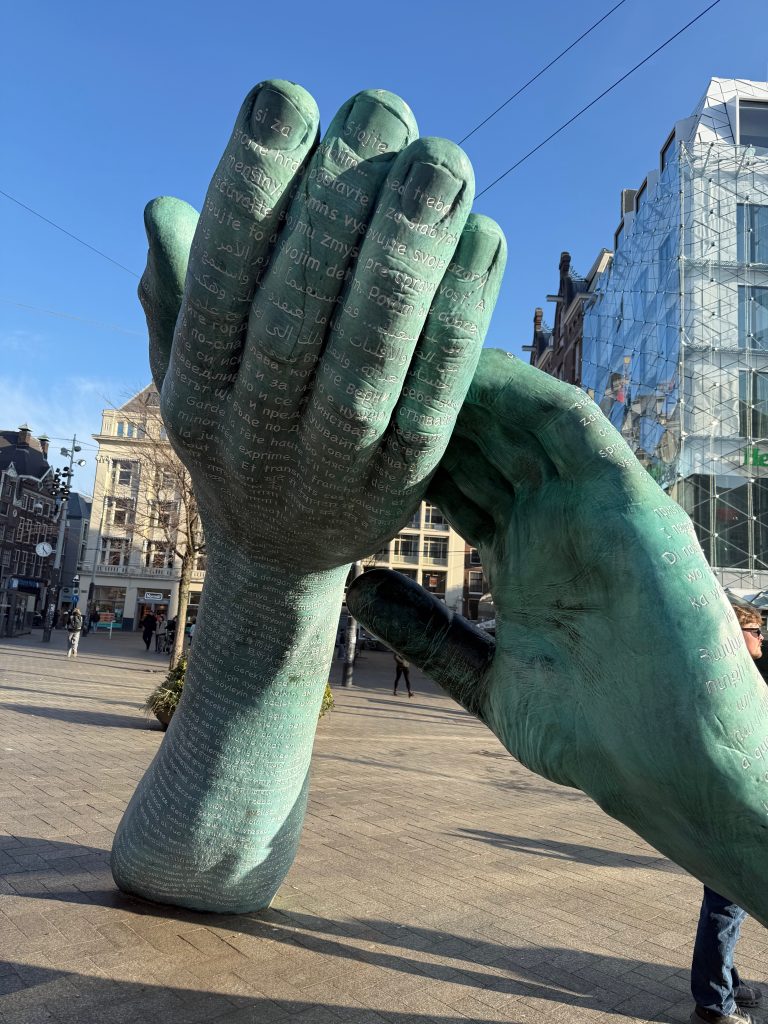
We toured Holocaust memorials throughout Amsterdam and walked through the former Jewish district. Seeing how memory is preserved through physical spaces emphasized the importance of remembrance and education in preventing future conflict. Later, we attended a discussion on harm reduction and public health, which reframed drug policy as a human rights issue centered on safety and dignity.
Saturday – Civic Life in Action

After class, we explored Amsterdam, grabbing brunch next to one of the canals and touring all of the local monuments, while documenting our observations. We watched a large, peaceful public protest with thousands of people marching through the streets. It was super relevant to the course to see this from a newfound view.
Sunday – Slowing Down

Sunday, we were able to spend more time sightseeing and exploring all day. In the evening, we went on a canal cruise and saw the city from an iconic view.
Monday – Haarlem and Saying Goodbye

On our final day, we visited Haarlem and explored its residential streets, historic churches, and a local Monday market where we sampled cheese and tried some traditional Dutch foods. In the afternoon, we returned to Amsterdam for our final class workshop. We then concluded the program with a traditional Dutch meal, marking the end of our January Term experience.
Looking Back
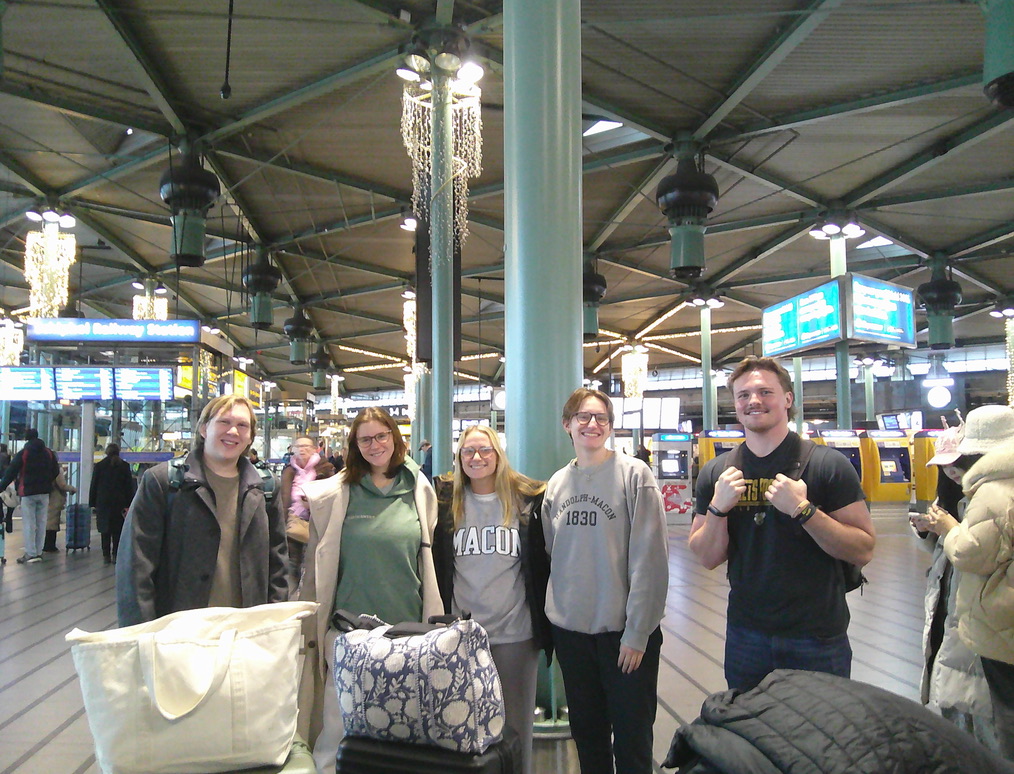
Studying abroad through SOCI 293–CRIM 293 allowed me to see how human rights, culture, and conflict shape everyday life across societies. By combining coursework with direct observation and engagement, the program challenged my assumptions and helped me understand global issues in a more meaningful way. January Term in the Netherlands showed me the value of learning beyond the classroom and deepened my interest in human rights on a global scale.