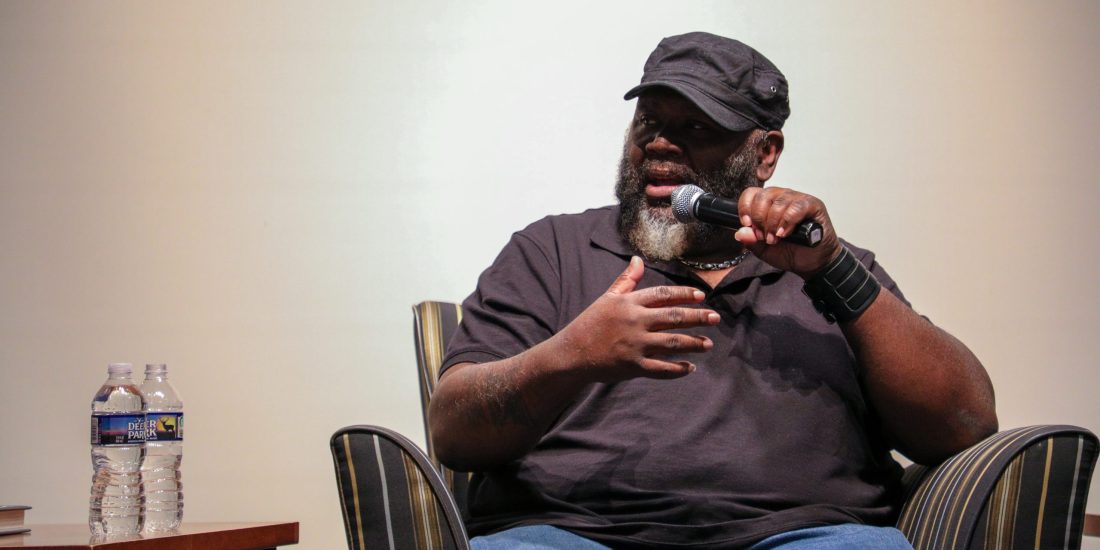


Former U.S. Representatives Share Perspective on Governing, Bipartisanship, and More
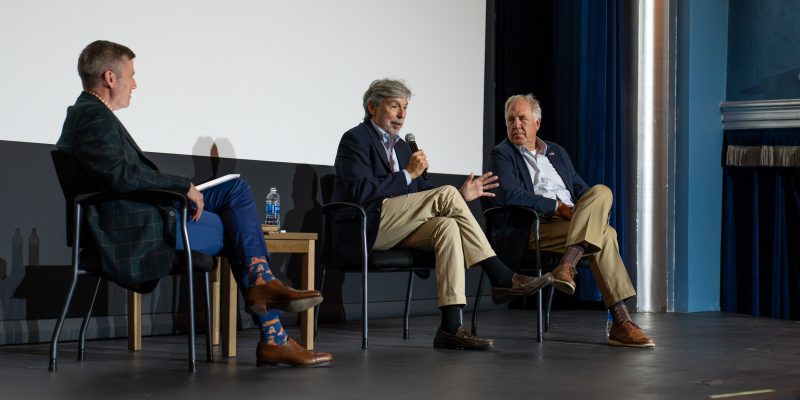
Bipartisanship was a theme across Randolph-Macon’s campus on Friday, Oct. 9, as the College hosted two former U.S. Representatives from opposing political parties as part of a national program known as Congress to Campus. Sam Coppersmith, a Democrat who represented the 1st District of Arizona from 1993-1995, and John Shimkus, a Republican who represented three different districts in southern Illinois from 1997-2021, visited several classes and participated in a public conversation moderated by President Michael Hill inside the Ashland Theatre.
“With the 2026 congressional midterms around the corner, we can’t avoid the partisan mudslinging and personal attacks that have unfortunately become all too prevalent in politics today,” said Dr. Lauren Bell, Founding Director of the RMC Pluralism Project and the James L. Miller Professor of Political Science. “As RMC redoubles our efforts to promote citizenship, pluralism, and dialogue across difference, programs like this help us show students that it’s possible to disagree civilly and to work together to improve our communities through public service.”
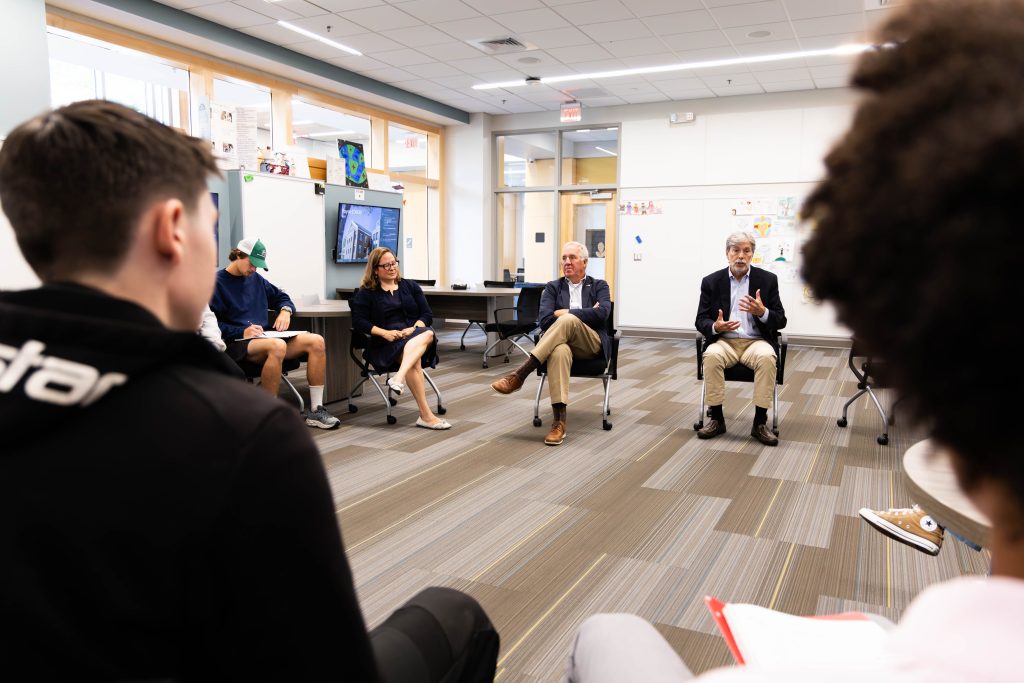
Bell orchestrated the program, during which the former congressmen met with students throughout the day, including visiting several Political Science classes and enjoying lunch with Environmental Studies students, during which they discussed their experience passing legislation with environmental impacts.
Students in The U.S. Congress, a course taught by Dr. Bell, engaged the Congressmen with thoughtful questions about the process of getting legislation passed, as well as balancing the need for bipartisan support for bills with the political realities of elections in their home districts. The Representatives explained that there’s no perfect answer to these challenges but emphasized the importance of being an honest broker.
They also posed a question to the students: is now the time for a successful third party in the United States? Answers ranged from a desire for an option beyond the two main parties to doubts about feasibility. “I think it was really informative,” said Nick Breen ’28, a Political Science major and Religious Studies minor. “Having both parties gives an idea of how they both work together, how they both use each other, and how our system is not as truly divided as we might think.”
The Ashland Theatre discussion moderated by President Hill, titled “Still the First Branch?” covered a range of topics, including what some describe as an abdication of responsibility by the legislative branch. But it opened with the idea of civil dialogue. “I think people need to hear people agree to disagree agreeably,” Shimkus quipped.
The Representatives shared their personal paths to Congress and offered perspectives on local mindsets in national politics and the productivity of a government where different parties hold control of the White House, the Senate, and the House of Representatives. They also debated the most effective systems to check against gerrymandering and dark money in campaigns.
When asked about disillusionment in democracy and politics from younger generations, both congressmen urged students in attendance that the best way to counteract the sentiment was to get involved.
“I would agree that there would be disillusionment, frustration, anger—that’s a cause to be engaged and involved and fight,” Shimkus said.
“It is really your job as young people to look at the world that we’ve created and to see where we failed,” Coppersmith added. “To look at it with fresh eyes and with fresh energy.”