RMC Students Help Bring Essential Healthcare to Underserved Virginia Community
The line for appointments at the Remote Area Medical (RAM) free clinic in Emporia, Virginia started forming at midnight for first-come, first-served slots that aren’t handed out until 6 a.m. The demand for medical, dental, and vision care in this region of southern Virginia is so high in part because of a severe deficit of healthcare providers and uninsured or underinsured residents.
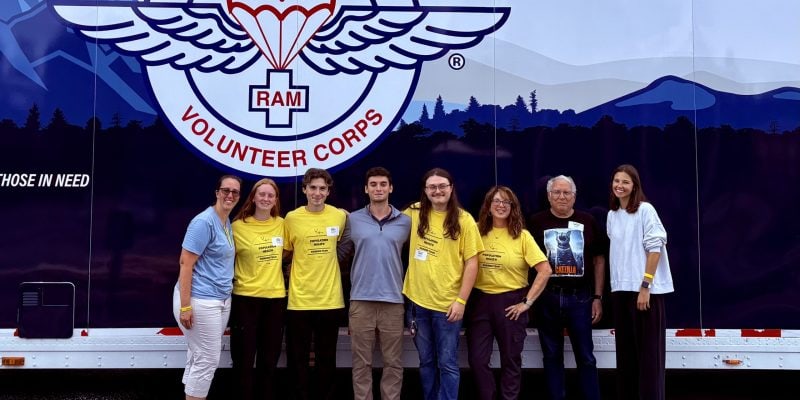
This year, BSN and Pre-Med track students from Randolph-Macon were once again part of filling that need, alongside volunteer providers offering two full days of care, free of cost and with no insurance required.
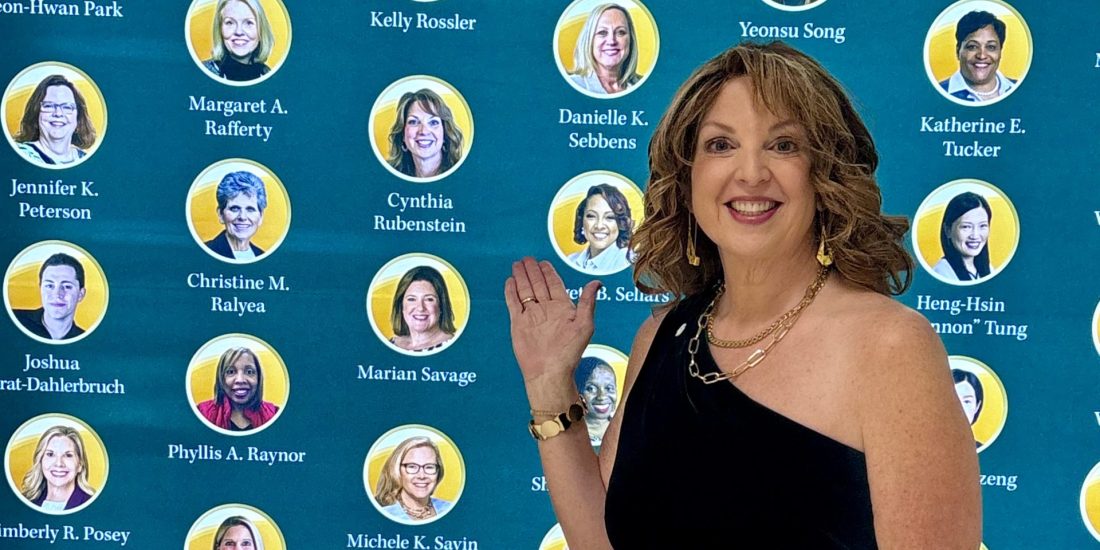
“There is a huge need,” said Dr. Cindy Rubenstein, RMC’s Director of Nursing. An Emporia native, she also serves on the leadership team for the Emporia RAM community host group. “I’ve seen people get eight teeth pulled because they’ve been in chronic pain and they haven’t been able to afford to go to a dentist. These same patients often return in subsequent years to RAM to get much-needed dentures.”
According to the Virginia Department of Health and county health rankings, Greensville County, which includes Emporia, fairs worse than most Virginia counties for population health and well-being. This includes almost double the rate of premature death as compared to the state and U.S. as a whole. For diabetes alone, 16.5% of Greensville County adults are diagnosed with diabetes as compared to 12% in Virginia and 11% in the U.S.
As part of their Population Health Immersion course, RMC BSN students helped address a unique community need for young people. With no pediatrician in the area, children and teens face barriers to get physicals for school entry and to play on sports teams. Under the direction of Dr. Rubenstein, the RMC students managed a pediatric clinic at RAM, providing operational oversight, health intakes and screening assessments, and family and patient education. In total, the pediatric clinic provided care to over 70 children and teens in the region.
“Having Randolph-Macon students at the RAM pediatric clinic is important because it creates an opportunity for community service, health education, and early career exposure,” said Takisha Carr, the Chair of Emporia Virginia Southside Remote Area Medical. “It also encourages leadership, compassion, teamwork, and an understanding of the healthcare challenges faced by underserved populations.”
Beyond service to those in need, this summer’s clinic experience helps the RMC students prepare for their future careers through a stronger understanding of the people who will seek their care. Students identified that a lack of transportation and a loss of work time and pay are frequently barriers for residents to access healthcare needs, especially those that require travel to medical specialists for management of their chronic diseases.
Lillie Puryear ’27, a Nursing major from Mecklenburg County, Virginia who participated in the course, noted that it wasn’t just her Nursing courses that served her during the clinic, but also her experiences as a Religious Studies minor. “All of our classes teach us how to interact with people from all different backgrounds,” she said.
RMC Pre-Med students also participated by upgrading a directory of healthcare resources available to patients, detailing providers in the area, the services they offer, and pricing structures. Their work before the clinic to verify and expand the information and give the pamphlet more visual appeal came to life when several volunteered at the weekend event.
“It was nice to be able to see the pay-off of everything we were doing. Seeing it on paper and seeing the pile go down as people came in,” said Greyden Bissler-Scheff ’28, an Engineering Physics major on a Pre-Med track with minors in Chemistry and Math. Greyden, along with fellow Pre-Med student Peyton Cannon ’29, will be in Rubenstein’s Project-Based Learning Honors course during the upcoming January Term, further collaborating with the Emporia RAM community host team to strengthen and expand clinic offerings in the future.
What struck Rubenstein and the students was the outpouring of gratitude from the clinic’s patients. Many people may have some sort of medical insurance coverage, but the RAM clinic can help fill the gaps for dental, vision, or preventative care. Roughly half a million dollars in free healthcare was provided across the weekend, including lab work and mammograms to screen for disease.
“There’s a lot of hidden chronic diseases that are uncovered with the RAM clinics,” Rubenstein said. “I was on the team to review the labs this year and out of almost 50 patients with labs drawn, there were only two with completely normal results.”
In addition to providing a much-needed service to the community, Rubenstein also emphasizes how the experience was valuable for the students as they train for future medical careers.
“It gives them the opportunity to see the impact and the needs in the underserved areas,” she said. “While our BSN curriculum is founded within a framework of social determinants of health, this experience provides the environment to build an awareness of the impact of those determinants on the community’s health.”
“I think the experience that comes with that kind of thing is pretty immeasurable,” Bissler-Scheff reflected. “Being in the environment where it’s just a one-on-one patient-provider experience, being able to form a relationship like that.”