

Legislative Visits in J-Term Course Aim to Demystify Virginia Politics
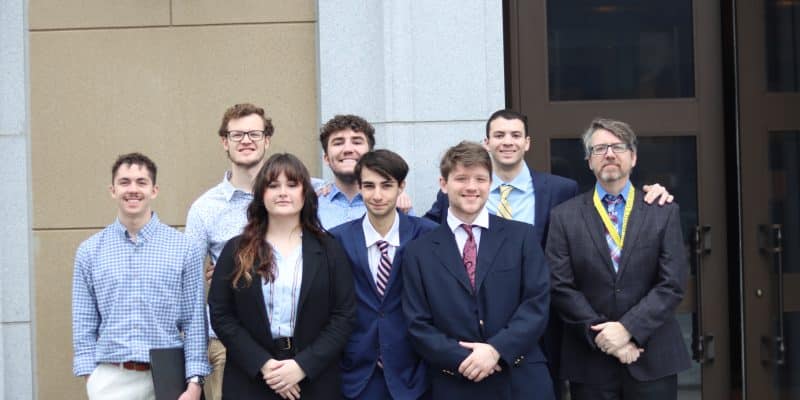
The early morning air is charged with anticipation on a rainy Thursday as the RMC van, driven by political science professor Rich Meagher, heads to the Virginia State Capitol building in Richmond. It’s the students’ fourth trip to the capitol as part of the hands-on learning that is central to Meagher’s January Term Virginia Politics in Action course.
The class is designed to delve into the intricacies of Virginia politics and policymaking while offering students a first-hand opportunity to engage with the democratic process during Virginia’s winter legislative session. Meagher is passionate about empowering his students and believes the course helps break down barriers to understanding. “I love demystifying the state legislature for students,” he explained. “This class helps them to see that their representatives are people trying to make good decisions and that they – the students themselves – can play a role in those decisions.”
Through his course, students not only gain insight into the inner workings of government but also realize their potential to influence and shape the policies that impact their lives and communities.
“My favorite experience was meeting with Senator Ghazala Hashmi’s legislative assistants because they were very encouraging of our advocacy and expressed their support for the bill,” Rose Lumpkin ‘24 reflected.
The course also challenges the conventional focus on national politics, urging students to recognize the significant influence of state governments. In his lectures, Meagher emphasizes that while national headlines capture our attention, state-level decisions often have a more direct impact on citizens. Further, the capitol visits encourage students to explore effective techniques and develop practical skills for advocating policy issues through an applied advocacy project.
Divided into groups, students spend the first two weeks of J-Term selecting a bill currently before the Virginia General Assembly and then developing a step-by-step plan to get that bill enacted or defeated. They put their plans into action over the next two weeks at the Virginia State Capitol, engaging in spirited discussions with state senators, delegates, and their staff members.
This January, students chose diverse advocacy projects on critical issues such as gun safety, improved wages for Virginia school teachers, and Fentanyl awareness in public schools.
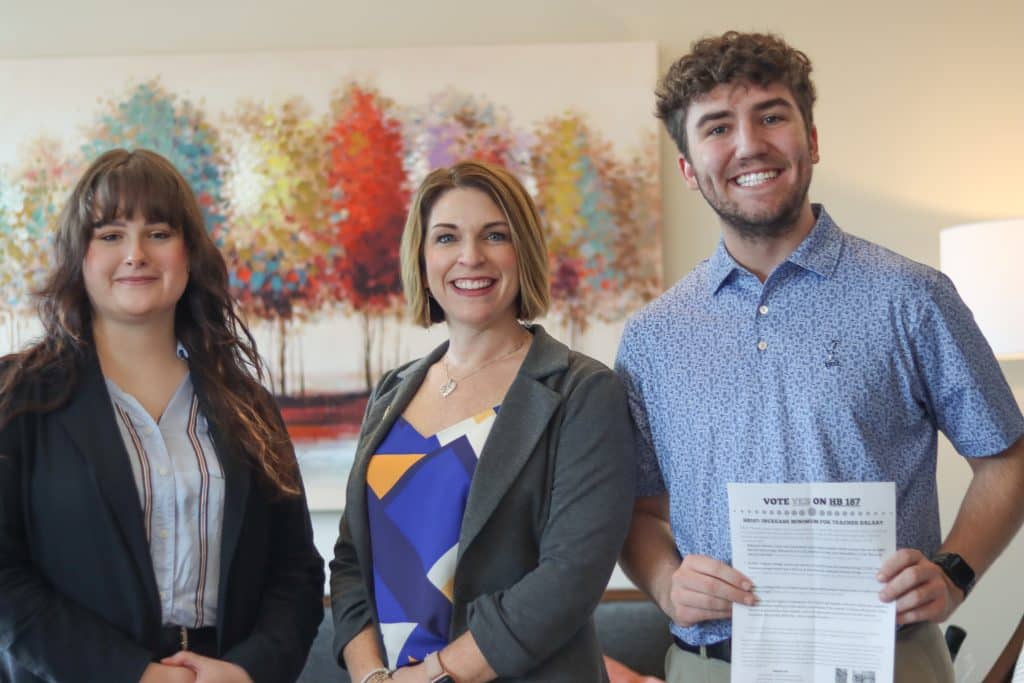
Lumpkin and Ren Hinchey ’25 chose to advocate on behalf of bills SB104 and HB187, which aim to increase the salaries for Virginia public school teachers to meet the national average. After days of walking the halls of the Virginia General Assembly and engaging in conversations with numerous individuals, the two reflect on the impact of their advocacy. “Our group had a very positive experience when advocating for our bills,” the pair noted. “Legislators are beginning to understand the reality of our public schools across the Commonwealth and understand that the salary increase would improve our schools, teacher retention rates, and the overall learning environment for our future generation of students.”
This firsthand engagement with lawmakers underscores the power of advocacy and the potential for positive change through dedicated efforts within the democratic process. Vincent Payne ‘25, whose group endorsed bill HB351, mandating locking devices for firearms when there are children 14 or under in the home, reflected on his experience engaging with legislators. “I was surprised at how polite all the delegates and legislative assistants were,” Vincent shared. “They were all willing to talk to students about our bill even if they did not support it. Overall, I am glad I gained valuable real-world experience and enjoyed my time talking with legislators and their assistants.”
Meagher hopes Virginia Politics in Action not only equips students with practical skills but also instills a sense of empowerment and purpose, ensuring that the impact of their education extends beyond the classroom. “After this course, students are more likely to engage in civic and political activity, and more likely to recognize their own power in making change happen,” he summarized. “Some of the students who took this class in the past are still working in state government!”
Hinchey, a political science major, echoes this sentiment, expressing gratitude for the opportunity to become a political advocate. “Randolph-Macon alumni have a strong presence in our state government,” he notes, “and I plan to take advantage of the networking opportunities that are available as a Randolph-Macon student.”