

Now is the Time

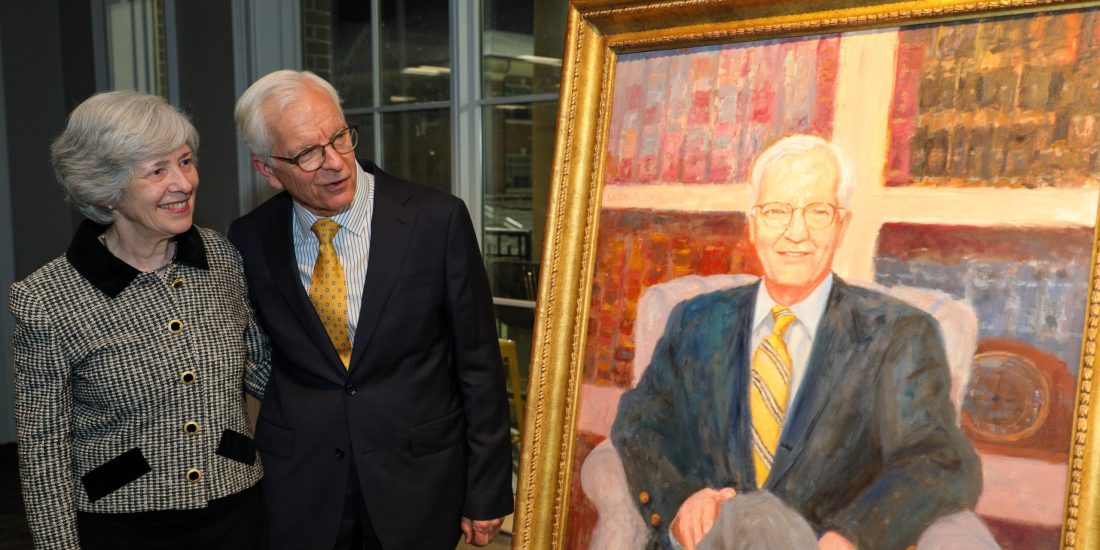
We celebrate the remarkable Lindgren Era, as President Robert R. Lindgren prepares to retire in July.
When then-Board of Trustees Chairman Macon Brock ‘64 called Bob Lindgren in 2005 to officially offer him the presidency of Randolph-Macon, he used a phrase that Lindgren would later say “reverberated” in its resonance: Now is the time for Randolph-Macon.
Those words were many things: A recognition of an opportunity. A call to action for the new president. A demarcation of a promising new era.
Lindgren, who had served 11 record-breaking years at The Johns Hopkins Institution as its Chief Development Officer, was a non-traditional choice for the presidency of a small liberal arts college. He brought experience from two much larger and more well-known institutions—the University of Florida and Johns Hopkins—where he had distinguished himself as an expert in resource development and earned a reputation as a man on track to lead a college.
“I went to see my friend [Johns Hopkins President] Bill Brody. I sat down with him and asked, ‘how do we find a good president?’” explained then-Trustee Ben Schapiro ‘64, who was serving on RMC’s search committee. “He said, ‘go meet Bob Lindgren. I will introduce you because he wants to be a college president.’”
Schapiro says, and many others felt, they were very lucky to have found him. Once appointed at Randolph-Macon, Lindgren assumed the mantle of an institution with 176 storied years and took seriously those prescient words from Macon Brock. Now is the time.
The average college president serves just four years in the job, and, of course, no one could have known that President Lindgren would serve nearly two full decades at Randolph-Macon. But, from the beginning, he approached the work in a way that foreshadowed it becoming a legacy. He took time to learn RMC’s history and rhythms. He built deep connections with faculty and staff, alumni, and friends of the College. Together with the Board of Trustees, he imagined transformative change that would take decades to unfold.
“The Student’s President”
Lindgren and his young family moved to Ashland from Baltimore in fall 2006 and quickly began acclimating to small college life. From the start, he says he saw the close bonds between faculty and students as a tremendous asset of the institution.
He too began to build close bonds with students, opening the doors of the historic President’s House to meet with athletic teams and student groups. Vice President for Advancement Diane Lowder, whom he hired to the Cabinet in 2007, recalled touring campus before she joined his team at Randolph-Macon. “I was so struck by how he called basically every student who passed by name,” she remembered.
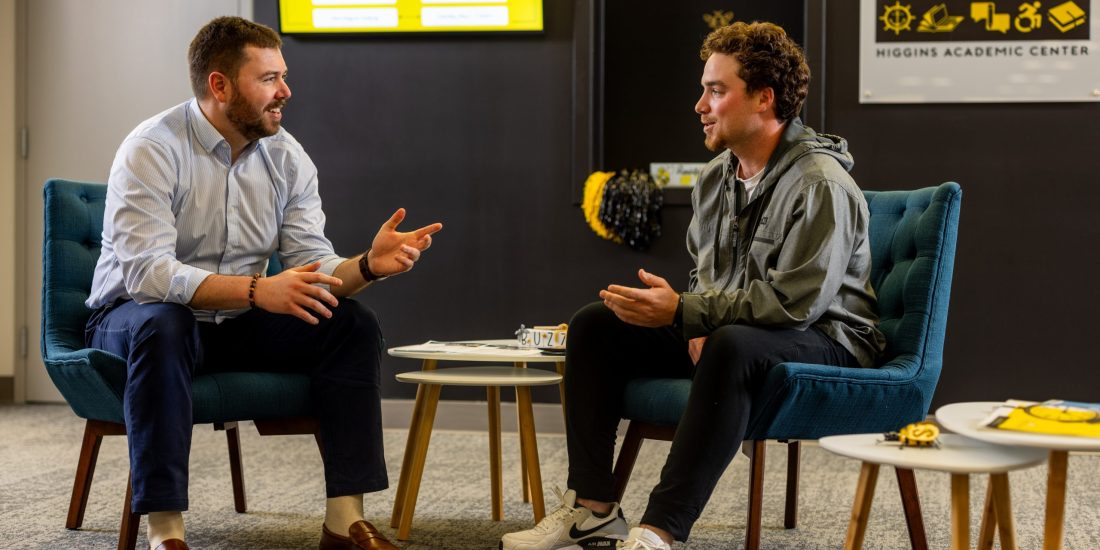
Those early events in the President’s House evolved to become “Freshmen Desserts” with which Lindgren created an opportunity for every single new Randolph-Macon student to meet the president. Andrew Lamb ‘24 noted the impression his visit to the President’s House made on him. “I was deeply moved by the fact that you took time to pray with us and share a meal. But what truly stayed with me was when you sat down afterward and spoke with me about my future plans. In that moment, you made me feel seen and welcomed—not just as a student, but as a person with a future worth investing in,” Lamb wrote to President Lindgren in 2025.

A Vision for Transformation
A significant part of Lindgren’s vision for the College was growth, and, first things first, he saw the need to improve facilities. A master plan, approved in 2009, outlined a vision for reinvigorating the campus with renovations and new buildings—all fashioned around the idea of accommodating a larger enrollment. The master plan’s ambitious goals were reiterated and enhanced by a collaborative strategic planning process that involved faculty, staff, trustees, and others in creating a vision document called “Now is the Time,” published in 2009. The strategic plan layered in a vision for growth of the academic program and a focus on student outcomes that eventually led to the Edge Career Center.
These long-term visions led to new dorms—first Andrews Hall and later Birdsong Hall—and the reinvigoration of the campus core by replacing the old Brown Campus Center with Brock Commons. Some of the most significant changes reorganized the athletic fields, including moving Smith Street and turning the football field from its east/west orientation at the southern end of campus to create Day Field for football and lacrosse and later Hugh Stephens Field at Estes Park for baseball.
“Truly successful visionary leaders are rare, but Bob Lindgren demonstrated how to be such a leader from the very start,” explained former Board Chair Alan Rashkind ‘69. “He was in love with the RMC people, community, and location on his arrival, but he recognized that the College campus suffered from a tired look. It was no small thing to revitalize it, but he did it, all without jeopardizing any of the charm of our beloved campus nestled beneath those oaks and maples.”
Alumni Engagement and Support
Just as he’d engaged students, Lindgren also made connecting with alumni a major priority. He visited Yellow Jackets around the country and shared his vision and the early progress. Many alumni who had not been engaged found new reasons to rediscover Randolph-Macon. “It had been 30 years since I had been back to Randolph-Macon. Why was the President calling me?” laughed current board member Mary Lynn Reed ‘80, who found herself being drawn in.
The College began a major fundraising campaign, quietly at first, and then publicly. The President and the Office of Advancement made participation in giving a major goal, emphasizing that every gift mattered, no matter the size. Something was happening, and alumni wanted to be a part.
With lead donors Macon and Joan Brock at the forefront, the College set a goal to raise $100 million. By the time the campaign was over in 2015, they had blown past that goal with $125 million committed. The campaign capstone was a new science building, with state-of-the-art lab equipment, called Macon F. Brock, Jr. Hall.
Ventures
Even after the official end of the campaign, the work of transformation continued. The James L. Miller Professor of Political Science and Dean of Academic Affairs Lauren Bell describes an evolving vision. “He was almost single-mindedly focused on articulating a vision, meeting that vision, and then refining it and meeting it again,” Bell said.
In 2017, Lindgren and Macon Brock developed the idea of an incubator, like one might find in business. Brock would help to establish the $35 million Brock Venture Fund, with which he charged the College to select and invest in new ventures that would help to continue enrollment growth. With the Brock Venture Fund, RMC invested in show choir, orchestra, nursing, engineering, criminology, and more.
Enrollment grew significantly and steadily from fewer than 1,200 students in 2006 to more than 1,650 in 2025.
In the midst of change came challenges. In particular, current Board of Trustees chair Sue Schick ‘84 remembers the hard choices and scary realities of the pandemic. “Bob and I had just completed a planning session in January 2020, my first as the new Board Chair. Those plans went totally out the window in March 2020,” she said. “It could have brought us down but he kept his focus on supporting our community. We were making very fast decisions, but he felt like a sure hand at a really difficult time.”
The Moment of Connection
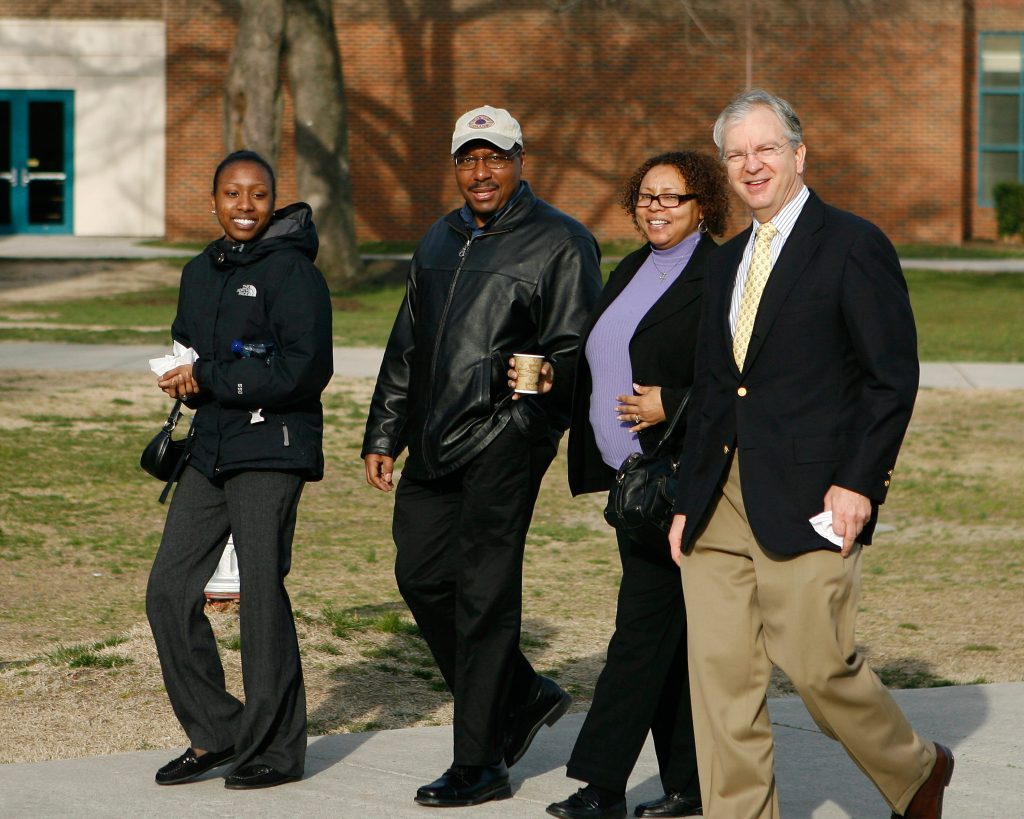
Those who were part of the 2005 presidential search committee that hired President Lindgren recall a telling moment that occurred during their first round of candidate interviews. As the committee introduced themselves to the would-be president, one-by-one, it became clear that he already knew who they were. He had researched each member of the committee in advance and referenced their role or their background as they went around the room. “No one else did that,” remembered Dean Lauren Bell, who served on the committee. “We knew from the time that the interview started that he had taken the time to do his due diligence, not just about what the college was about, but about who we were as people.”
That personal engagement is a throughline of his presidency. Each holiday season, he writes personal notes to approximately 1,200 faculty, staff, and friends. He personally interviews each prospective faculty member. Each winter, he calls recipients of scholarships to congratulate them on their admission and encourage them to join the Yellow Jacket community.
Catherine Kagey ‘25, who comes from a family of Yellow Jackets, remembers seeing President and Mrs. Lindgren each year at the ODAC Basketball tournament in Salem. “He would shake my hand and tell me, ‘I cannot wait for you to be a Yellow Jacket!’” she said.
Lowder, who has partnered with him on hundreds of visits with alumni and friends of the College, marvels at the depth and authenticity of his preparation. “He wants to know not only that they have three children, but their names, and what schools they are in, and if they are considering Randolph-Macon,” she said.
She also commends the tough moments in which he quietly shows up, at the bedside of a student in the hospital or by calling in a favor to refer a sick friend of the College to the very best doctors. She has attended dozens of funerals alongside Lindgren, who believes—thanks to the sage counsel of former trustee Doug Dalton ‘70—that it’s “important that you show up. It’s important that you show your respect.”
Former Board Chair Alan Rashkind was touched by how deep his attachments are. “Everyone knows that Bob makes it a priority to attend every RMC student event he can possibly attend. But perhaps not everyone knows how sad he can become about “senior day,” which means he will very soon have to say goodbye to student-athletes he’s cheered on for four years,” he said.
“Believe in the moment of connection,” Lowder said. “While it’s no longer our tagline, it’s an authentic part of his DNA.”
Time Marches On
As the accolades have poured in over Lindgren’s final year, many have watched him skillfully deflect the praise that’s come his way, sincerely redirecting to remind us of all those with whom he has partnered.
“He gives credit to everyone else,” remarked Schick. “And, of course, he is right that so much of what Randolph-Macon has accomplished has been the work of many hands. But it was his leadership.”
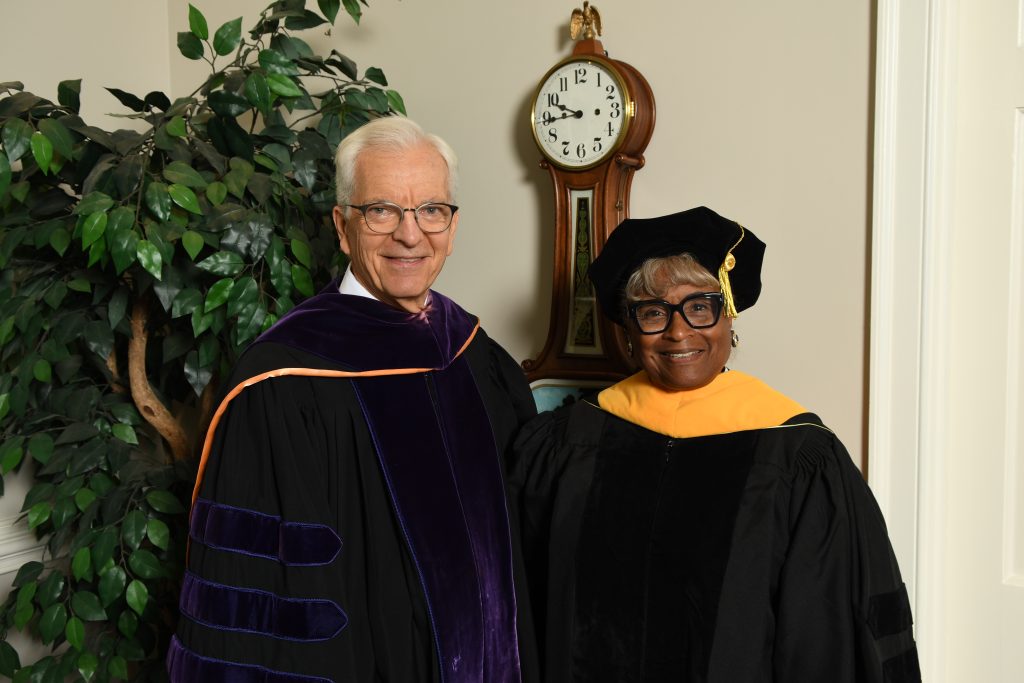
As he looks toward the next chapter in Randolph-Macon’s story, Lindgren has recently begun invoking the phrase, “now is the time” in speeches, setting the stage for another exciting new era. It’s especially fitting now, because Bob Lindgren is and was a man fascinated by clocks. His collection of timepieces, which has grown during his two decades in Ashland, includes many old antiques that require an expert clockmaker to service them. Complex and intricate, finicky at times, certainly he knows that they tick best with just the right kind of human intervention.