



Leaning In: What I Learned Volunteering at RMC Edge Boot Camp

I first heard about Randolph-Macon College’s Edge Boot Camp from a local business owner who had volunteered in the past. I was excited to learn more about the program, especially after I saw the agenda. It immediately brought me back to early in my HR career, when I was invited to a final interview that included a business lunch. I’d already been in the working world for a while, but it was my first time realizing that dining etiquette could be part of the “interview.” Thanks to my teenage years spent working in fine dining, I knew which forks to use, but it was still a brand-new experience in my professional life.
The RMC Edge Boot Camp gives students a chance to practice professional presence in two different settings: an etiquette dinner with a pre-networking event, followed by mock interviews the next day. Volunteers can participate in one or both, and I’m thankful I chose to do both!
As an HR consultant, I hear it from organizations across all industries: it’s hard to find talent. I also hear grumbling about Gen Z graduates as employers continue to span four generations in the workforce. One thing I think we can all agree on is this: if we want talent to grow and understand professional expectations, we have to show up and lean in. In the Richmond region alone, there are 450+ colleges and universities within 150 miles! Randolph-Macon College is just one part of that pipeline, and programs like RMC’s Edge Boot Camp help students connect classroom learning to workplace realities.
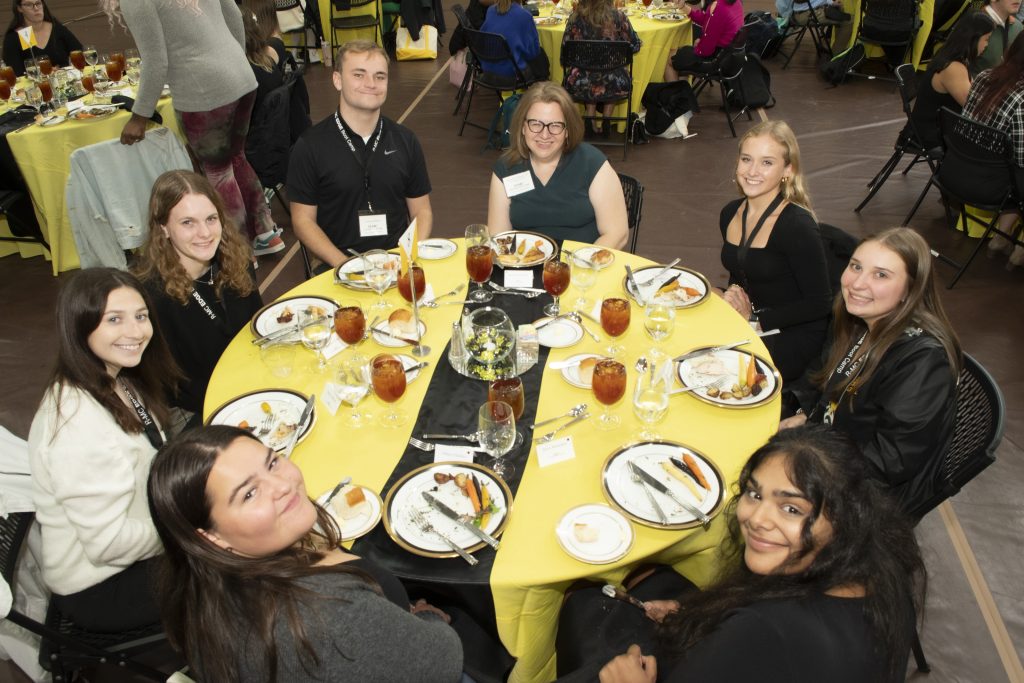
Dinner was emceed by an RMC alum, who walked us through the “ins and outs” of etiquette during a business meal—from utensil usage, passing the bread, and table conversation. One could tell there were nerves in the room, but we were all learning and engaging with the content. I even gained a new fact: when someone asks to pass the salt or pepper, pass both shakers together!
The dinner conversation was one of the stand-out moments for me as a first-time volunteer. Most of the students at my table were sophomores and represented a mix of majors, interests, and hometowns, from nursing to business administration to political science, with personal stories that stretched well beyond Virginia and across the globe. This was also where I learned this program is voluntary, which made me realize that these students were taking their futures seriously and with focused intent.
The next day, volunteers gathered for a luncheon before the mock interviews. We received packets with pre-drafted questions and our schedule of students. The entire experience was beautifully orchestrated by the RMC Edge Career Center: welcoming, organized, and informative. It was also a great chance to connect with other volunteers, including RMC alumni and local business leaders from a range of industries and career stages. Different backgrounds, same shared goal: help students walk into real interviews with more confidence and clarity.
Interviewing is a key step in securing employment at nearly every organization. It is the candidate’s opportunity to showcase their individual skills, experience, and potential. The reality, though, is that every organization approaches interviewing differently in process and tools: AI screening, applicant track systems (ATS), panel interviews, multiple rounds, virtual formats, and more. No matter the structure, candidates still need practice translating who they are into clear, relevant stories.
That’s why I appreciated that the Edge Boot Camp coaches students to use the STAR method (Situation, Task, Action, Result) for answering behavioral questions. In my interview sessions, I saw the same range one sees in real hiring processes: nervousness, confidence, and everything in between. Nearly every student brought a résumé, responded thoughtfully to the questions posed, and used the time to ask their own questions. A few even asked directly for feedback, which, speaking from an HR lens, is a strong signal of desire to grow and learn.
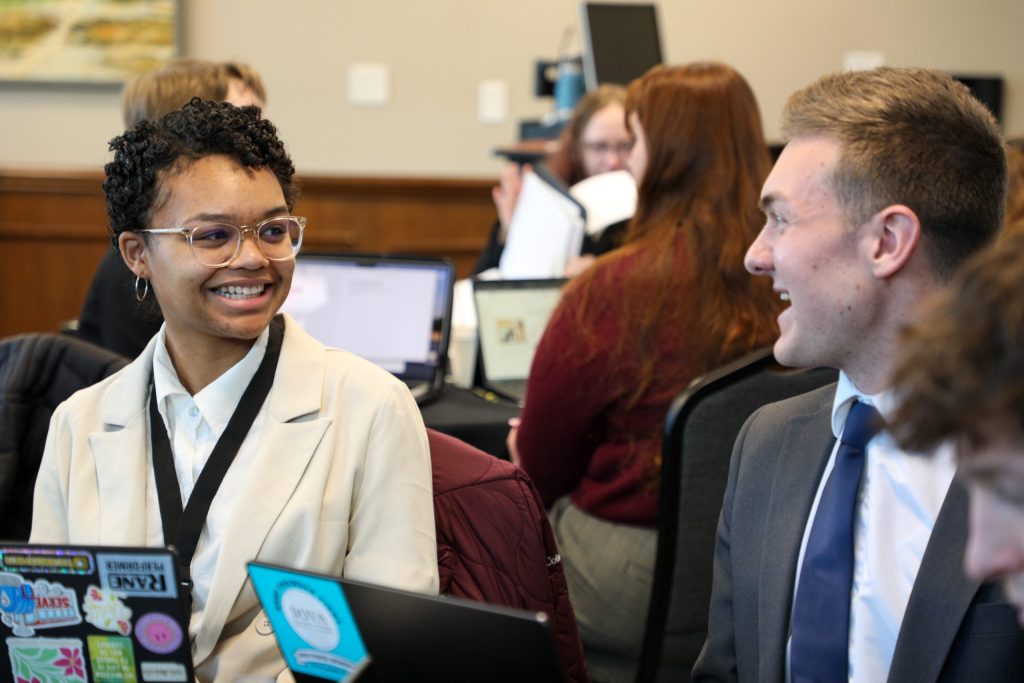
When I think about my own career path, I wish I’d had access to something like this in college. Being interviewed without the pressure of “getting the job” and sitting through a business meal without the pressure of “messing it up” would have been invaluable. I’m someone who leans on metaphors when I explain HR concepts, and I keep coming back to this one: the RMC Edge Boot Camp is like learning to ride a bike. The students still have to get on and pedal, but with a little guidance (and a little practice), they are building muscle memory that stays with them for years.
As a business leader, I know there’s never enough time in the day. That’s what made this kind of volunteering feel doable with my schedule: Edge Boot Camp only asks for a few hours to participate as a volunteer in one or both events. I also know that my clients, and many local employers, wrestle with questions about whether the next generation is “ready” for the workplace, and how we keep great talent in our region. Programs like this are often supported by alumni, but I’d challenge more local business leaders to jump in. The more we show up and invest in the future workforce, the more likely students are to walk into interviews with less apprehension, prepared to respond thoughtfully and yes, to pass the salt AND pepper with confidence!