

J-Term in the Classroom: Students Immersed in Unique Coursework
A January Term course on campus at Randolph-Macon is an opportunity for immersion. While some students took travel courses abroad or completed internships this January, the four-week period of coursework here on campus also opened new doors with an intensive focus on unique topics that are often taught only in January term. From major requirements to unique perspectives on familiar topics, here’s just a sample of the wide variety of coursework students completed in 2025.
Heroes or Villains
This honors course, taught by classics professor Rosanna Lauriola, explored heroism through the iconic and complex character of Odysseus portrayed not only, as expected, by the Ancient Greek poet Homer in his Odyssey, but also by other likewise authoritative writers, including playwrights and philosophers. Throughout the term, Dr. Lauriola asked students to consider the many questionable actions of Odysseus during the Trojan War, in its aftermaths, and during his homecoming from war. Though he’s exalted for his perseverance and resourcefulness, the students explored the ways Odysseus uses deception, manipulation, scheming, frauds and more throughout the famous epic. In this way, Lauriola asked them to explore the thin line between heroism and villainism.
The course culminated with an inventive final event: a mock trial of the hero Odysseus, using the evidence of the literary texts. “The ‘verdict’ is to be given in the final that takes the format of a mock trial, with students playing specific roles—from the prosecutor to the defense attorney, witnesses, etc.—impersonating the mythological characters involved in Odysseus’ life, ” Lauriola explains. “For each of their roles, they prepared and read a script, arguing and debating the pros and cons regarding all the events in which Odysseus was involved, whether gloriously or questionably.”
While examining the morals of one of literature’s most famous characters is an exercise of merit on its own, it also provides a framework for students to apply beyond epic Greek poems.
“Though this course is mainly centered on Odysseus, I feel it does a good job at training people to look at multiple sides of a character or topic,” said Carson Triplett ‘26, a computer science and cybersecurity double major. “The course provides a valuable lesson on looking at events in context to the environment or age they were made in. This allows for a better understanding behind the reasoning of some actions, even if we might not agree with them.”
U.S. Intelligence
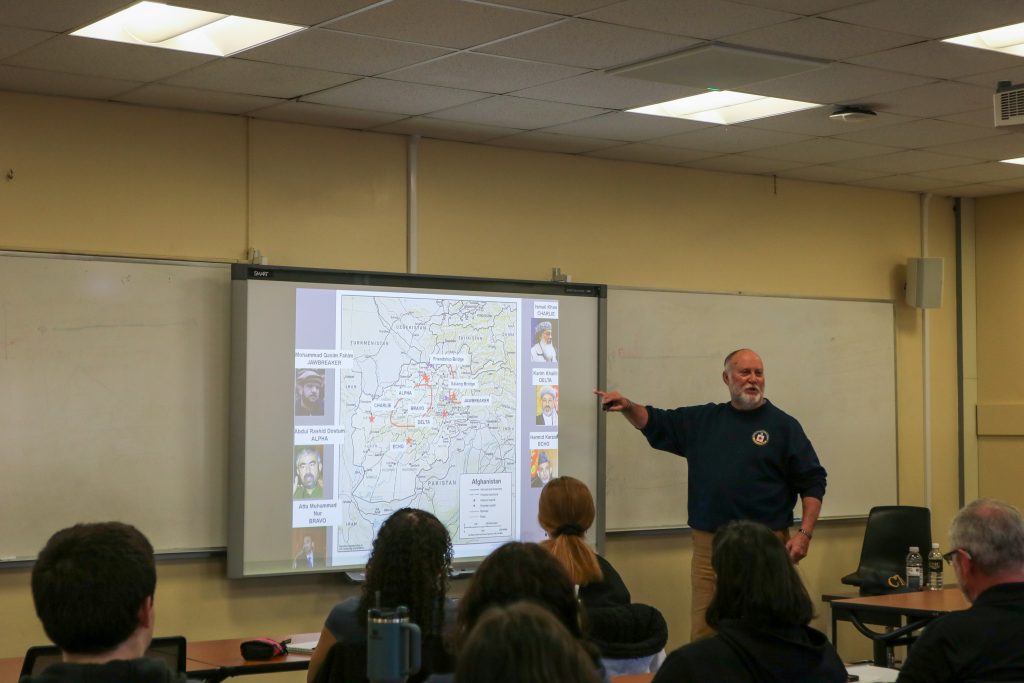
Secrets, intelligence, and spies—the world of espionage is often shrouded in mystery, but in Dr. Tom Badey’s U.S. Intelligence course, students uncover the reality behind the covert operations that shape global affairs. This political science course provided students with an in-depth examination of the history, structure, and function of intelligence agencies in the United States since 1947, and emphasizing the role of intelligence in foreign policy decision-making.
“The course emphasizes the development of critical thinking and analytical skills,” Badey explained. “Students are required to frame their analyses of contemporary threats facing the U.S. in the Bottom Line Up Front (BLUF) format used by many U.S. government agencies.”
As part of the class, students had the opportunity to hear from former CIA officer Kenneth Stiles ‘81, who shared insights from his 29-year career in the intelligence community. Stiles, who specialized in GIS (Geographic Information System) and imagery analysis, played a critical role in intelligence operations, including participation in 1994 negotiations with North Korea and the development of targeting systems for post-9/11 operations in Afghanistan. “The intelligence community can teach you anything. From firearm training to any technical skill, but the ability to write critically and cohesively is something you need to bring with you—and that is something that RMC will teach you,” Stiles said.
Structure & Symbols of Spanish

Dr. Laurie Massery’s Structure & Symbols of Spanish is the only humanities course at RMC that helps students fulfill the Quantitative and Symbolic Reasoning pillar. It’s a very different viewpoint on the Spanish language. The course starts at the most foundational level of language, sounds (phonology and phonetics), and stacks the building blocks from there, analyzing the formation of words and the structure of sentences.
“It’s really just taking it apart and putting it back together, so you can learn the different roots of the words, practice pronunciation, learn about dialectal variation, and think about the constraints on word order and sentence structure,” Massery said. “It’s a really great course that gives students the opportunity to examine language from a technical perspective. It is also a good course for future teachers who want to think of ways they can present language to their students.”
“This class was different then other Spanish classes as it went in depth to why the language is spoken and written the way it is,” said Chesnea Anderson ‘27. “The way we use language within society is different than the way we write formally. Structure, words, definitions, and even the way we use certain terms changes.”
“It also allows students to make comparisons between English and Spanish, and even other languages. Sometimes I’ll highlight why students will make errors, or where native Spanish speakers tend to have a different perspective,” Massery explained. “It’s a tangible way to look at language and I think it’s a nice way to give other options to students.”
Popular Culture
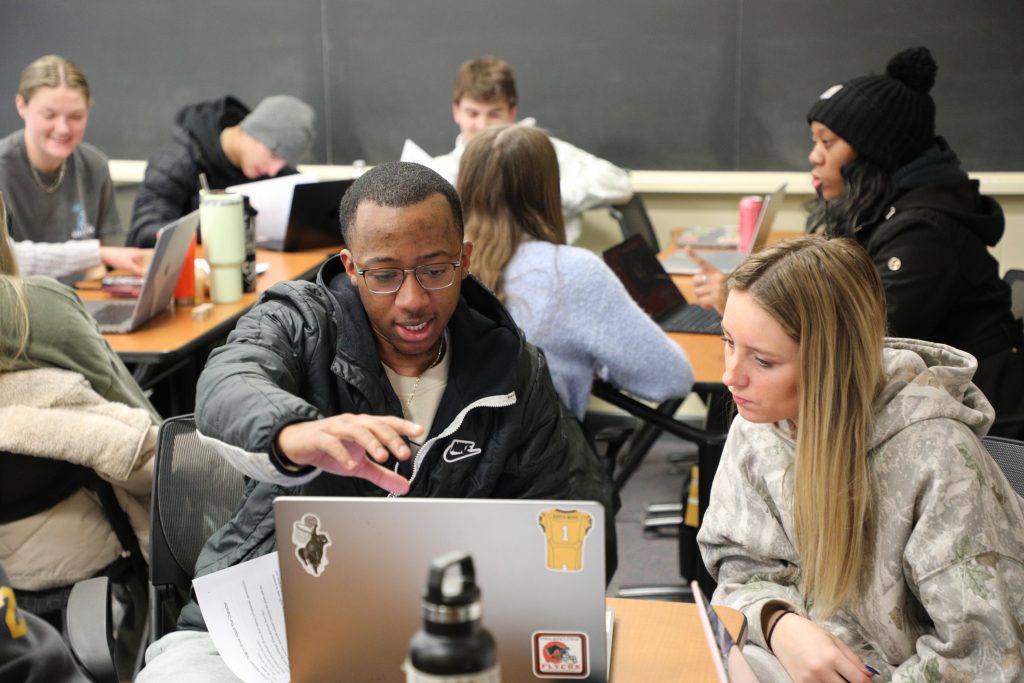
In this sociology course taught by adjunct faculty member Heather Heckel, students tackle a host of sociological phenomena—race, class, gender, sexuality, disability, and global perspectives—through the lens of popular culture. Many students who enroll in the course are not sociology majors, so the familiar subject matter serves as a natural introduction to those broader themes.
“The things that are in our popular culture tend to be a reflection of our society,” Heckel said of why pop culture is a good format for sociological concepts. “It’s an easy way to meet students where they are. People like to talk about music, movies, TV shows, and books. Talking about these issues of race and class and gender using something that they’re very familiar with, but is removed from their own personal lives, makes it a little bit easier for students to discuss.”
The course produces some interesting discussions, like analyzing the portrayal of non-white actors on TV Guide covers from 1953-1997. Perhaps the most unique assignment requires students to watch a blank TV screen for 30 minutes and write about their experience. Not wanting to give any trade secrets away, Heckel noted that “I find the students actually get a lot out of it.”
Basic Crime Scene Investigation
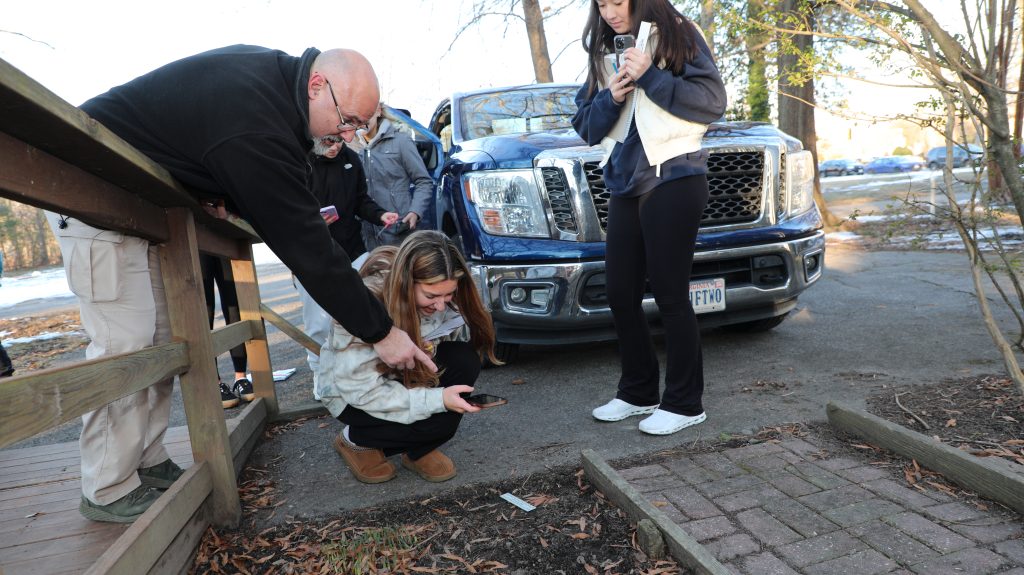
Basic Crime Scene Investigation provided students a real-world glimpse into what it means to be a crime scene investigator. The course was taught by Adjunct Professor of Criminology John Carter, who serves Henrico County as a detective in the Criminal Investigations Section, General Investigations.
“The class is designed for those interested in criminal justice careers but specifically in crime scene analysis,” Carter explained. “We discuss different types of evidence, how to identify, document, and recover the evidence using approved methods, and what this evidence tells CSI’s assisting in developing theories of crime.”
In addition to lectures, students also learn through hands-on experiences. They practiced crime scene photography, collected and documented fingerprints, investigated impression evidence (such as that left by footwear or tire treads), and made scale diagrams of crime scenes.
“My hope is that the students come away with a basic understanding of what it means to be a crime scene investigator,” Carter continued. “And to foster an interest that may lead to a career in the field of forensic crime scene analysis, both in the field and in a laboratory.”