

Chemistry Professor Awarded National Science Foundation Grant
Randolph-Macon College Chemistry Professor John Thoburn was recently awarded a grant from the National Science Foundation (NSF). The $319,387 grant will fund Thoburn’s project, “Synthesis and Host-Guest Studies of Face-Capped Metal-Organic Cages.”
Gratitude
“I’m honored to receive this grant,” says Thoburn. “Over the years I have received generous support from RMC in the form of awards from the Chenery Research program and sabbatical support from the Rashkind Endowment, as well as support from the chair of the Chemistry Department. I’m glad to be able to ‘pay it back’ through the NSF grant, a part of which goes straight back to the college. The RMC grants served as ‘starter’ grants that allowed my research team—RMC students—to generate preliminary results that anchored the NSF proposal. Those initial results are the requisite steppingstones to a successful NSF grant.”
The Research
Thoburn’s research centers on how small molecules can spontaneously self-assemble into larger molecular complexes of higher order. Specifically, he is building cubic container molecules that can encapsulate other molecules.
“Potential applications include their use as capsules for the delivery of drugs to target organs, where they can be selectively released,” explains Thoburn. “To realize those applications, I am working with my team of RMC students to study the underlying basic science of these molecular cubes to address questions such as how the molecular cubes open and close to catch and release their guest molecules, and how the guests can be used to probe of the interior structure of the cube.”
Community Outreach
In conjunction with the grant, Thoburn will partner with Richmond Community High School (RCHS) to mentor college-bound high school students from economically and socially disadvantaged backgrounds.
“The fastest growing demographic group of potential college students comes from under-represented and under-served communities,” says Thoburn. “To prepare those students for success in college, and to prepare RMC for the future of college education, it makes sense to integrate high school students from these communities into our Schapiro Undergraduate Research Fellowship (SURF) program. I see our nascent partnership with Richmond Community High School as a win-win for everyone. My efforts are one of several RMC initiatives to reach out to a broader demographic. In particular, I would like to mention the work of Chemistry Professor April Marchetti and her collaborators on the Pathways to Science (Caminos a la Ciencia) program.”
Partnerships + Next Steps
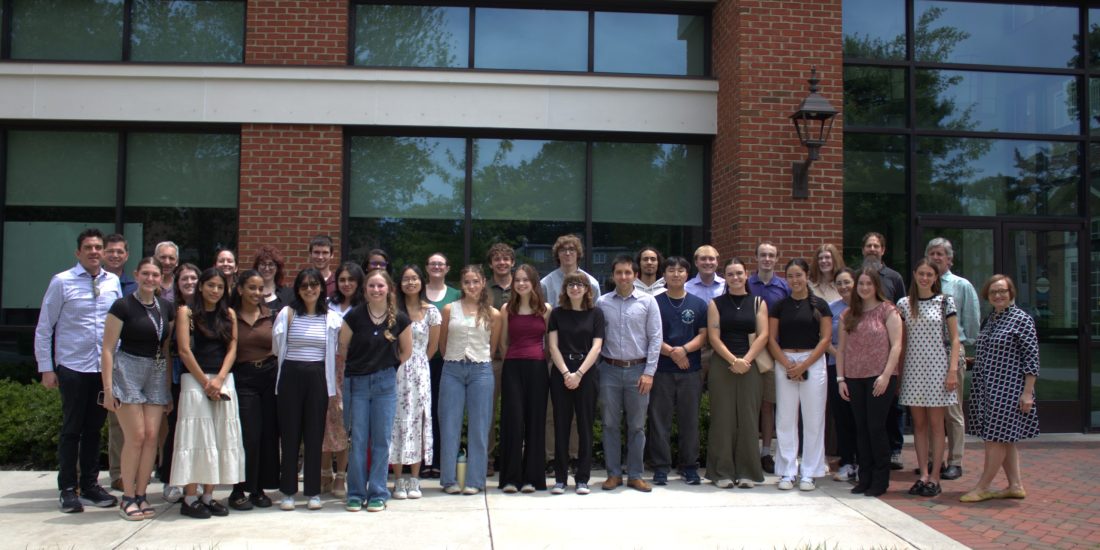
Each RCHS student will be paired with an RMC student. They will work together as a team on the RMC student’s SURF project, with Thoburn serving as advisor to both. Mentoring goes beyond just teaching laboratory techniques, notes Thoburn.
“It means priming them for the next step, whether that’s college or graduate school,” he says. “In the lab we have a chance to talk informally about what to expect next: the ins and outs of applying, which courses are a ‘must-take,’ what to look for in a research advisor, and how to set up peer networks. Having the high school students work one-on-one with the undergrads offers additional advantages: Our students have more ‘insider’ information about college than I do, and it’s an opportunity for them to practice their leadership and teaching skills.”
A Unique Collaboration
Thoburn’s project also includes collaborative research with Cambridge University.
“Most of the research will take place at RMC because our laboratories are well equipped for this project, especially with our two NMR spectrometers and the X-ray diffractometer,” says Thoburn, who for 10 years has collaborated with Cambridge University Professor Jonathan Nitschke. “However, there are a few unusual pieces of equipment we don’t have, like an electrospray mass spectrometer, that we will have access to in the laboratory at Cambridge. Just as important is the international experience for our undergrads, who get to work at a top-tier research institution that will nicely augment their
RMC experience.”
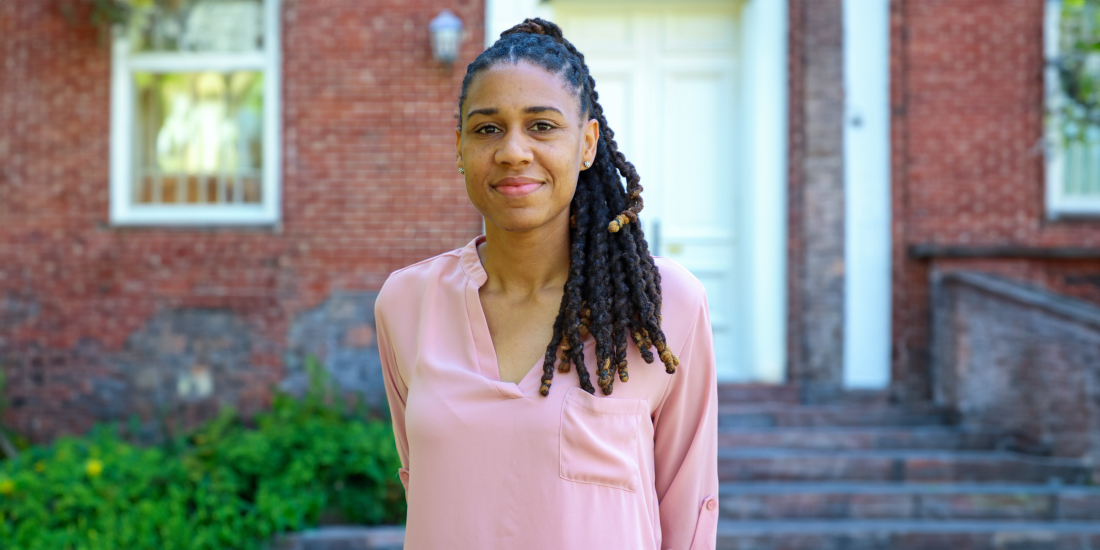
John Thoburn
Thoburn, who earned his B.S. from Haverford College and his Ph.D. from University of California, San Diego, is in his 17th year of teaching at Randolph-Macon College.