

Bilinguatherapy Internship Brings Psychology and Spanish Together
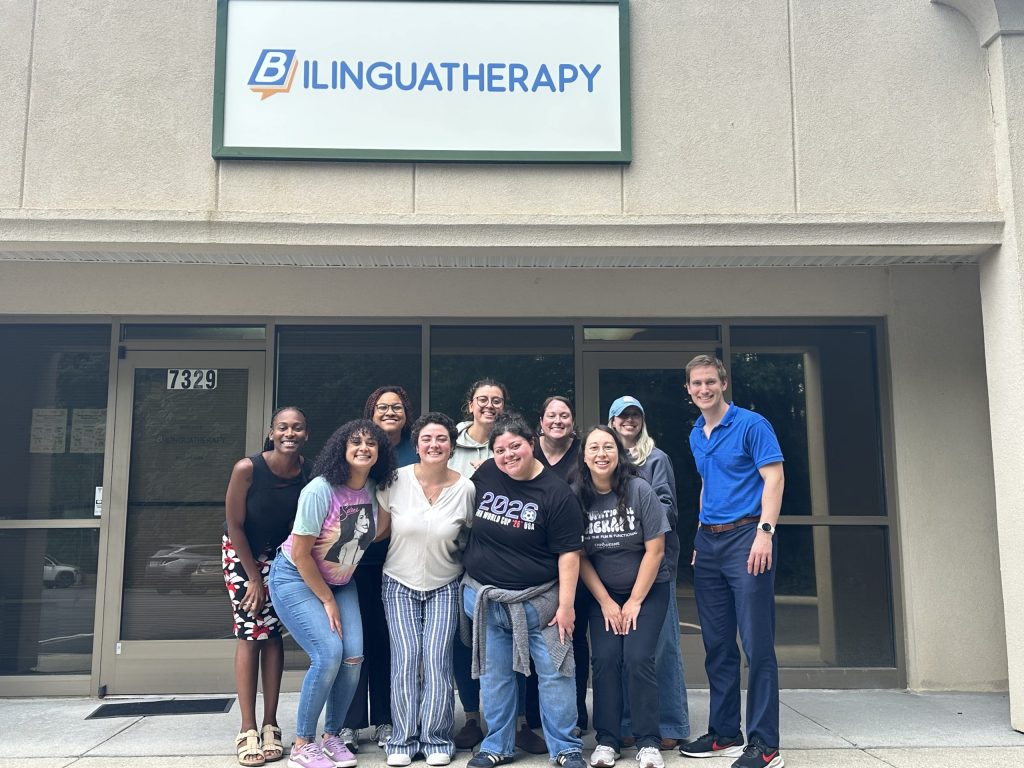
When children play, they stretch their imaginations and learn from each other. But this summer, Psychology major and Spanish minor Valentina Ambrogi-Torres ‘27 is learning from their play as well through an internship at Richmond-based therapy center Bilinguatherapy.
Bilinguatherapy creates personalized speech, occupational, and physical therapy plans that empower children and families, breaking down barriers to care for Spanish-speaking communities. As a Bilinguatherapy intern, Ambrogi-Torres explores the various types of therapy by shadowing speech, occupational, and physical therapists, and assisting by translating for and interacting with the clients.
“The way children play shows a lot about what their goals are and what they need, and we can integrate a lot of different therapeutic practices in play,” Ambrogi-Torres said. She added that activities such as molding playdough can assist with fine motor skills.
Resonating with Bilinguatherapy’s mission, Ambrogi-Torres reflected on the importance of increasing accessibility to overlooked groups, whether that be Latinos, Spanish speakers, or the neurodivergent community. “Giving that same attention to everyone, no matter who they are, whether it be Latino or not, or Spanish speaker or not—it’s very important to me,” she said. “I like that Bilinguatherapy is there, open for all.”
Throughout her internship, Ambrogi-Torres has been actively involved in the therapy sessions. She has practiced using mimicking language, talking to the children in the first person when demonstrating emotions. For example, she would say “I am happy” or “I am sad” instead of using “you” to help the child learn which personal pronoun to use when expressing their own emotions. “Then the child picks it up. They’re copying us and they’re saying ‘I’ emotions instead of saying you look sad,” she said. Working hand in hand with children’s caregivers, education, and communities, therapists at Bilinguatherapy offer support through practices like mimicking as children learn to express themselves through a language they understand.
Assisting the patients in various ways, like playing catch with physical therapy patients, has helped Ambrogi-Torres build relationships with the children, reminding her why she wants to become a therapist in the first place. “I wanted to go into therapy to help people,” she said. “It’s given me very good insight into the realities of being a therapist and the realities of social work in general, working in a public community like this and helping people.”
Ambrogi-Torres’s education at Randolph-Macon laid the groundwork for her internship success. First, her Psychology classes exposed her to neurodivergence, when the brain works or develops in a way that is not considered typical. These classes informed her about the indicators of neurodivergence as well as the physical characteristics and experiences of neurodivergent people.
Additionally, her minor helped her better understand and communicate in the Spanish language. Learning about the lack of translators in the community in her Medical Spanish class “lit a fire in me to want to be that person and want to be that translator or an accessible avenue for anyone,” she said.
“A very interesting part of the job is seeing my perspective change,” Ambrogi-Torres said.
Prior to the internship, she was interested in the field of cognitive behavioral therapy for high school and college athletes, as an RMC Field Hockey player herself. Although she remains focused on this goal, working with young children has opened her eyes to how therapy at an early age shapes adolescents. As she pursues a career that helps people through therapy, Ambrogi-Torres will remember her internship experience, having learned “the ability to stay patient with myself and others, the ability to give grace where grace is due, and the ability to stay humble and stay grateful for this opportunity, no matter what is being thrown at me.”