

An Inspired Researcher: Aftyn Trumbo ’21
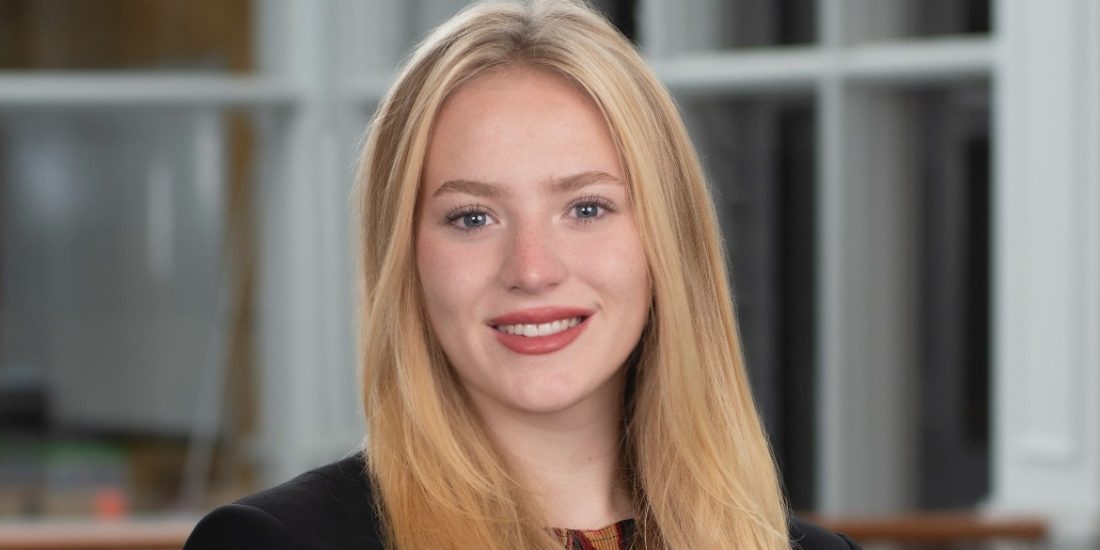
“I could talk about research all day,” says Randolph-Macon College student Aftyn Trumbo ’21. A behavioral neuroscience and psychology major and biology minor, Trumbo’s enthusiasm for research is undeniable. In 2019 she traveled to Australia, where she presented the findings of her Schapiro Undergraduate Research Fellowship (SURF) project at the International Behavioral Neuroscience Conference. And she continued that project as a second-year SURF participant.
Environmental Factors & Parkinson’s Disease
Trumbo investigated if exposure to chronic psychological stress, along with a physiological stressor, may synergistically act to create a toxic microenvironment, and if exercise can protect against this damage.
Her project, Investigating the chronic synergistic effects of exposure to the endotoxin Lipopolysaccharide and chronic restraint stress, and potential protective effects of exercise, in C57/BL6J female mice, translated into long days in a lab in Copley Science Center, where she worked alongside Psychology Professor Kim Gerecke, her SURF mentor. “This work will add to our knowledge of environmental factors’ roles in Parkinson’s disease,” says Trumbo.
Lipopolysachride is an endotoxin from the wall of gram-negative bacteria and has been shown to produce a chronic inflammatory response.
“We investigated how Lipopolysachride, in combination with chronic restraint stress—which has been shown to similarly induce inflammatory responses—produces dopamine neuron death not seen with individual stressors alone,” says Trumbo. “Exercise has been shown to be anti-inflammatory. Therefore, we investigated its protective role against the immune response and dopamine neuron death induced by this multiple stressor.”
Working with Professor Gerecke “allowed me to grow as a student and scientist,” says Trumbo. “Her vast knowledge and compassionate guidance make her a mentor I aspire to emulate.”
Busy Days
Trumbo spent much of her time in the lab staining brain tissue samples for protein markers of reactive immune cells, resiliency factors, and dopamine neurons.
“After staining procedures, I examined the samples under a microscope and captured images, from which I quantified the expression of those factors,” she explains. Trumbo hopes to present her research at a conference and publish it in a manuscript, “both of which will aid in my goal to attend a graduate neuroscience program and have a career in research,” she says.
Fellowship Award
Trumbo is a recipient of the Klein-Maloney Fellowship for Women in the Sciences. The fellowship supports students who are interested in research opportunities in the lab sciences.
“I’m looking forward to expanding my research with a project funded by the Klein-Maloney Fellowship,” says Trumbo, who chose RMC in part because of its behavioral neuroscience program. “The chance to take my multiple-stress model and investigate cannabinol’s possible protective effects excites me. I feel honored to be given this and many other opportunities to grow as a student researcher.”
Invaluable Experience
“The questions that Aftyn answered through her research yielded invaluable insights not only into how Parkinson’s disease may be initiated in the brain, but importantly, how it may be prevented,” says Gerecke. “In addition, Aftyn gained invaluable research experience, to prepare her for her goal of studying in a Ph.D. program. Her research, and her experience presenting at an international conference, set her apart from many other undergraduates and add to her impressive qualifications to make her a very competitive student for graduate programs.”
The SURF Program
The SURF program was established in 1995 through a generous endowment made by Ben Schapiro ’64 and his wife, Peggy Schapiro. The Schapiros continue to support this program, which promotes scholarly undergraduate research by students in all disciplines. Ben Schapiro has served on a number of RMC committees, including the Board of Trustees and the Society of Alumni.
In order to participate in the program, students write proposals and apply for grant money to fund their research. SURF students receive a stipend and room and board, and results of their research are presented at the annual SURF Symposium and on Research Day. Many SURF participants have presented their research throughout the United States and internationally, and some have published their work. The SURF program is co-directed by Art History Professor Evie Terrono and Chemistry Professor Serge Schreiner.