

RMC Alumnus Interviewed about Priceless Heirloom
In 2016, the family of Randolph-Macon College alumnus Mark Person ’78 donated Nat Turner’s Bible to The Smithsonian’s National Museum of African American History and Culture. The 400,000-square-foot museum, which stands on a five-acre site on the National Mall, opened on September 24, 2016.
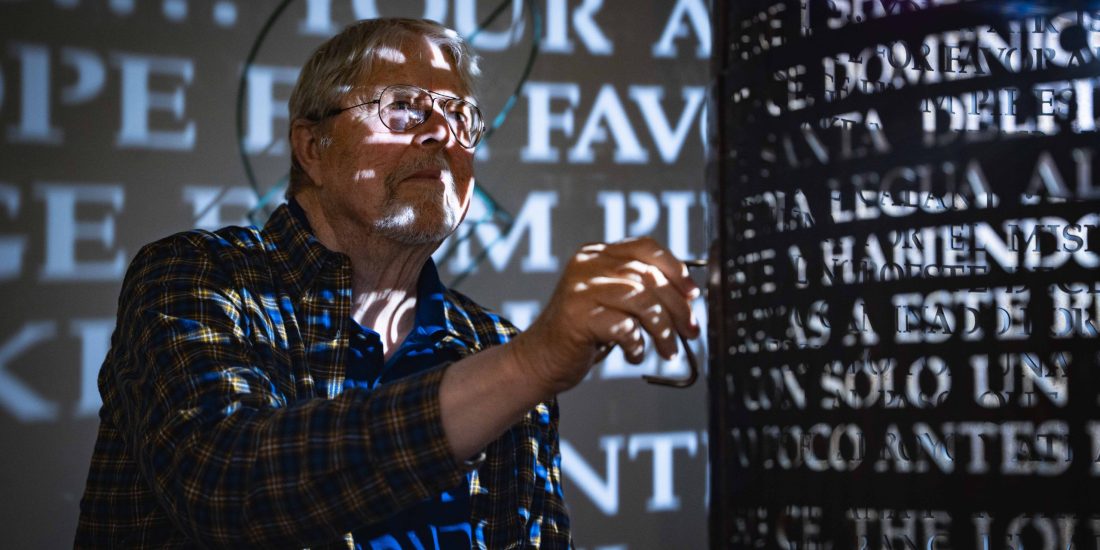
A 2019 segment of Virginia Currents included an interview with Person, who talked about Turner’s life and legacy.
Person’s ancestors had owned Nat Turner as a slave, and Turner is thought to have been baptized with the Bible on the Person family’s land. Experts say the Bible, which has been an heirloom in the Person family, could have gone for millions at auction, but Person sees donating this to the museum as an opportunity for reconciliation.
“It’s been in the family since 1912 and was kept on top of a piano, then a closet, then a safe deposit box,” said Person in an interview published in The New York Times on September 15, 2016. “I look at it as symbolic, as a way of reconciliation. We have a lot of turmoil in the country and the Bible is still significant. People have their beliefs and somehow that comes out on top even after all the struggles. I met with the Turner family two or three years ago and it was a very positive experience. They said, ‘the Bible is in the right place’ [in regards to the donation] and that solidified it. We knew in the family that it was priceless.”
Person was also featured in a segment of the September 11, 2016 edition of the CBS show Sunday Morning. (Person is interviewed at 6:42 on the video.)
Person, who majored in psychology at RMC, is a registered representative at Quest Capital Strategies, Inc. in Richmond, Virginia.
2016: RMC Commemorates 50 Years of Diversity
Randolph-Macon College celebrates its diverse community and ever-changing campus culture. September 2016 marked the 50th anniversary of desegregation at Randolph-Macon College. In 1971 the college became coeducational, and today the campus is comprised of students, faculty and staff who represent a wide variety of ethnic and social backgrounds.
(This story was originally published in 2016 and was updated on 2/18/19.)