

Advising Pilot Sharpens Focus on Exploration and Student Success

Armed with curriculum maps, degree audits, and their own growing understanding of their strengths and goals, first-year students in the spring session of Yellow Jacket Success Strategies used an April morning to put their plans for college on paper.
The class activity was the culminating exercise in a reimagined first-year advising program at RMC. These students from the Class of 2029 are the first cohort to participate in a two-semester course designed to help students through the exploration stage of a four-year phased approach to their development and success, organized around the acronym EDGE, or “Explore,” “Discern,” “Grow,” and “Embark.”
Maddie Smith, the Academic Success Advisor who is the pilot course instructor, emphasized that the goal of the exercise isn’t to lock students into a four-year course plan, but rather to help them understand the possibilities before them and the steps they can take now toward future success.
Born out of the College’s recent Strategic Plan and its focus on postgraduate outcomes, the pilot course pairs academic advising with a full curriculum of support as students transition to college. Its aim is to enhance belonging and build the foundation for a rich RMC experience that prepares them for life after graduation. Early indicators of its impact are promising, including improved first-year retention among the cohort, particularly among historically underserved student populations.
“How can we extend beyond a one-size-fits-all model and really meet every student where they are in this process?” Smith said of the philosophy behind her advising approach. “Knowing that students come to college really at different starting points, whether that be academically, emotionally, mentally, etc.”
The expanded course time also gives Smith and her educational partners more time to expand the breadth of what future success can mean to students. “A common measure is ‘What job did you get?’ And that matters, but also, how equipped do you feel to make a difference in your community, out in the world?” said Associate Dean for Academic Wellbeing Jill Grant, who leads RMC’s Higgins Academic Center and has played a key role in developing the pilot. “How do we spend the four years with them to help them figure out who they want to be, what they want to do?”
The fall semester of the pilot emphasized exploration, connecting students to campus resources, sharpening study and time management skills, and helping students learn more about themselves as college students. With that foundation, students have spent the spring semester creating a concrete resource for their next steps: a student portfolio, which consists of a resume, a four-year course plan, a LinkedIn profile, and an assessment of their personality and strengths.
Smith’s approach is a holistic one, intended to tailor support to individual students. “A lot of my advising conversations really start with ‘who are you?’ and ‘how are you?’ without even getting into the academic piece,” she explained.
In its pilot year, Smith was able to evolve the course in response to student feedback. When students sought practical guidance on financial literacy, Smith set up a “game of life” session in which they picked a job and then sought to match its salary constraints with options for housing, healthcare, entertainment, and more. When asked how they felt after they completed their “adulting” tasks, the refrain was an appreciation for “how realistic it was.”
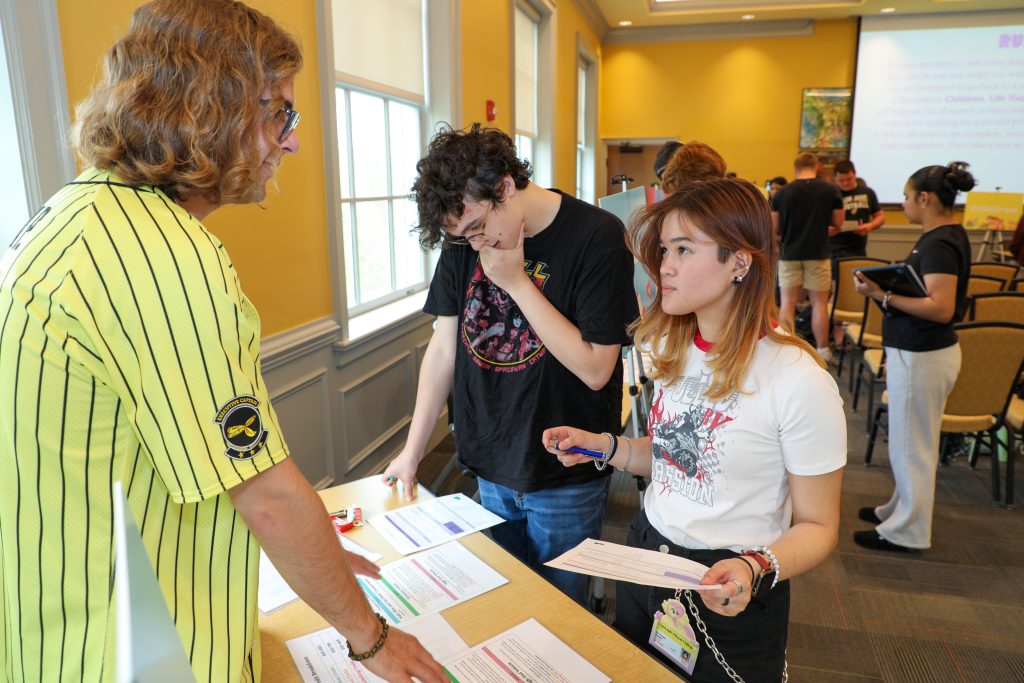
For Kaiya Wilson ’29, the value of the pilot became clearer over time. A Nursing major with a demanding courseload, Wilson was skeptical of being enrolled in an extra spring course and emailed Smith to say as much. But by the end of the semester, Wilson had applied to co-facilitate next year’s program as an Advising Captain.
“I’ve gotten so much insight on what it is to be a Macon student,” Wilson said. “I really want to be that mentor to younger students, because I’ve really appreciated being mentored by my Captain.”
The final weeks of Smith’s course are focused on the next transition—from first-year to sophomore student. She supports students with a plan to progress from exploration to discernment, with a goal of ultimately selecting a major (if they haven’t already) and with it, a faculty advisor. Major advisors serve as expert mentors to help guide students through the major, connect to experiential opportunities like internships, and ultimately, support career and graduate school planning.
“The advising relationship is an incredibly important part of the student experience, and we want students to feel supported throughout their time at Randolph-Macon,” explains LaNea Winston, Assistant Dean for Academic Advising. “This approach helps ensure students have a strong circle of support that includes an Academic Success Advisor who helps students explore and discern their path, a Captain who supports their transition and connection to campus life, and a faculty advisor who provides mentorship and guidance within their academic discipline. Together, these relationships create a more intentional and supportive experience as students grow academically, personally, and professionally at RMC.”
Winston will lead an expanded team of Academic Support Advisors who will open this course to all new students at RMC next fall.
Kaiya Wilson and the rest of her cohort will level up to the next phase of their journey—individualized paths built on an even stronger foundation.