






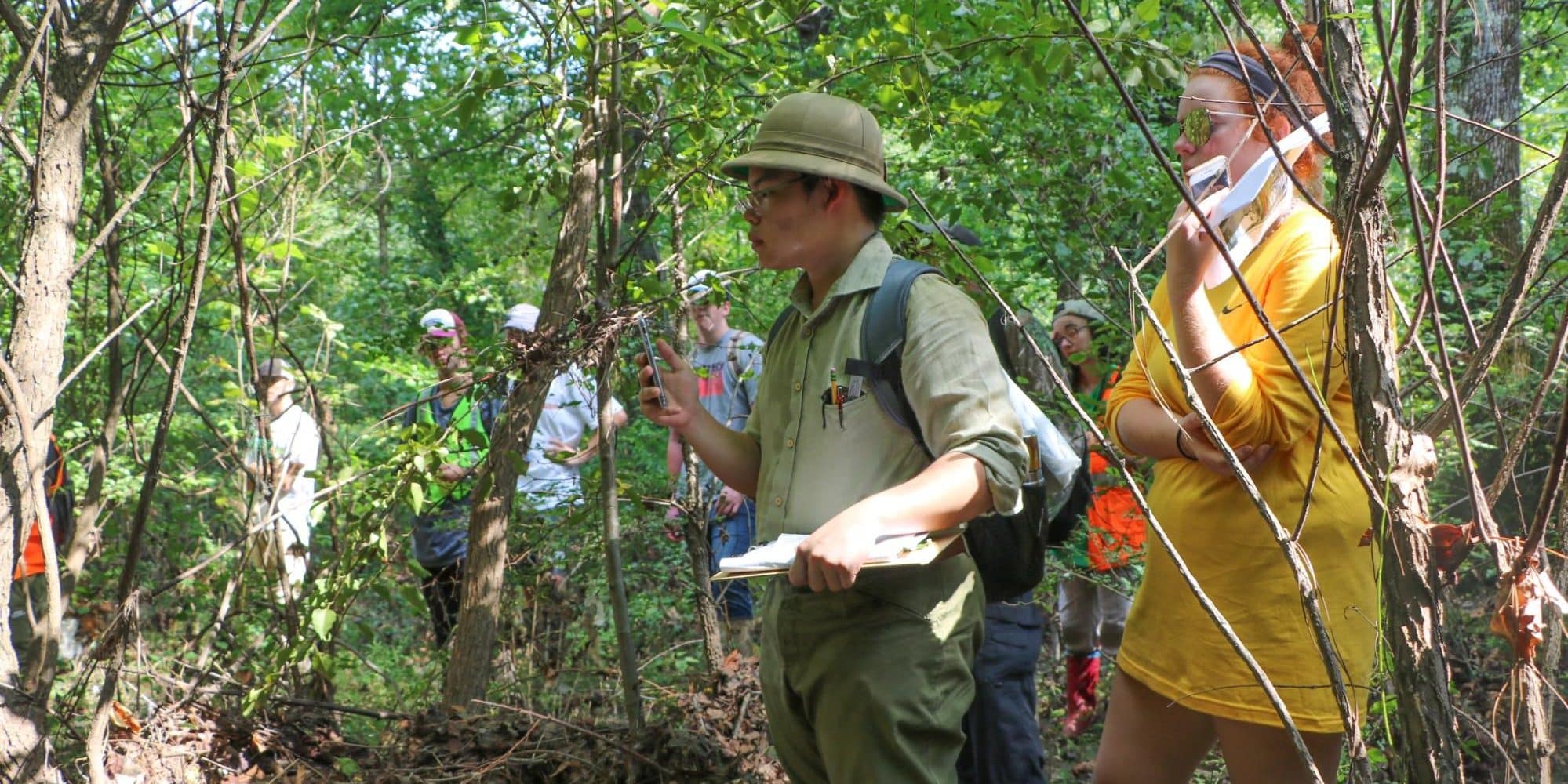
Major in environmental studies at RMC and you can start making a difference from day one. Our innovative, interdisciplinary program solves real-world environmental problems for real organizations with a one-of-a-kind series of environmental problem-solving courses. With professors as project managers, students work alongside peers to tackle current environmental issues for real clients. In addition, the major gives you the flexibility to specialize in a specific environmental pathway, ranging from biology to law to ethics (and anything in between).
Major Environmental Studies
Environmental STudies
up close In and Beyond the Classroom
Hands-On Learning
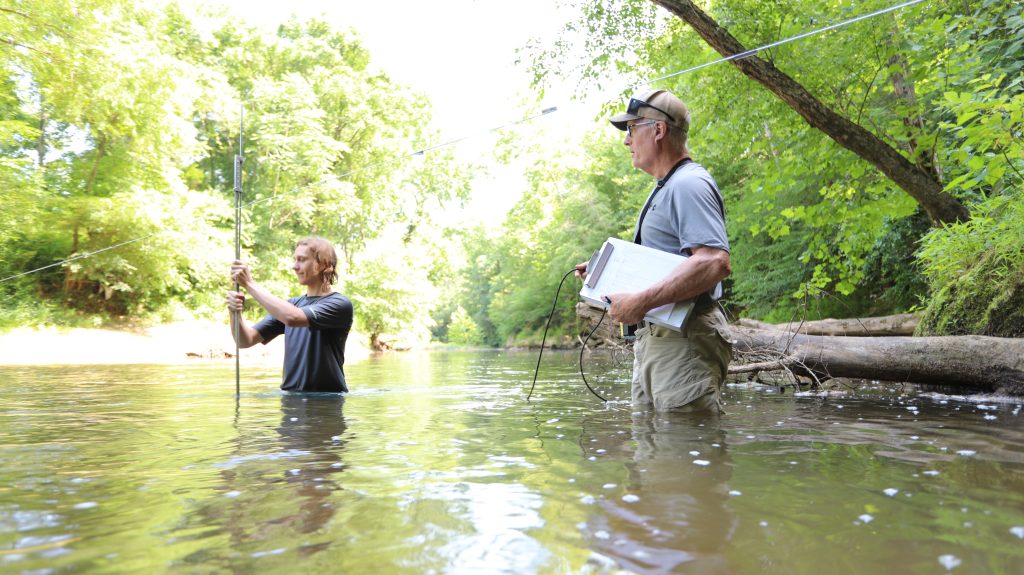
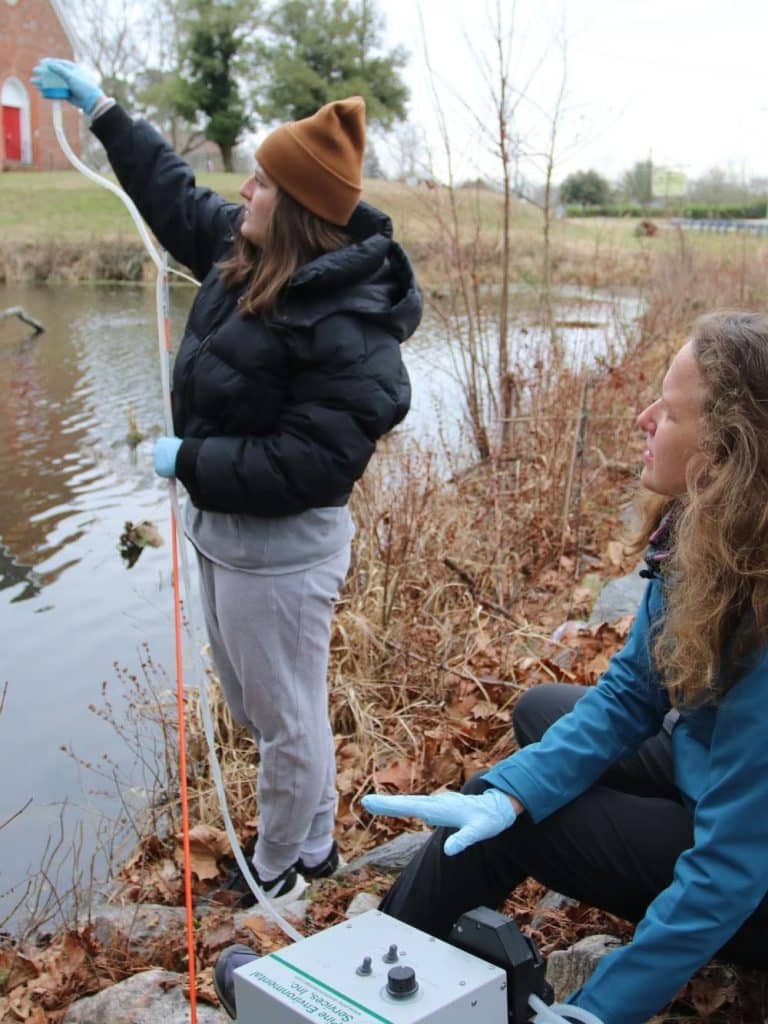
Environmental studies students in the Environmental Problem-Solving courses are partnering with the Virginia Department of Wildlife Resources and Davey Mitigation to conduct biological monitoring of the South Anna River after removal of an obsolete dam. The work will study the impact of the dam’s removal on at least seven species of fish, who were previously blocked from accessing historical spawning and rearing habitats. Past projects in the course have ranged from flood resiliency planning to population viability analysis of an endangered tiger beetle.
ADVISING AND MENTORSHIP
RMC’s environmental studies program is taught by award-winning faculty who work as mentors both in and outside the classroom. Environmental studies students often conduct independent research, co-writing articles with faculty and/or presenting at a professional conference.
FAcilities
As an RMC environmental studies major, you will have access to the school’s field research station at Martin Marietta Quarry, a 66-acre quarry, just 8 miles from the RMC campus. The quarry contains a variety of bottom-land and up-land habitats including a mature beech/maple forest and a dense stand of young pine.
Environmental studies students conduct research using state-of-the-art equipment including:
- 22 ft research boat, jon boats with outboard motors, and kayaks
- Side scan sonar
- Seismic reflection profiling system
- ADCP acoustic doppler current meter
- Water quality testing equipment including sondes
- Surveying equipment
- Field sampling devices
global education
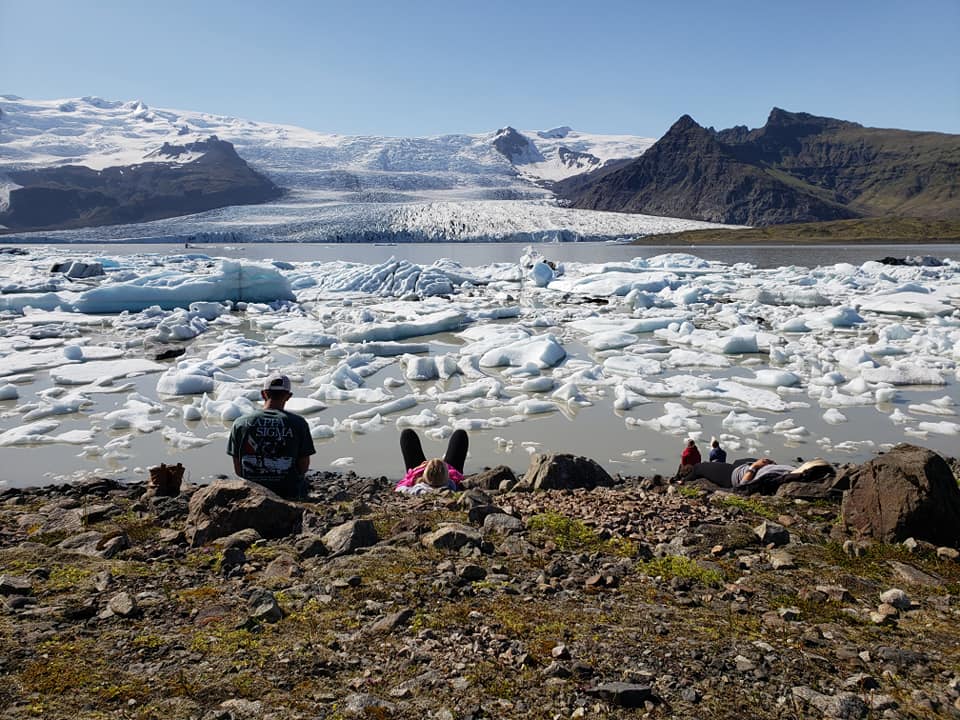
In the Geology of Iceland (GEOL 152/252) travel course, students participated in field work analyzing and mapping individual volcanic and glacial features in the magnificent nation of Iceland. They studied landscapes produced by the interaction of fire, ice, and the ocean. Students also investigate how the combination of fire and ice (glaciers) has produced a country socially, economically, and culturally tied to its geology; and how humans have survived in this harsh geologic environment for the past 1,300 years.
High-Impact Internships
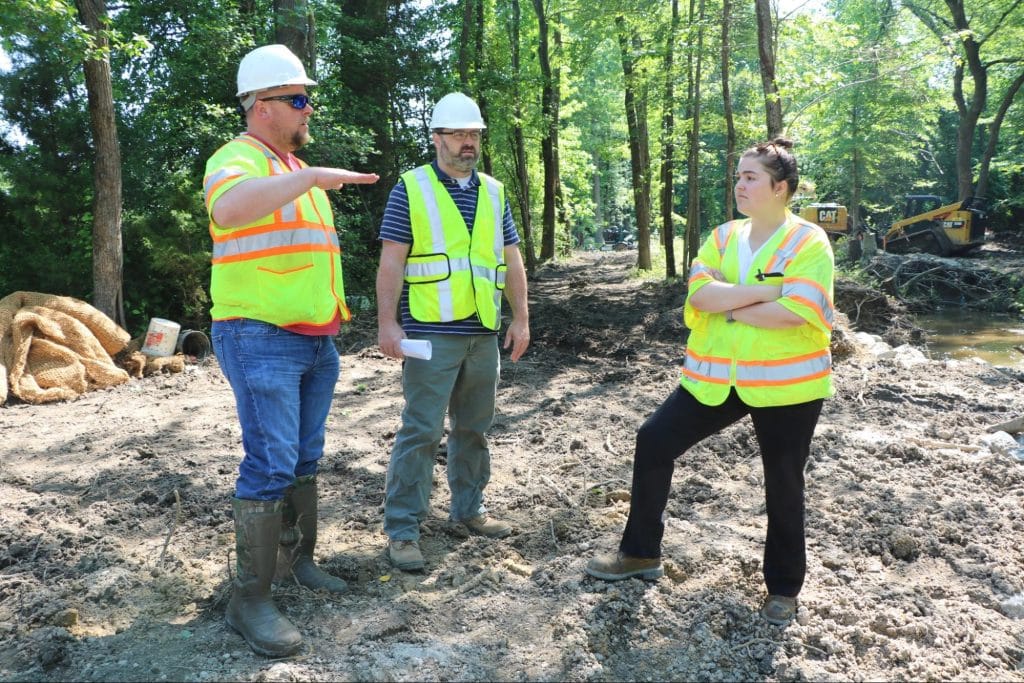
RMC internships give you the opportunity to learn directly from the people and places that matter. Environmental studies students have recently interned at:
- U.S. Fish and Wildlife Service
- U.S. Geological Survey
- Hanover County Department of Public Works
- U.S. Navy Natural Resources Management Agency
- Virginia Department of Environmental Quality
- Virginia Department of Wildlife Resources
- Sierra Club
-
#9college major (environmental studies) with a future according to U.S. News and World Report
-
0the number of textbooks used in environmental problem-solving coursework
-
$76,530median annual salary for environmental studies majors
Environmental Studies in full Courses You Won’t Want to Miss
(A very small sample)
EVST 205
Environmental COMMUNICATIONS
Make a difference by communicating effectively to a wide range of audiences including other professionals, decision makers, and the general public. Become proficient communicating to these groups using formal and informal writing and speaking. Learn how to get your ideas across in a way that changes minds.
EVST 105/305/405
EnvironmentAL PROBLEM SOLVING I, II and II
This series of courses lets you solve real environmental problems while working for off-campus clients from government, the private sector, and non-profit organizations year after year. Intentionally designed so that your skills as a problem solver grow through your years on campus, the problems are new every semester, requiring collaborative, real-world solutions.
EVST 213
Environmental Ethics
Explore the value of ecosystems; human beings’ treatment of animals and non-animal nature; the meaning and justification of moral obligations to species and to the environment; and the complex and profound ways in which our environmental actions affect fellow human beings.
Opportunities Worth Grabbing
Popular activities and programs among environmental studies majors
From Here To What you can do with an Environmental Studies degree from RMC

Troy Andersen ’99
Assistant Field Office Supervisor
U.S. Fish and Wildlife Service
“The speaking and writing intensive courses at RMC laid the foundation for the skills that I continue to utilize every day in my role as a federal manager and Chairman of a local School Board.”
Shannon White, Ph.D ’10
Research Biologist
U.S. Geological Survey, Eastern Ecological Science Center, Leetown Research Laboratory
Jenny Templeton ’06
District Conservationist
U.S. Department of Agriculture, Natural Resources Conservation Service
Delaney Sheire Nowotarski ’16
Adjunct Faculty Instructor
Germanna Community College
Erin Lee ’22
Civil Environmental Engineer
US Army Corps of Engineers
BuzzWorthy The latest from RMC Environmental Studies
News Story categories: Environmental Studies
Asian Studies
Biology
RMC Welcomes 18 new full-time faculty members
The teacher-scholars join RMC’s dedicated faculty from across the academic landscape, prepared to mentor students and advance scholarship.
News Story categories: Environmental Studies
Biology
Economics, Business, and Accounting
Randolph-Macon Honors Retiring Faculty and Staff
As the 2025-2026 academic year comes to an end, Randolph-Macon College will say farewell to faculty and staff who collectively served for 306 years.
News Story categories: Environmental Studies
Academics
Athletics
Close Student-Faculty Relationships, Interdisciplinary Study Celebrated as Part of Inauguration Week Ceremonies
The Academic Symposium and Community Showcase was part of a week of programming celebrating the inauguration of Dr. Michael E. Hill as RMC’s 16th President.

More to explore 55+ areas of study to discover at RMC

Get Ready Discover Environmental Studies at RMC.
Loading…
Frequently Asked Questions: Environmental Studies
What is environmental science?
Environmental science seeks to understand and solve environmental problems from a technical and scientific standpoint, especially as they pertain to the interrelationship between human society and the environment. The National Center for Education Statistics outlines the various fields of study that contribute to environmental science, including biology, chemistry, physics, geosciences, climatology, statistics, and mathematical modeling. Using tools from these disciplines, environmental science analyzes the environmental factors that contribute to subjects like food safety and human disease.
What is the difference between environmental science and environmental studies?
Environmental science and environmental studies share a similar goal of explaining and resolving environmental issues, but they approach the task in different ways. Where environmental science uses the lenses of biological, chemical, and physical sciences to address environmental concerns, environmental studies also includes human sciences such as communications, sociology, psychology, and political science. A problem can’t be truly solved unless the solution is both scientifically sound and also practical from political, economic, and ethical viewpoints. In that sense, environmental studies is true to the spirit of a Randolph-Macon College liberal arts education.
According to the National Center for Education Statistics, environmental studies includes instruction in the basic principles of ecology and environmental science and related subjects such as policy, politics, law, economics, social aspects, planning, pollution control, natural resources, and the interactions of human beings and nature. Although environmental science is a core component of environmental studies, environmental studies casts a broader net to better understand the human/societal impacts of people on the environment, and vice-versa.
Because solving any environmental problem requires knowledge from a wide range of disciplines, environmental professionals always work on interdisciplinary teams. Successful professionals are skilled at team problem solving and also contribute expertise in a specific discipline to the team.
At RMC, a major in environmental studies is focused on the two core requirements to be a successful environmental professional: the ability to collaborate on an interdisciplinary team, and the ability to contribute expertise to the team in a specific discipline. Skills in team problem solving are developed by working for real off-campus clients to address a real-world environmental problem. Each student completes three “Problem Solving” courses with a new client and problem each time. Expertise within a specific discipline is developed by the student selecting another major (any other major that RMC offers) and taking upper level courses toward that area of expertise. These courses are counted towards the EVST major, and this double-counting allows most EVST students to double major.
What are some possible future career fields in environmental science?
Because of the broad nature of environmental studies as a discipline, there is a wide variety of careers available to environmental studies graduates. The largest employers of environmental scientists and specialists per the U.S. Bureau of Labor Statistics are government (local, state, and federal), consulting, and engineering.
Career website Indeed.com reports some of the top jobs pursued by environmental studies majors, which range from various types of scientists (environmental scientist, wildlife biologist, meteorologist, geologist, ecologist, biologist, geophysicist, biostatistician) and engineers (geotechnical, geospatial, environmental, civil, fire protection, sustainability, chemical, mining, aerospace), to environmental consultant, natural resource specialist, policy analyst, environmental health and safety (EHS) manager, professor–and even some surprising roles like veterinary technician, forensic scientist, and emergency medical technician. Majors are also prepared for careers in business, economics, and public policy. Environmental studies majors may choose to pursue additional specialized knowledge in the form of a Master’s/PhD, law degree, or MBA.