






The study of the human condition. This wide-ranging and fascinating topic is the heart of your education as a sociology and anthropology major or minor. Collaborate with fellow majors in student-centered classrooms where you scientifically study social and cultural institutions, and social inequality. Explore the concepts of socialization; deviance; health and illness; family patterns; social change; and race and ethnic relations; and apply a sociological lens to human interaction.
Major/Minor Sociology and Anthropology
sociology
up close In and Beyond the Classroom
hands-on Learning
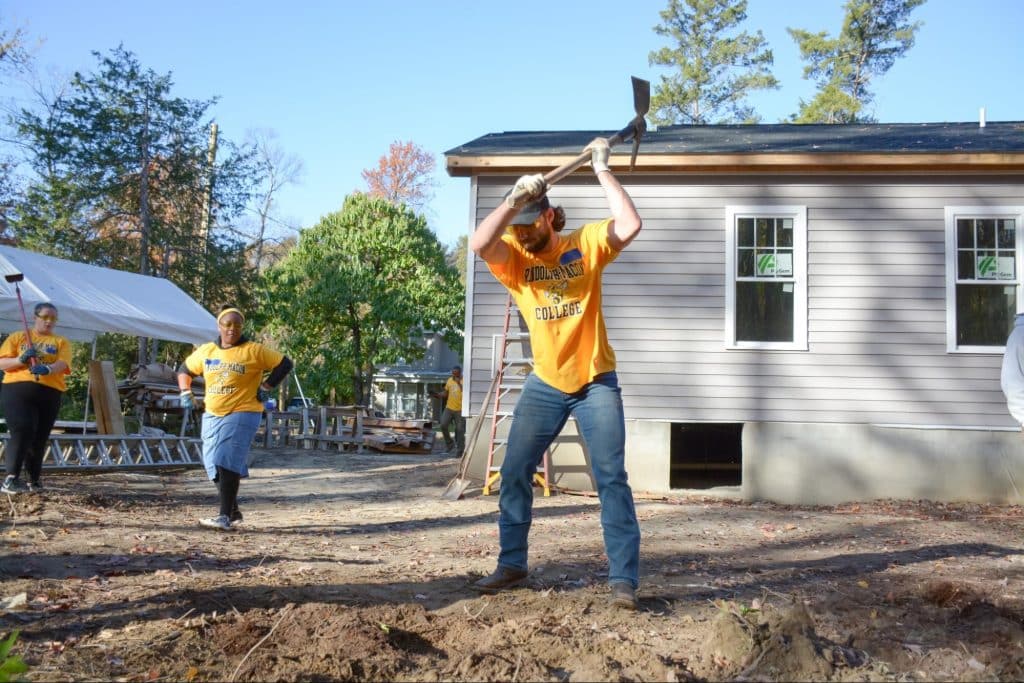
Bridging the gap between theory and practice, Professor Sarah Cribbs’ Social Inequality class experiences the significant impact of service learning by splitting time between the classroom and community engagement including volunteering with Habitat for Humanity. In doing this, sociology and anthropology students gain a new perspective on the real-world implications of social class constructs and directly apply what they learn in the classroom about how people create patterns through individual behaviors, how we interact with one another, how society influences people, and how people influence the larger social structure.
high-impact internships
Make a difference in class and out. As an RMC sociology and anthropology major or minor, you’ll have the opportunity to apply what you’ve learned. Recent interns earned credit with internships at:
- Hanover Safe Place
- Bon Secours at Memorial Regional Hospital
- Richmond Health Department
- Catholic Charities
- Chesterfield Social Services
Advising and mentorship
In our small-classroom environment, you’ll practice research design, qualitative and quantitative data analysis and critical thinking that will help prepare you for a career in a range of professions. As a sociology and anthropology major or minor, you will become especially adept at understanding and practically applying social and cultural diversity and inclusion concepts; ideas that are highly relevant for the 21st century. As you define your path in college and after, our dedicated faculty mentors will be your guides.
global education
The human condition is, of course, a global one. A January term travel course to South Africa recently studied prejudice and privilege in the African nation. The trip paired a psychology course with sociology in a wide-ranging travel experience that explored the struggle to end apartheid, the Truth and Reconciliation Commission; domestic violence, and gender and racial identities.

-
$101Kthe median salary for sociologists in 2023 per the Bureau of Labor Statistics
-
7 of 10executives want students with teamwork skills and the ability to collaborate with others
-
#20A sociology degree is ranked in the top 25 degrees most needed for the future
Sociology/
Anthropology
in full Courses You Won’t Want to Miss
(A very small sample)
SOCI 342
Race and Ethnic Relations
Gain insight into dominant-minority relations. Consider the past and present positions of ethnic and racial minorities from a historical and cross-cultural perspective.
SOCI 202
Sex and Culture
Study a cross-cultural perspective on human sex as well as the categories of gender in various cultures worldwide. Learn the anatomical, physiological, and emotional aspects of sexuality; and critically situate North American ideas of sexuality by emphasizing a culturally relative perspective on sex and gender.
CRIM 410
Juvenile Delinquency
Examine the nature and causes of juvenile delinquency; the development of the juvenile justice system; theoretical explanations of juvenile delinquency; and the current research on juvenile delinquency in the United States.
Opportunities Worth Grabbing
Popular activities and programs among sociology/anthropology majors
Criminology Club
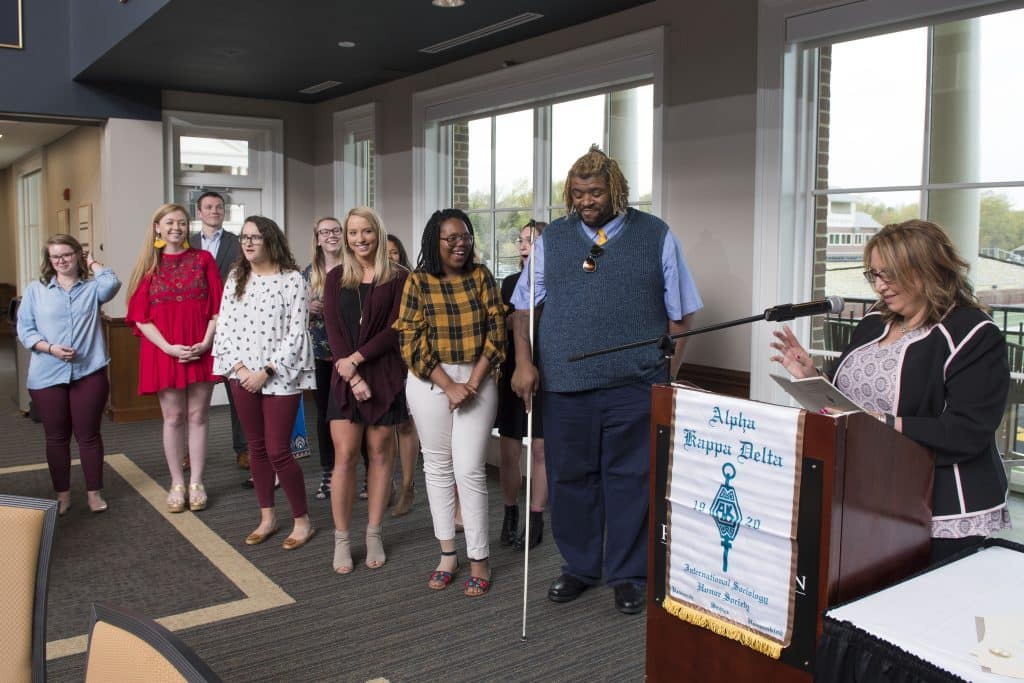
alpha kappa delta
Top students are inducted into the international sociology honors society.
InterFaith Council
From Here To What you can do with a Sociology/
Anthropology degree from RMC

Jake Brigham ’16
Associate Attorney
Messner Reeves, LLP
“Receiving my undergraduate degree from RMC was essential to my success after college. Being at a small school allowed me to foster special relationships with my professors, who then were able to create a learning environment conducive to their student’s needs. I still think about my sociology professors today and remain grateful for their dedication to my growth as a student. As a private liberal arts college, the RMC curriculum promoted the development of a critical thinking lens which has been crucial to navigating my path in life after I earned my degree. I have no doubt that the quality of my educational experience in Ashland directly impacted my life beyond the dorms in a positive way.”
Kamryn Steinruck ’21
Medical Social Worker
Bon Secours Mercy Health
Holly Bowman ’20
Property Development Specialist
The Housing Fund
lee Olenyik ’20
Regional Sales Lead
Zynex Medical
Mary Margaret Petersen Signorelli ’13
Owner/Licensed Professional Counselor
Halfwild Counseling
Buzzworthy The latest from RMC Sociology/Anthropology
News Story categories: Sociology and Anthropology
Academics
Criminology
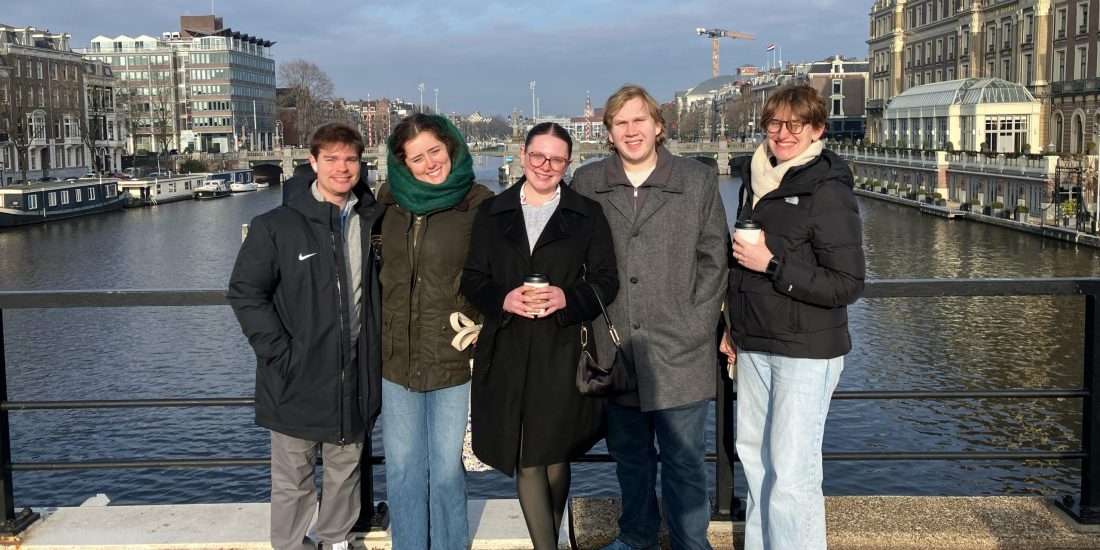
Netherlands Day by Day: A January Term I’ll Never Forget
Emma Skelton ’26 details her experience taking the “Human Rights: Culture and Conflict” travel course in the Netherlands.
News Story categories: Sociology and Anthropology
Academics
Career Preparation
Community Connection: A J-Term Internship with Hanover and King William Habitat for Humanity
Meredith Gray ’26 took on a range of responsibilities, from drafting a policy memo to maintaining social media accounts.

News Story categories: Sociology and Anthropology
Academics
Alumni Stories
RMC Alumna Launches Portable Library at Ghanaian Hospital through Projects for Peace Grant
This summer, Selikem Kartey ’25 was able to translate her passion for helping others into an international service project that provided hospitalized children with much-needed educational and enrichment resources.

More to explore 55+ areas of study to discover at RMC


Get Ready Discover Sociology/
Anthropology at RMC.
Loading…
Frequently Asked Questions: Sociology and Anthropology
What is anthropology?
Anthropology is the interdisciplinary study of societies across time and space with the goal of better understanding human development and diversity. The American Anthropological Association outlines four main branches of anthropology:
- Biological Anthropology—how biological evolution has affected humankind over the millennia
- Archaeology—examining how societies of the past lived, often hundreds or thousands of years ago
- Linguistics—the study of language and its structure as part of the human experience
What is sociology?
The American Sociological Association defines sociology as “the study of social life, social change, and the social causes and of human behavior.” Sociology focuses on contemporary social behavior, relationships, and institutions to uncover collective patterns of interaction and inequality. This can be at a more granular level, such as within families, or as broad as the global community, and often focuses on urban and industrial contexts.
What is the difference between anthropology and sociology?
Anthropology and sociology both seek to understand the nuances of human development and interaction. While similar, these sciences differ in their approaches and methodologies to examine societies through different lenses. Anthropology tends to look at societies and cultures over time, whereas sociology is generally focused on the issues of today (deviance, health and illness, and race and ethnic relations, as some examples). The two fields also differ in their methodologies. Anthropology tends to use more qualitative methods, like archaeological excavation or participant interviews/observation, whereas sociology depends more on surveys and statistical analysis to provide a quantitative analysis of social patterns and institutional structures.
What is the difference between psychology and sociology?
As explained above, sociology studies relationships and traditions across groups of people. Psychology focuses on the mind and behavior of individuals, and in turn how individuals’ mental state affects broader societal patterns and issues. The American Psychological Association describes the varying purposes of psychology as they relate to individuals within society: to understand and treat mental, emotional, physical, and social dysfunction; to understand and enhance behavior in various settings of human activity (e.g., school, workplace, courtroom, sports arena, battlefield); and to improve machine and building design for human use.
RMC offers both the majors in psychology and sociology, allowing interested students to study within both fields.
What jobs can you get with a sociology degree?
Sociologists’ deep understanding of human behavior makes sociology majors desirable job candidates across many sectors. Many sociologists choose to pursue careers in market research, nonprofit advocacy, social services, policy advising, criminal justice, counselling, and more.
In 2023, nearly one-third of American sociologists were focused on scientific research and development services. Sociologists are also often employed in governmental positions at the local, regional, and national levels. In addition, the American Sociological Association’s 2023 Job Bank Report, published in August 2024, lists academic roles, including teaching and research positions, as the most commonly advertised jobs on its site.
What jobs can you get with an anthropology degree?
The U.S. Bureau of Labor Statistics projects that employment of anthropologists will grow 8% from 2023 to 2033, double the national average for all occupations. Anthropologically focused positions are available within governmental (local/state planning and research, cultural resource management, international development, etc.) and community or nonprofit environments (i.e. global health organizations, research organizations, museums, and other community groups).
What are the benefits of a combined sociology/anthropology major?
A combined sociology/anthropology major offers a comprehensive study of both fields, integrating insights into both contemporary and historical social structures. This interdisciplinary approach equips students with diverse analytical tools and perspectives, enhancing their ability to address complex societal challenges and broadening career opportunities.
RMC’s major/minor programs combine sociology and anthropology to provide a broad understanding of both disciplines. Students additionally have the opportunity to focus their studies in one of three sub-areas: anthropology, social dynamics, and crime and justice. In addition to enriching coursework, the department offers many research and other hands-on learning opportunities outside the classroom that help students explore career options and gain practical experience.