An adaptive strategic planning process, launched in 2023, has set the College on a course to strengthen our historic focus on the post-graduate outcomes of students. In short — how do we enhance and promote RMC’s relentless focus on student success?
Our answers to this big question are multi-faceted—not just one initiative or effort, but many. Not just one timeline, but a test-and-learn approach to launching programs and projects and then learning from them to improve them along the way.
This page summarizes the major projects endorsed by the Strategic Planning Leadership Committee.
Initiatives In Process
Data Governance Team
A foundational effort to ensure that RMC’s data is consistently accurate, accessible, secure, and strategically utilized to track the outcomes of these initiatives. Dr. John McManus ’84 and Chief Information Officer Angus McQueen have been appointed to lead an effort to organize siloed data stored by various offices and departments in a manner to better enable a shared understanding of the Randolph-Macon story, strengthen organizational agility, and support long-term strategic goals.
In November 2024, the faculty approved a new major in data science, which will enable graduates to work at the intersection of math and computer science, in some of the fastest-growing fields in the world today.
The new major will begin accepting declarations in the 2025-2026 academic year.
OUR SIGNATURE OUTCOMES-FOCUSED EFFORT
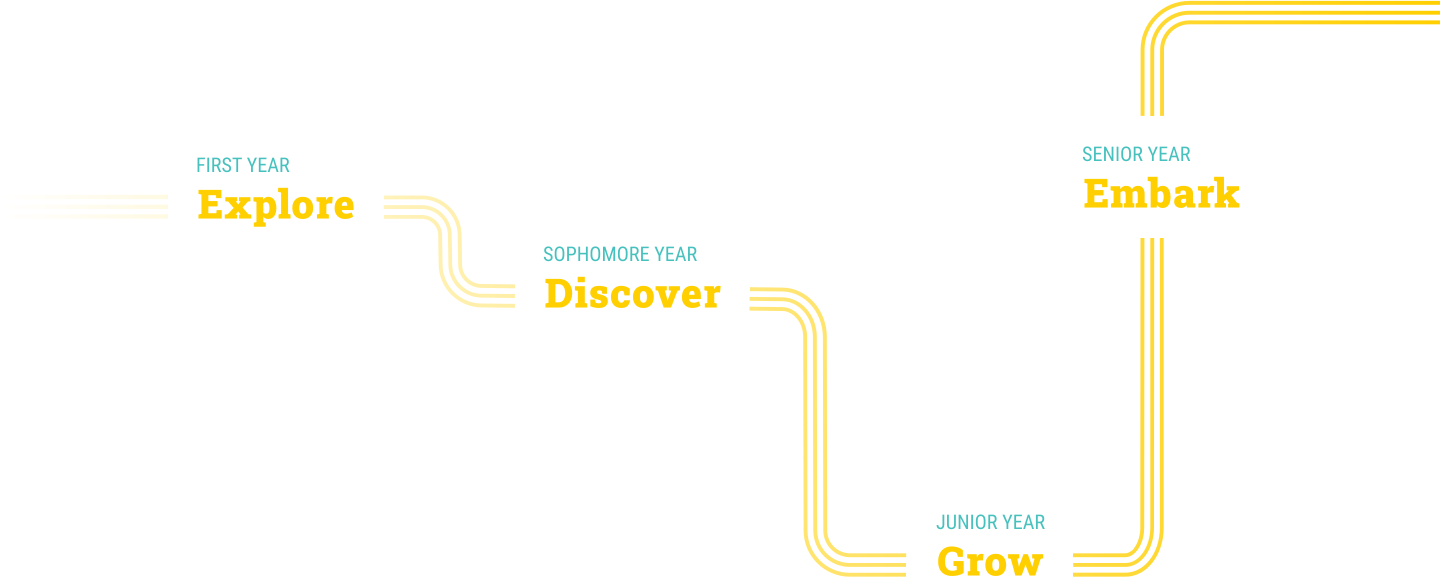
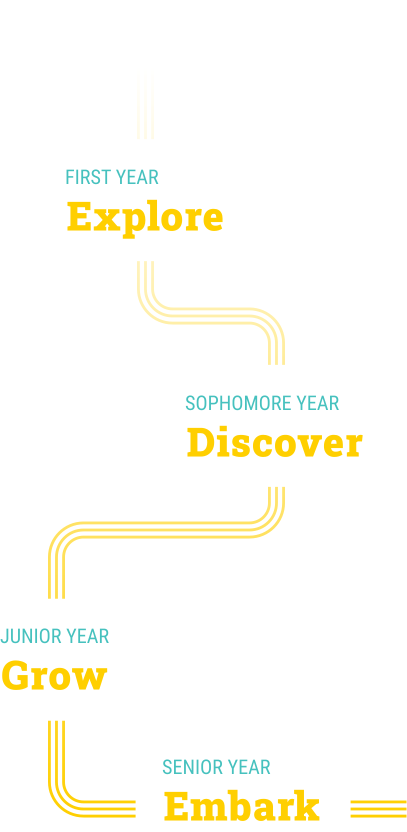
Four-Year Pathways Program
This ambitious new effort aims to set first-year students on a course that improves their four-year path to graduation and their outcomes once they depart RMC. This is an integrated, institution-wide approach to student success that helps students discern their individual path, take meaningful steps toward career- and future-focused experiences, track progress toward crucial milestones, and translate their learning into post-graduate outcomes that meet their goals. More than academics or career preparation, it’s a holistic approach to student success that builds on RMC’s existing strengths to launch our students – and our institution with it – into rare air.
A Pilot
A pilot for this four-year program will begin in Fall 2025 with a cohort of 100 incoming students, in groups of 20, who will be mentored by an Academic Success Advisor through both one-on-one meetings and participation in a two-semester sequence of courses designed to effectively orient students to RMC and to help them establish and activate a meaningful plan for their college experience and beyond.
Four-Year Approach – A Network of Support
This is much more than just a first-year transition program. It is a four-year framework that helps students to integrate and synthesize the knowledge, skills, abilities, and experiences they develop through academics, co-curricular activities, athletics, and employment to prepare them to meet their desired career outcomes. Their network of support includes their academic success advisor, a faculty advisor in their major (once declared), as well as key campus partners, like the Edge Career Center team who provide programming and expertise.
And it’s not just people! RMC will soon launch a curated library of LinkedIn Learning opportunities that will be available to students, as well as faculty and staff, and alumni, to help strengthen credentials in key areas that might not be part of the standard curriculum.
The resulting path, with milestones along the way, is a plan customized for each and every student. All along the journey is a network of support tuned to a student’s progress and goals.
TrACKING For students, TRACKing for rmc
Let’s be honest. We all need a system to help track our progress – and that’s where microcredentials come in. Students will earn badges as they build valuable skills, using the nationally recognized career readiness framework of NACE Competencies.
And how will RMC measure our program? Our ambitious goals include:
Improved retention and persistence to graduation
100% participation in career preparation Boot Camp
Increases in student participation in high-impact practices like internships, research, or relevant creative experiences
Increase in students reporting first-destination plans at or before graduation, with 100% knowledge rate by September
Reduction in retention and graduation rate gaps for Pell-eligible students and identified demographic groups
We will track and measure students’ career readiness confidence along the way, as well as post-graduate outcomes such as alignment of employment sector with long-term goals, satisfaction with their outcomes, salaries, and long-term career trajectory.
Summer Online
Responding to an increased demand for online summer courses, RMC has moved to meet the moment with a new approach to summer term.
The 2025 summer terms were expanded with a broader slate of online, asynchronous classes across a wide variety of subject areas. This digital delivery is more than just happenstance; the College is investing in RMC faculty’s digital pedagogy with additional training and peer mentors to ensure the most effective practices for online teaching.
Athletics and Activities Roadmap
Engagement outside the classroom is a hallmark of the RMC experience, with teams, cohorts, and activities that are core to the student experience. Our 18 NCAA Athletics teams, and the addition of organizations like Esports, Equestrian, and music programs including Choir, Orchestra, and Show Choir, has played a meaningful role in the growth, retention, and overall satisfaction of our student body. So how do we look to the future?
A working group tackled that question with a comprehensive report that RMC’s leaders (and future leaders) can use as a roadmap. Their detailed analysis of sixteen enrollment-driving opportunities helps to frame conversation about the costs and benefits of new and expanded programs, including:
New and expanded bands and choirs
Additional NCAA sports
Non-NCAA emerging sports
JV sports teams
Competitive academic teams
What’s Next?
What’s Next for Strategic Planning?
We’re not done yet! An adaptive strategic plan is never done, and there are a number of projects still in flight, but not quite ready for sharing. The work continues to test the ideas detailed here and to set new ones into action.