

Timely Federal Budget Course Equips Students to be Better Citizens

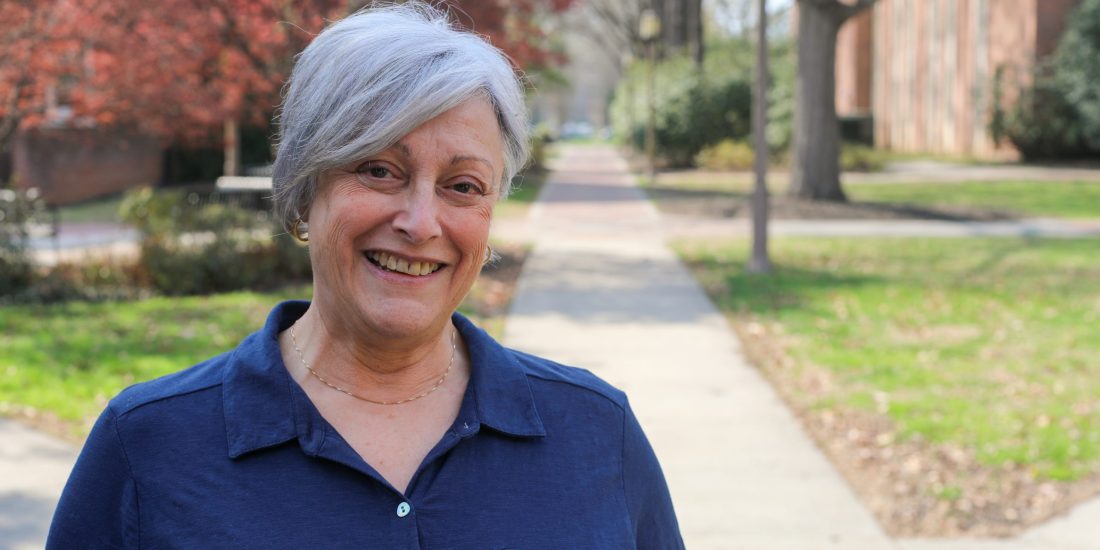
Professor of Political Science Elliott Fullmer has taught his Federal Budget course consistently since the spring of 2018. While the popular class has always guided students through the nuances of allocating trillions of dollars of government spending, it was particularly relevant this fall amid the longest government shutdown in U.S. history. “It’s really helped my class, if not the country,” Fullmer quipped.
With the lapse in appropriations as a backdrop, the class explored how the U.S. government raises and spends money, the variety of factors and special interests that decide those processes, and how that can all break down.
“The federal budget is, in one way, a reflection of the country’s values,” Fullmer explained. “There’s no better way to see what a country values in a democracy than what it’s spending money on and what it’s raising money for.”
Fullmer uses a sports metaphor to describe the importance of the process. If elections are the draft, then governing is the game; and what a government spends money on is crucial to how it governs. The budget is so crucial to operations that Fullmer’s course could simply be viewed as a study of federal policy. Several class periods are spent covering healthcare, while others address defense, the tax code, and Social Security.
A common refrain from students is the realization that some programs they thought took up huge slices of the pie are actually much smaller than imagined, and that others (like Social Security and healthcare) are much bigger.
“It was really interesting for me to see that programs like SNAP and what we call welfare, they make up just a few percentage points in terms of our budget,” said Sophia Caron ’26, a Criminology and Sociology double-major with minors in Psychology and Political Science. “I think that those are the programs that people focus on the most in terms of if they’re draining our federal budget.”

That perception of scale was particularly relevant during November’s congressional debates over extensions to Affordable Care Act subsidies, which amounted to less than 1% of the total budget but were the sticking point of the shutdown. That such a small portion of federal funds caused that much conflict served as a case study of the current political moment.
“It’s a reflection that the federal budget, like so many things in our system, requires some degree of cooperation,” Fullmer said. “That’s hitting up against a period of American politics where there’s not a lot of that, we have increased polarization. When you take polarization and you insert it into a process that requires cooperation, you’re more likely to have trouble.”
The course culminates in a project in which students propose their own changes to the federal budget. Students explain their philosophy of government—how they think the federal government should seek to solve problems through collective action—then detail their changes and the expected impact to the deficit and debt.
“I’ve been impressed at how thoughtful and outside the box the ideas can often be,” Fullmer said. Over the years, he’s seen a wide range of creative proposals, from universal childcare to modernizing high-speed rail infrastructure to campaign finance reforms.
The ubiquitous impact of the budget means the course has a broad application for students. Caron, the Criminology-Sociology double-major, wants to pursue a career in law enforcement, and knows the federal budget affects funding for an agency like the FBI. Ryan Deegan ’28 is a Political Science and History double-major with an interest in a career in public policy or administration and notes the everyday implications of these policy decisions.
“Politics in general, especially American politics, influences everything in ways we sometimes don’t even think of,” Deegan commented. “Like whether or not your grandparents might be receiving increased Medicare benefits or your commute to work is going to get better because it might get funding in the infrastructure section.”
Ultimately, whether students go on to be policymakers or are non-majors in unrelated fields, the course equips them to navigate how the government impacts their own lives.
“I think when you have these foundations, you can have a better filter for information that you encounter later. Which increasingly I think is the most important thing political science can do, is prepare people to encounter the maddening information environment,” Fullmer said. “I remember one student said, ‘I feel like a better citizen after taking this class,’ and that meant a lot to me.”