

SURF Symposium Celebrates Summer of Undergraduate Research
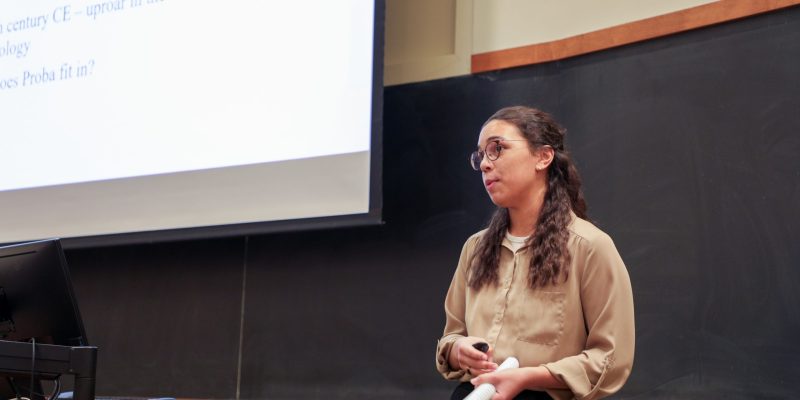
In her opening remarks at the 2025 Schapiro Undergraduate Research Fellowship (SURF) Symposium on Aug. 1, Provost Alisa Rosenthal reflected on the importance of experiences like SURF in preparing students for success and greater well-being after college. She also emphasized how the magic of undergraduate research lies in the process.
“I encourage you to listen not just for polished conclusions or impressive results, but for the stories behind the studies: for the questions that sparked curiosity, the obstacles faced, the moments of doubt, the small but meaningful breakthroughs,” said Rosenthal. “Each presentation you hear today is the product of weeks of intellectual risk-taking, persistent effort, and deep engagement between student and faculty.”
Since 1995, SURF has given students the opportunity to conduct original research under the guidance of a faculty mentor over nine weeks of the summer. The program has been supported through a generous endowment by Ben Schapiro ’64 and his wife, Peggy Schapiro and other donors.
The SURF Symposium is an annual culmination and celebration of a summer’s worth of hard work, creativity, and collaboration. This year, 29 students either gave formal PowerPoint presentations of their work or participated in a poster session showcasing their findings. A full list of this year’s projects can be found here.
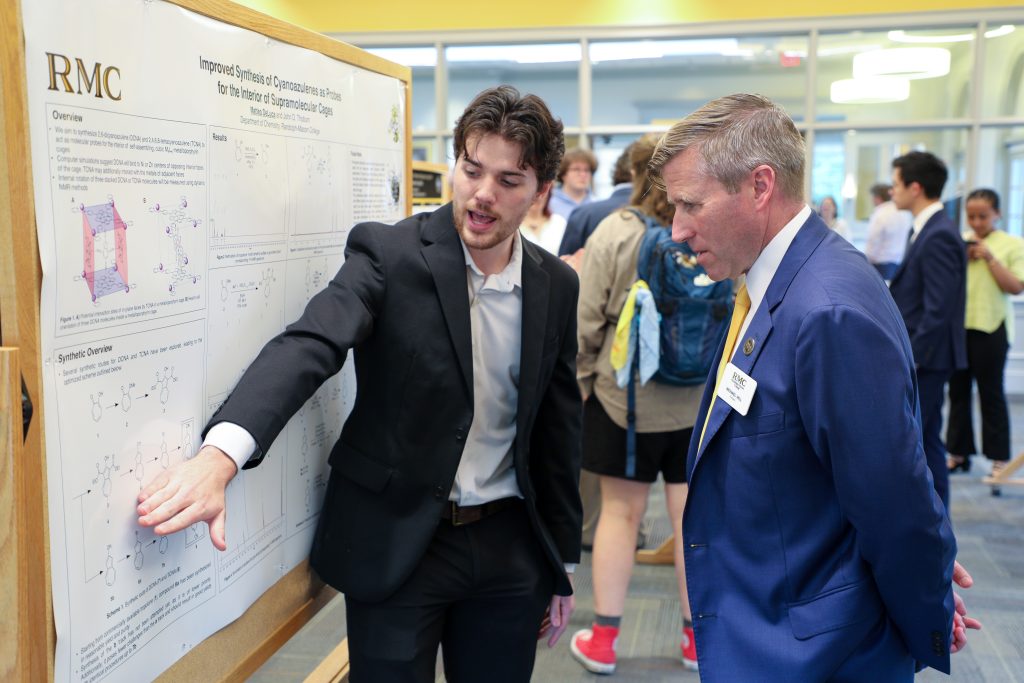
The scholarship presented during the symposium reflected the broad range of disciplines engaged in research on campus. In the lab of Garnett-Lambert Professor of Chemistry John Thoburn, students explored the properties of supramolecular cages; Teaghan McNeill ’26 presented on her experience synthesizing “sulflower,” a carbon sulfide compound.
Two separate biology students studied ways to optimize plant growth. Shane Hale ’27 tested dog fur as a sustainable replacement for peat moss as a fertilizer—with positive results in both marigolds and kale plants—while Wyatt Richardson ’26 observed the impact of companion plants on pollinator populations.
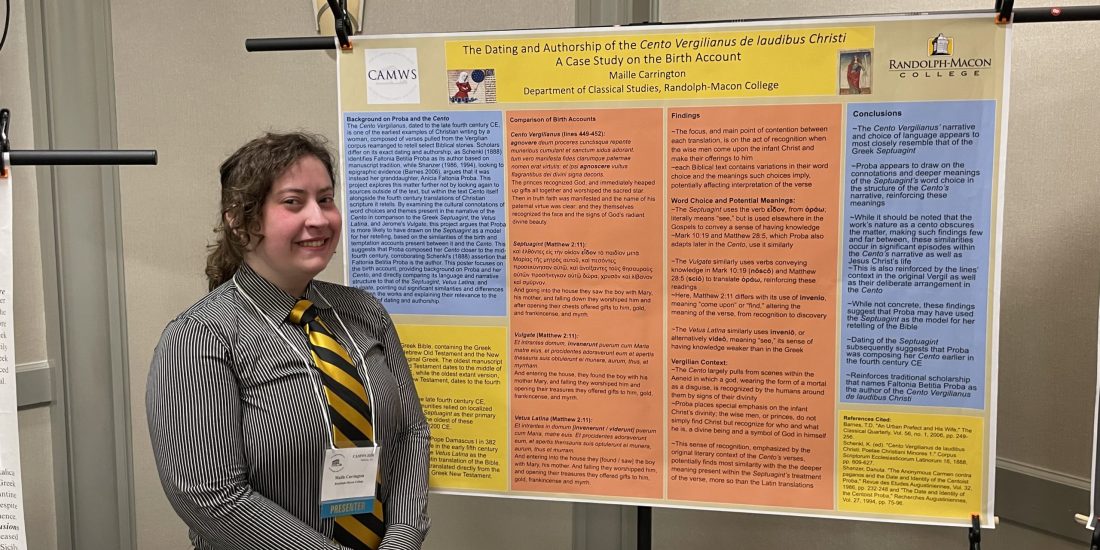
In addition to the physical sciences, there was significant representation from the humanities and social sciences. Charlie Collins ’27 analyzed the evolution of civil religious rhetoric by the last four Republican presidents, and Maddy Jones ’26 examined how the works of the fourth-century poet Proba show tendencies of Docetism, and how that fit into the backdrop of debates around Christianity in that era.
Across every presentation was a common thread of students seeking to answer important questions and gaining valuable experience and insights along the way.
“Today is a celebration, not just of outcomes, but of journeys,” Rosenthal concluded. “Let today remind us of the power of curiosity, the gift of mentorship, and the value of a community that learns and grows together.”