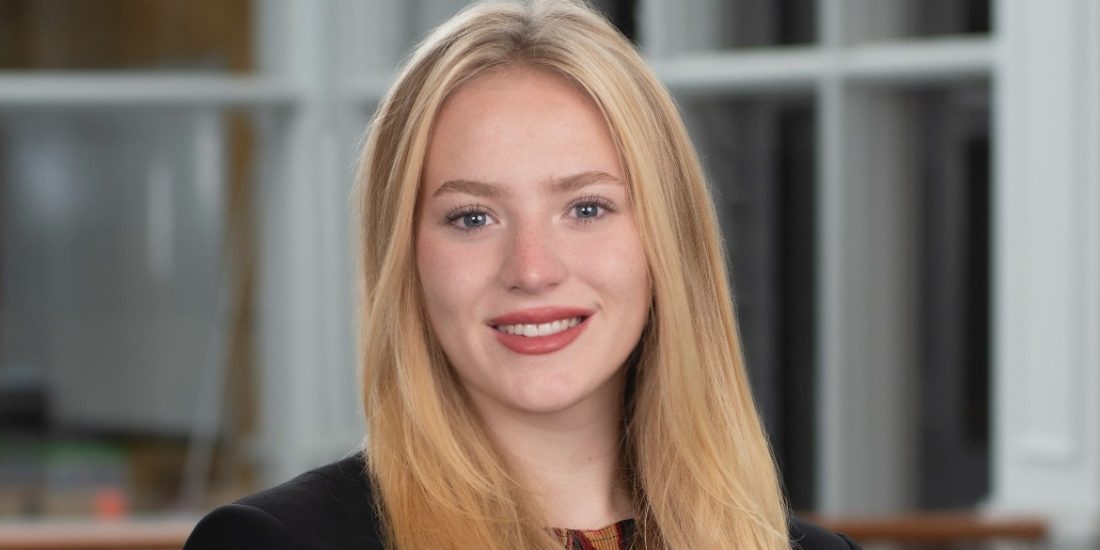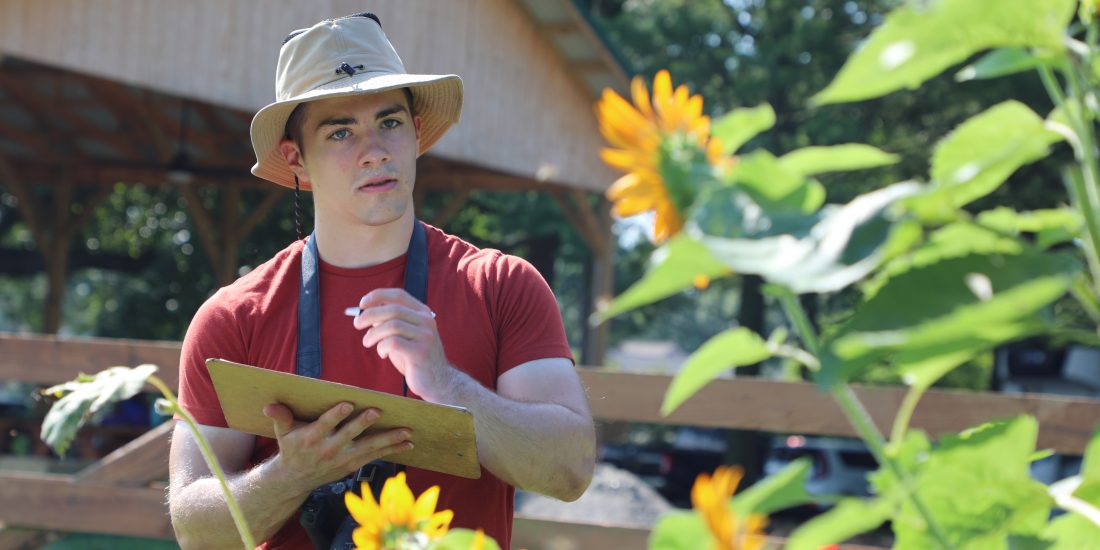


SURF Feature: Grace Bakeman ’24 Compares Pandemic Music Culture Across Centuries
“State Board of Health Issues Drastic Order Effective Immediately”
“Rigid Quarantine Rules Established”
“‘Non Essential’ Crowds Barred in Epidemic War”
It’s not hard to imagine these headlines plastering the front page of today’s newspapers. But you may be surprised to learn they were published more than 100 years ago during another global health crisis: the influenza outbreak of 1918.
The parallels between that 20th century pandemic and today’s COVID-19 landscape inspired sophomore Grace Bakeman ’24 to combine her two majors—Music and Psychology—in an investigation of how musical activity in the U.S. was affected during the two time periods. Her Schapiro Undergraduate Research Fellowship (SURF) project, titled “‘As Catchy as the Flu’: Gauging the Impact of the 1918 and the 2020 Pandemics on Concert Culture in the United States,” examines the various disruptions each pandemic had on working musicians, concert-goers, and venue owners.
Bakeman worked alongside her mentor, Professor of Music and Chair of the Department of Arts Dr. James Doering, Ph.D., to tap digitized trade journals and historical news sources like The New York Times, The Los Angeles Times, and The Atlantic for a peek inside the music world of 1918-1920. The Library of Congress’ “Chronicling America” also provided a rich collection of archival newspapers, the headlines of which Bakeman scoured using keyword research for terms like “influenza,” “pandemic,” and “the grippe”—a dated term for the flu.
“Today we have digital concerts and livestreams, TikTok and Spotify. We can see the ways the pandemic forced the music industry to change,” Bakeman said. “I wanted to know if musicians and other industry professionals in the early 20th century had similar responses to the pandemic, especially since they didn’t have the technological tools at their disposal that we do.”
Finding Through Lines in the Headlines
Bakeman’s keyword research uncovered a range of personal anecdotes and glimpses into public sentiment at the turn of the last century. Like today, local health departments across the nation ordered the closure of public spaces to “stop the spread,” with performances of all kinds shut down indefinitely. Many musicians turned to teaching, took up other forms of employment, or stopped playing music altogether. Also similar to today, adherence to those regulations varied by region. One theatre manager refused to close shop while the new Charlie Chaplin film was out. The screenings became a super-spreader event, and the manager himself caught the illness and died.
Reading through scores of newspapers and periodicals gave Bakeman a more global perspective on how the 1918 pandemic evolved in time. As she culled through 1918’s headlines, she noticed the stories began to increasingly focus on huge spikes in influenza deaths in late October and early November. When she mapped those headlines to the historical timeline, she noticed a glaring overlap.
“The influenza spike coincided with the lifting of restrictions on gatherings right around Armistice Day,” Bakeman said. “It was almost like many people weren’t worried anymore about getting sick because a brutal war had just ended and they needed to celebrate.”
Seeing the Present Through the Past
Not all of Bakeman’s research led to tidy conclusions. In fact, she ran into problems accessing materials from a wide swath of the country that forced her to “go where the sources are,” Dr. Doering explained. On top of that, there were barriers to handling physical materials (many museum archives are still closed to the public), as was the issue of finding uncensored, unbiased reporting on how the influenza pandemic ravaged the U.S. in 1918.
“Many of the Allied Powers had censorship bans that basically said, ‘If the story isn’t positive, don’t publish it. We have enough things to worry about,’” Bakeman said. She points to Spain, a neutral country at the time without censorship bans. The country was fairly transparent about the number of influenza cases it was seeing, even reporting on the serious illness of its king. Such headlines made Spain appear to be hit much harder than other nations, hence the illness becoming known as the Spanish flu.
“It’s not that different from some of the ways people refer to COVID-19,” Bakeman said. “The more I’ve dug into that aspect, the more I see blame playing a prominent role in both pandemics.”
Despite the gravity of subjects that fell within the scope of her SURF project, Bakeman encountered many instances of positivity and optimism while the country was hit hard by the virus. It pleased her to see local papers announcing concert venues opening back up following the worst days of influenza pandemic, and another reporting that two sisters, sidelined during the pandemic, had resumed their vocal lessons. One amusing editorial written by a box office manager, pleading with audiences to continue following health directives to avoid crowded spaces, offered readers the chance to attend that night’s show, which was doing so poorly that audience members would presumably have little trouble keeping a safe distance from others.
“Pandemics are obviously tragic times,” Dr. Doering said. “Terrible things have happened. But it was interesting to see back in 1918 what’s happening today: people trying to find any bit of levity in the moment.”
From Looking Back to Looking Ahead
In discussing her SURF experience, Bakeman reflected on how her deep dive into the past sets her up well for future research opportunities. She comes to RMC with an associate’s degree from J. Sargeant Reynolds Community College and numerous academic experiences in the hard sciences. But she said her humanities research this summer has opened her eyes to the range of options available outside of, or tangential to, the sciences.
“I’ve loved digging these stories out of the back pages of newspapers and amplifying voices that were buried under everything else,” Bakeman said. “The research has been a really fascinating look at the similarities between what we’re going through now and what people experienced over a hundred years ago.”