

Research in Bloom: From Pollinators to Native Plants
Stroll down to the corner of Smith and Henry Streets on the Randolph-Macon College campus and you’ll find the Brian Wesley Moores Native Garden. The Garden will soon be in full bloom, with bright-yellow Coreopsis, purple Coneflowers, and the white, pom-pom-shaped flowers of the Common Buttonbush. Dozens of bees, butterflies and other insects will zoom through the garden, collecting pollen and depositing it among the flowers and plants.
Research in Bloom
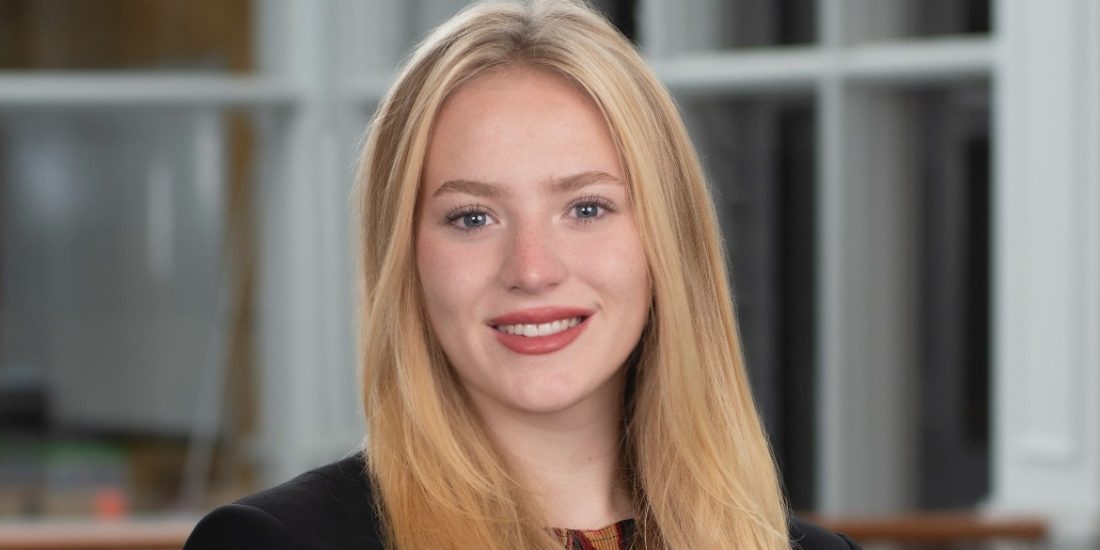
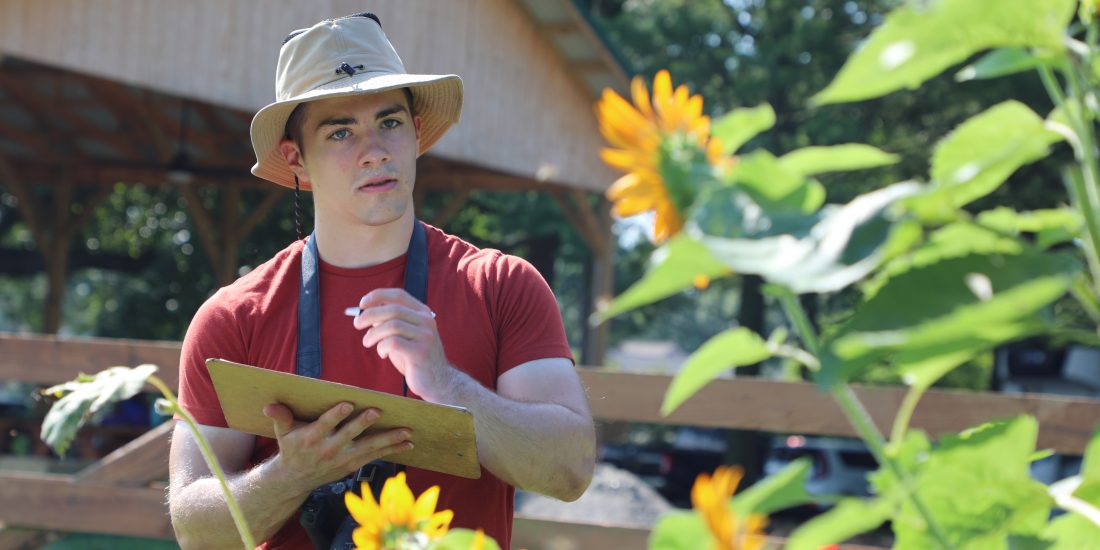
Last summer, two RMC students conducted research at the Garden, cameras at the ready and notebooks in hand, as they measured which insects pollinate native vs. non-native plants. Taylor Drucker ’21 and Caroline Golightly ’20 were participating in Randolph-Macon’s Schapiro Undergraduate Research Fellowship (SURF) program.
Their research was supported by the Morton and Spapperi Foundation, and Drucker and Golightly were Morton and Spapperi Family Foundation Scholars. The Foundation’s mission is to initiate and participate in projects designed to preserve, enhance and restore land to greater ecological value. Foundation co-founders Julie Spapperi-Morton and Kent Morton have been engaged with the college’s Environmental Studies and SURF programs for several years. Amy English ’98 is the Foundation’s director of initiatives and strategy.
Drucker and Golightly were mentored by Biology Professor Nicholas Ruppel, whose research focuses on the interplay between local species and natural ecosystems. Drucker (biology major; chemistry minor) and Golightly (biology major) arrived at the Garden each day at 9 a.m. to test pollinators’ preferences for native or non-native plants. With Ruppel on hand to answer any questions they had, the two photographed pollinators and tallied how many of each species they found on each native and non-native plant.
From Garden to Creek…and Back Again
After a couple of hours in the Garden, the two headed over to Mechumps Creek in Hanover County, where they worked to identify plant species. This part of their SURF experience was a collaborative project, done in partnership with RMC Biology and Environmental Studies Professor Chas. Gowan.
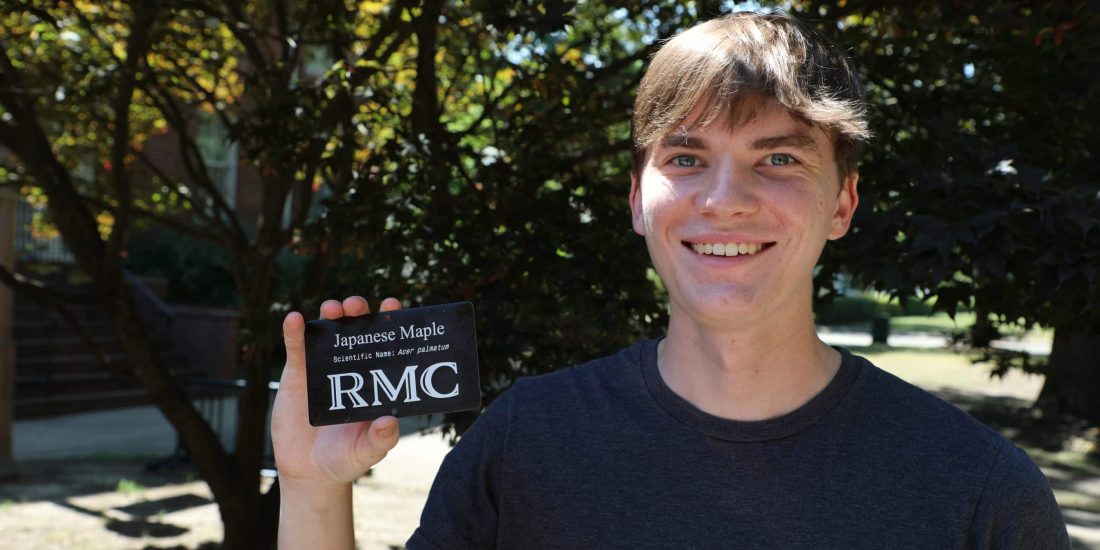
In 2010, Gowan began exploring methods to restore Mechumps Creek and other urban streams throughout the region. Drucker and Taylor collected tree and shrub leaf samples from the Mechumps Creek area and tallied how many native and non-native species they find.
Golightly focused on survey trees and shrubs that have grown along the banks of Mechumps Creek. She sampled plots along the Creek and provided an indication of what plants were surviving, what plants had been recruited since the 2010 restoration, and whether the plants were native or non-native to the area. After three or four hours at Mechumps, Drucker and Golightly headed back to the Native Garden for an afternoon observation of pollinators. Any down time they had was dedicated to in-depth plant/pollinator identification and compiling their data.
Mentorship
Faculty guidance is an important part of the SURF program.
“I took Professor Ruppel’s Genetics course, and his passion for teaching was very evident,” says Drucker, a Presidential Scholarship recipient and member of the women’s soccer team. “Working with him on my SURF project showed me that his passion expands beyond the classroom. His mentorship was invaluable, and this experience helped me with future research projects.”
When Golightly took Ruppel’s Plant Physiology course, she became interested in learning more about plant research.
“SURF is a great way to gain research experience, and it will look good on graduate-school applications,” says Golightly, a member of the Math Club, Anglers Club and Beta Beta Beta. “Professor Ruppel had clear goals and made sure that our SURF research reflected these goals. He is always willing to help his students in any way he can.”
Ruppel says, “Taylor and Caroline embraced the collaborative nature of science—both projects really were team-oriented. They both quickly mastered their plant and insect identification skills, and as the summer moved along, their data helped us understand how urban areas, and our community in particular, can serve as functional ecosystems.”
Summer Internship
In summer 2020, Golightly will do an internship at University of Miami’s Shark Research and Conservation (SRC), where she’ll learn how to catch, handle, tag, and take samples of a few species of sharks in preparation for graduate school.
“I have not decided which grad program I will be accepting for the fall, but my options are Miami University, Jacksonville University, and UNC Wilmington, all for marine science and conservation,” says Golightly. “SURF helped me gain the experience I needed to be a competitive candidate for grad school. Field work, lab work, and writing a scientific paper were really crucial for preparing me for this next step, especially for programs that are research- and paper-intensive.”
The SURF Program
The SURF program was established in 1995 through a generous endowment made by Ben Schapiro ’64 and his wife, Peggy Schapiro. The Schapiros continue to support this program, which promotes scholarly undergraduate research by students in all disciplines. Ben Schapiro has served on a number of RMC committees, including the Board of Trustees and the Society of Alumni.
In order to participate in the program, students write proposals and apply for grant money to fund their research. SURF students receive a stipend and room and board, and results of their research are presented at the annual SURF Symposium and on Research Day. Many SURF participants have presented their research throughout the United States and internationally, and some have published their work. The SURF program is co-directed by Art History Professor Evie Terrono and Chemistry Professor Serge Schreiner.