

Spotlight: A Look at January Term in the Classroom
Every January Term, Randolph-Macon students take advantage of the opportunity to immerse themselves in unique courses. The four-week term, with classes that meet daily, allows for an intensive focus, and students utilize it in a variety of ways: getting active in a physical education class, working through major or minor requirements, or studying topics they simply find interesting.
Here’s a look at some of the coursework they covered in 2024.
Revolutions in 19th Century European Art
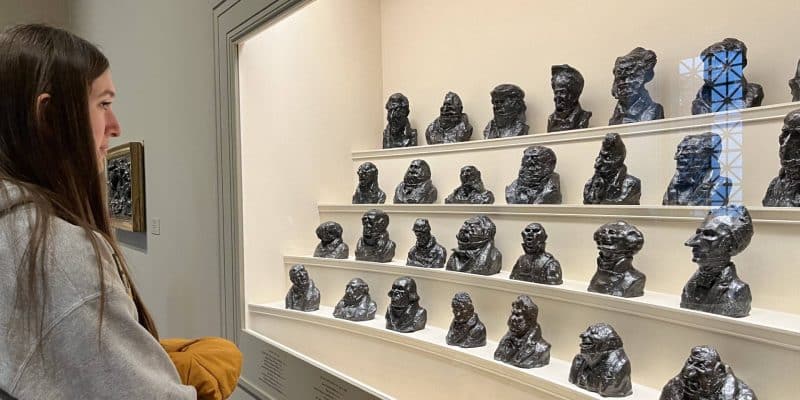
Revolutions come in many forms, from a new artistic style to a new regime conquering a continent. Art history professor Dr. Evie Terrono’s Revolutions in 19th Century European Art course was concerned with both, but especially how revolutionary art reflects the world in which it was created.
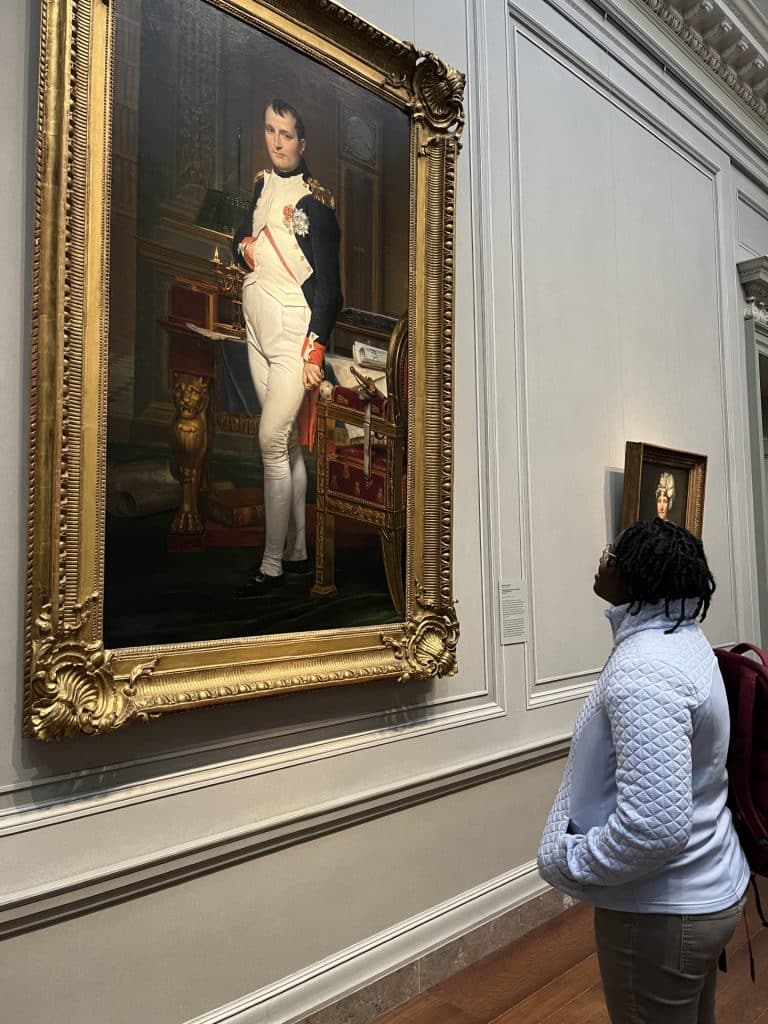
“Students discuss both primary and secondary readings seeking to understand the artists and their works in their proper socio-cultural context,” Terrono explained. “Students learn how artists responded to the socio-political realities of their times, but also how they challenged established artistic practices. While we now consider Impressionism a popular, and perhaps easily accessible movement, contemporaries found it provocative and even offensive.”
In addition to exploring 21st century responses to the thematic choices of these artists, and the careers of women artists who bent the rules of the profession, the class traveled to Washington D.C. to visit the National Gallery of Art, where students got up close with works that covered the range of topics covered in the course.
“My perspective on art has completely shifted since taking this course with Dr. Terrono,” Milly Mach ’26 said, citing the use of art as propaganda in the 19th century.
“For example, Napoleon Crossing the Alps by Jacques-Louis David represents a portrait of the great French Emperor Napoleon Bonaparte,” Mach explained. “This is a very well-known piece of art, but in the 19th century, Napoleon used art to generate a positive cult of personality. One of the most fascinating things about Napoleon Crossing the Alps is that David depicted him gallantly on a horse. The factual story was that Napoleon actually crossed the Alps on a mule, but he is depicted on a horse to cultivate a persona of being a strong military leader.”
Poetry and the Human Experience
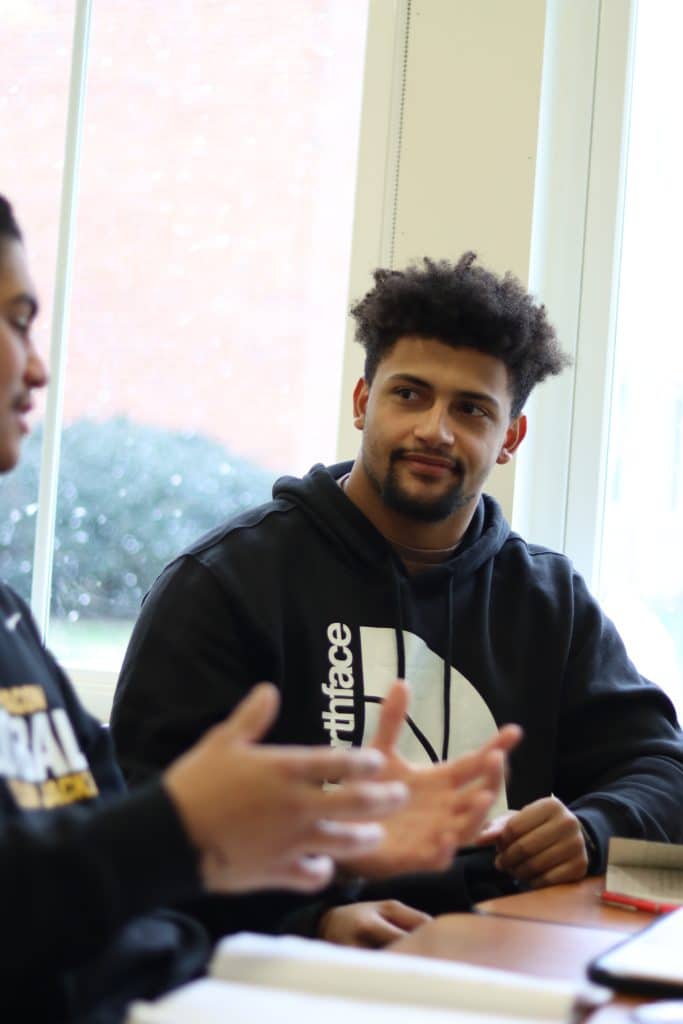
“Class starts with a chocolate truffle—only half—before students learn how the truffle was made, how its ingredients were selected, and how much time and effort it took,” said Dr. Jen Cadwallader, the A.G. Ingram Professor of English. “They eat the second half and discuss the difference between liking and appreciating, exactly the frame of mind to bring to poetry.”
Her Poetry and the Human Experience class examined works from Shakespeare to the modern day, covering different components of the human condition, including childhood, old age, love, loss, war, and inspiration. Through exploring its formal elements, students gained an understanding of poetry’s power to capture the beauty of the human experience and help us navigate its triumphs and tragedies.
“Not only does Dr. Cadwallader create a safe environment to interpret poetry, but she also allows students to engage in partner and group activities that make the class a blast while each student grows individually,” said Haley Talley ’27.
Students wrote their own poetry, spending time outdoors to capture the natural beauty of campus, taking in the art on campus, and ultimately compiling an anthology of poems—ones they appreciate and ones they’ve written themselves—on a subject of their choosing.

Public Speaking
Public Speaking, taught by communications studies professor Dr. Sam Allen, provided students with an introduction to the foundational principles of effective oral communication. The course emphasizes practical application, with students preparing and presenting a series of formal speeches, in addition to a wide range of in-class exercises.
“My favorite warm-up we’ve done was ceremonial speaking,” recalled Paige Zuker ’26. “We were told that the zombie apocalypse was happening and only one profession could stay in town. We had to advocate why our profession would be useful during the apocalypse.”
Students also had the unique opportunity to practice their speeches using virtual reality software, gaining feedback through AI.
Writing for Film II
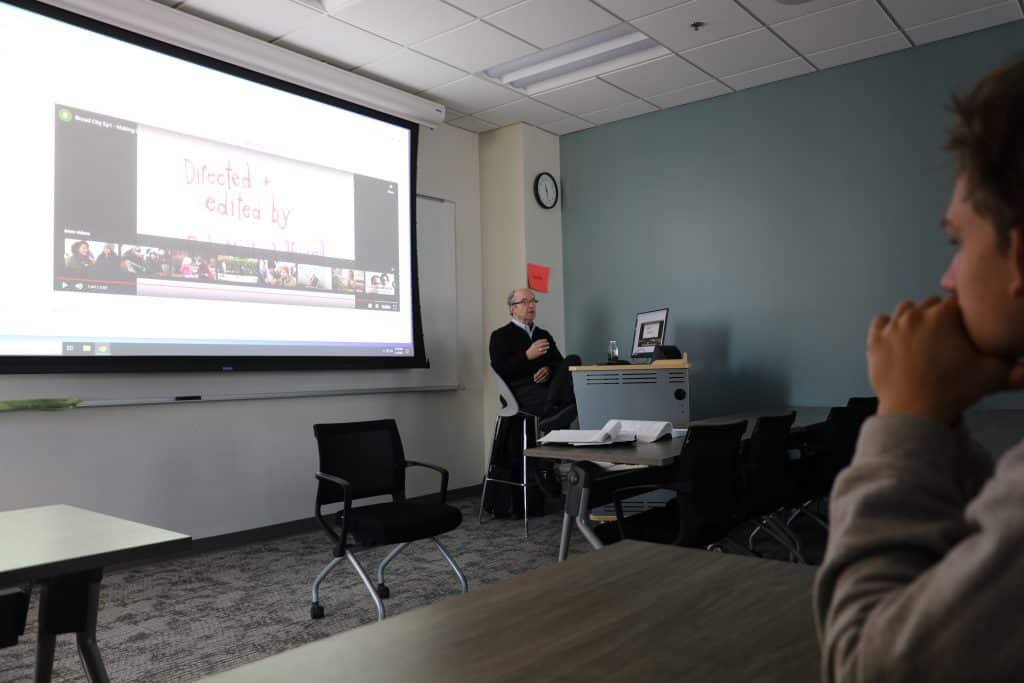
Before it made it to the screen, your favorite movie or TV show began its life as a script. In professor Kevin Downs’ Writing for Film course, students learned the necessary skills to craft scripts in the industry-accepted format.
Throughout the course, students first write a five-page silent script, then create a script for their own original short films, around 30 pages in length.
“By the end of the semester, students have sufficient skills to draft original short and long-form screenplays for commercial production and distribution,” Downs explained.
“In just a few weeks, I feel I have taken great strides in finding my voice as a writer and understanding what makes a story entertaining,” Jack Cheatham ’27 said. “Reading my script out loud and receiving feedback has helped me develop confidence in my writing abilities which I never had before. I’m proud of the work I have produced, and I think I am going to try to film the script I made in the summer.”