

Spain Day-By-Day: A Student’s Photo Blog from January Term
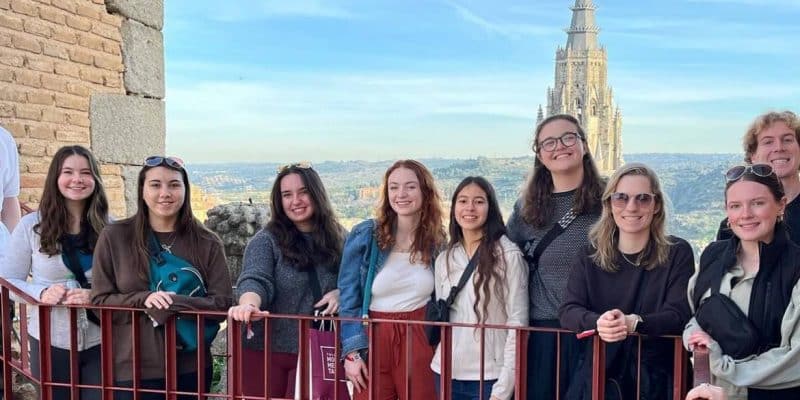
I had the chance to participate in a Term study-travel trip to Toledo, Spain, as part of Professor Kristina Soric’s class about Spain’s cultural history as viewed through its art, literature, and architecture.
Before we traveled, we learned there is a famous tourism slogan from the 20th century: “Spain is different.” It refers to a perception that, after more than 700 years of convivencia with and cultural influence from North African Muslim and Jewish people, Spain does not quite fit in with other European countries. We got to visit in-person the architectural evidence of this history over the course of two weeks.
Day 1: Toledo
Still jetlagged and freezing cold, we bundled ourselves up and walked less than a quarter mile from the Fundacion we stayed in to Toledo’s Cathedral.
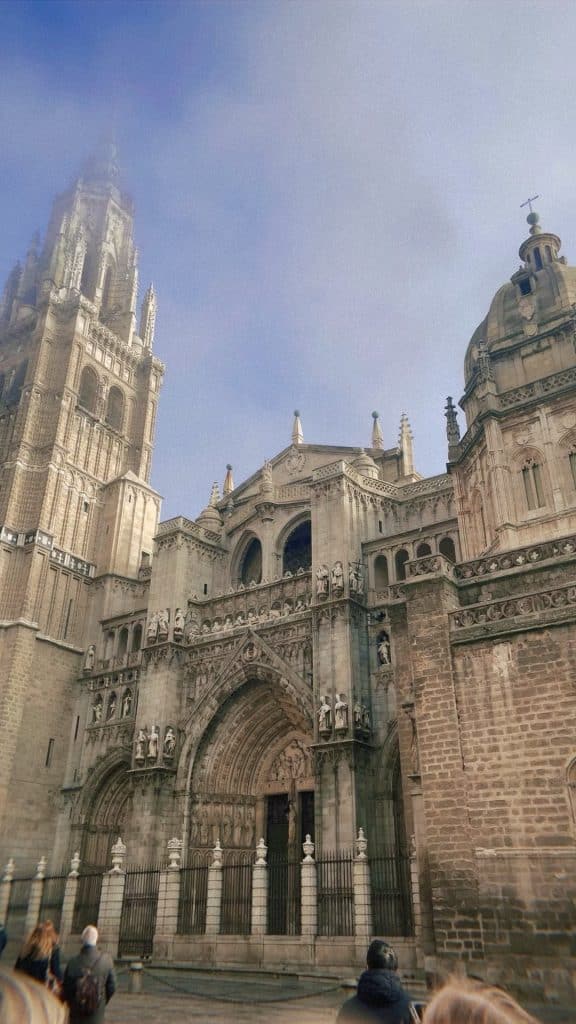
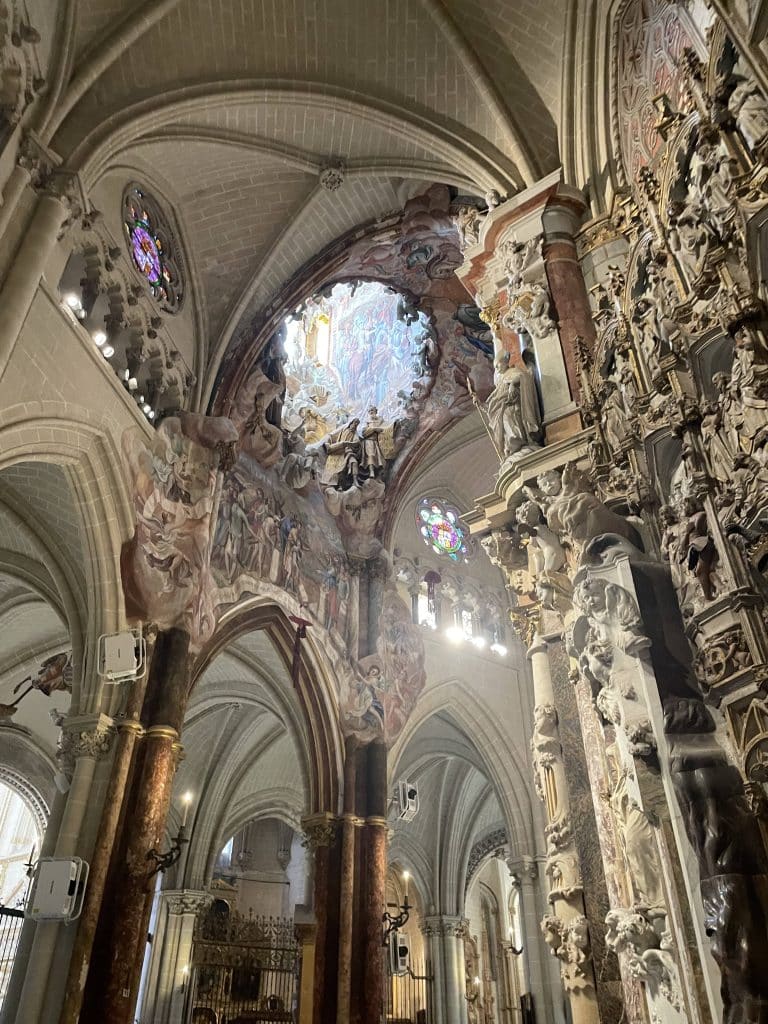
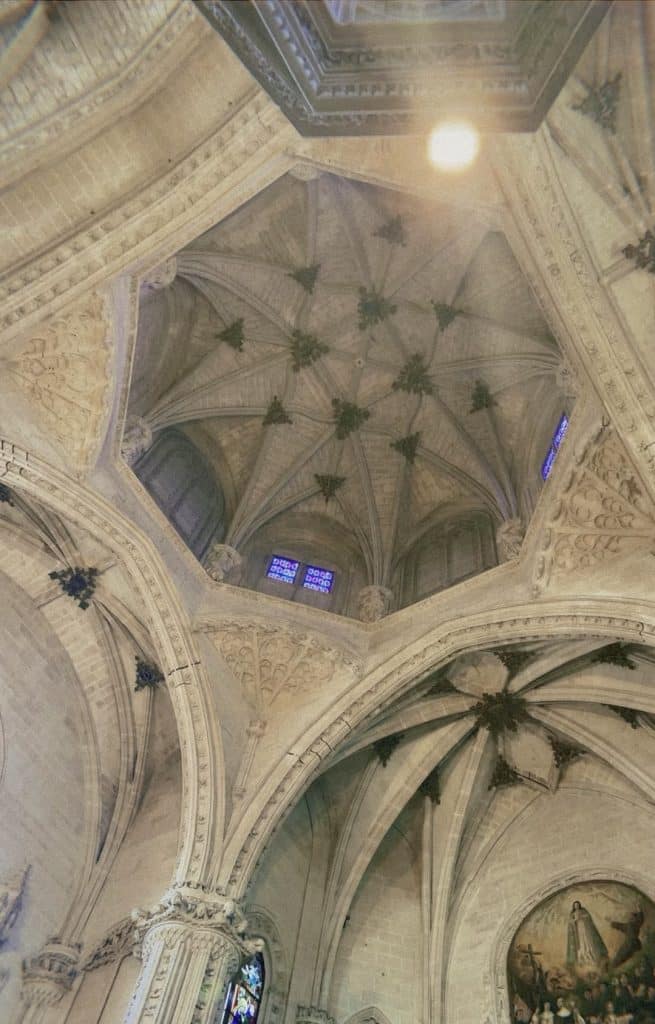
With construction beginning in 1227 and not ending until 1493, the Cathedral has side-by-side examples of each of the architectural styles that swept through Spain in the intervening two and a half centuries. It features side-by-side choir stalls of medieval and early Renaissance make, Neoclassical frescoes, and the famous Baroque transparente, a literal hole in the ceiling that bathes the whole church in sunlight.
The Cathedral also has examples of architectural styles that are uniquely Spanish. We saw multifoiled arches in the Mudejar style and an intricate Plateresque facade. Both of these styles take influence from Spain’s medieval history of Umayyad occupation beginning in 711 A.D. and make Spanish buildings distinct from other European architecture.
Day Two: Toledo
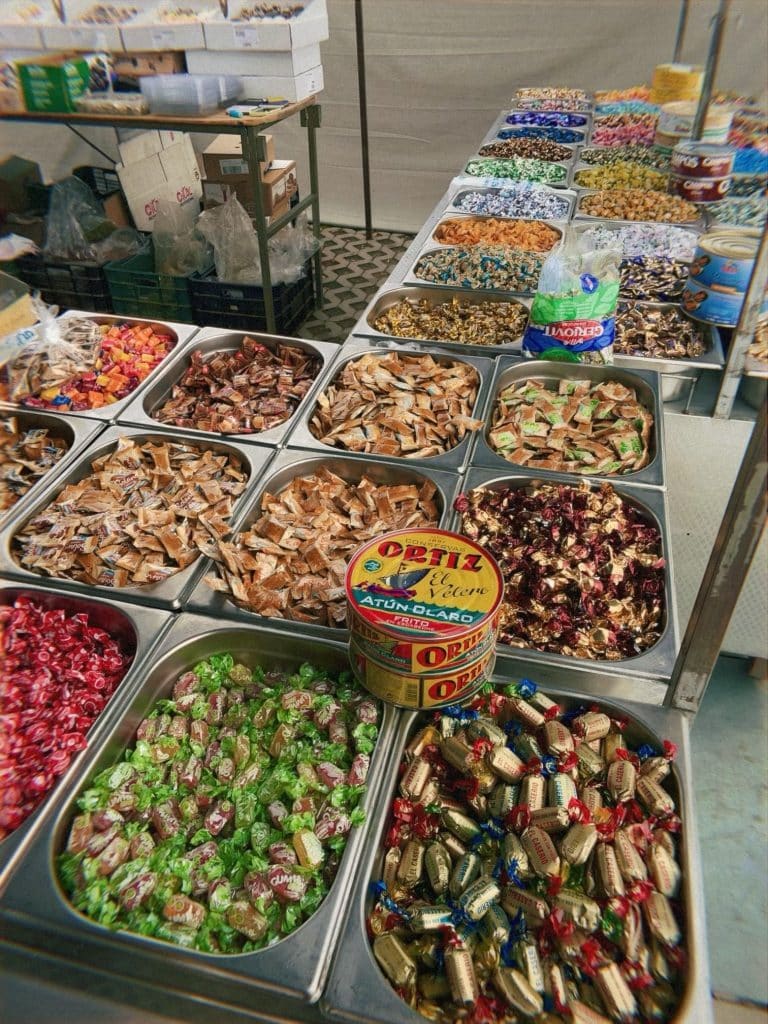
After breakfasting on café con leche and pastries, we trekked beyond the city’s ancient Roman walls to the newer side of town to visit its weekly flea market or mercadillo. Here, dozens of vendors set up tents and tables to sell jewelry, trinkets, clothing, pastries, and spices at very low prices. Some of us got in some practice haggling in Spanish, but most were perfectly happy with the ticket prices. I bought gloves from a sweet Spanish woman who, after feeling my cold hands, told me she would sell them to me for two euros instead of three.
Day Three: Madrid excursion
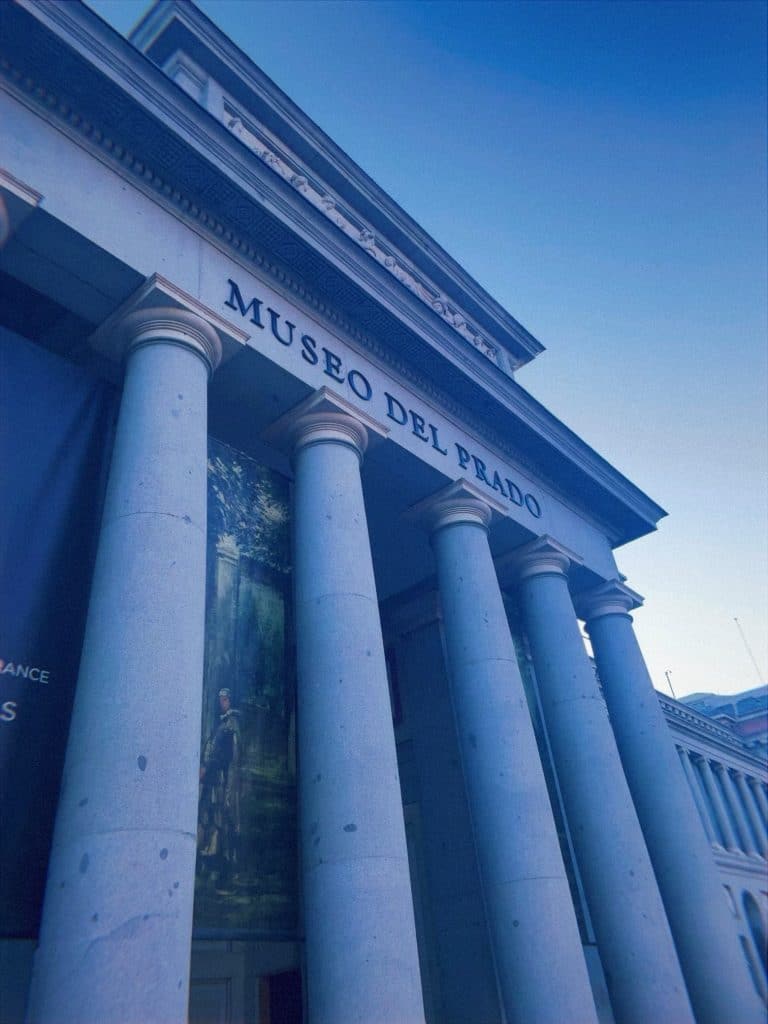
Our group took a short bus ride from the Fundación to Madrid to visit the Prado Museum. We had just talked in class about Bourbon Spain and the Neoclassical art and architecture movement that came with that dynasty. The Prado building itself is a good example of this, with classical-style columns and an emphasis on symmetry and imposition. Most of the city center where we explored is part of Bourbon Madrid, but having been as far as Lavapies, I know that other parts of the city have a more Neo-Mudejar or Gothic style.
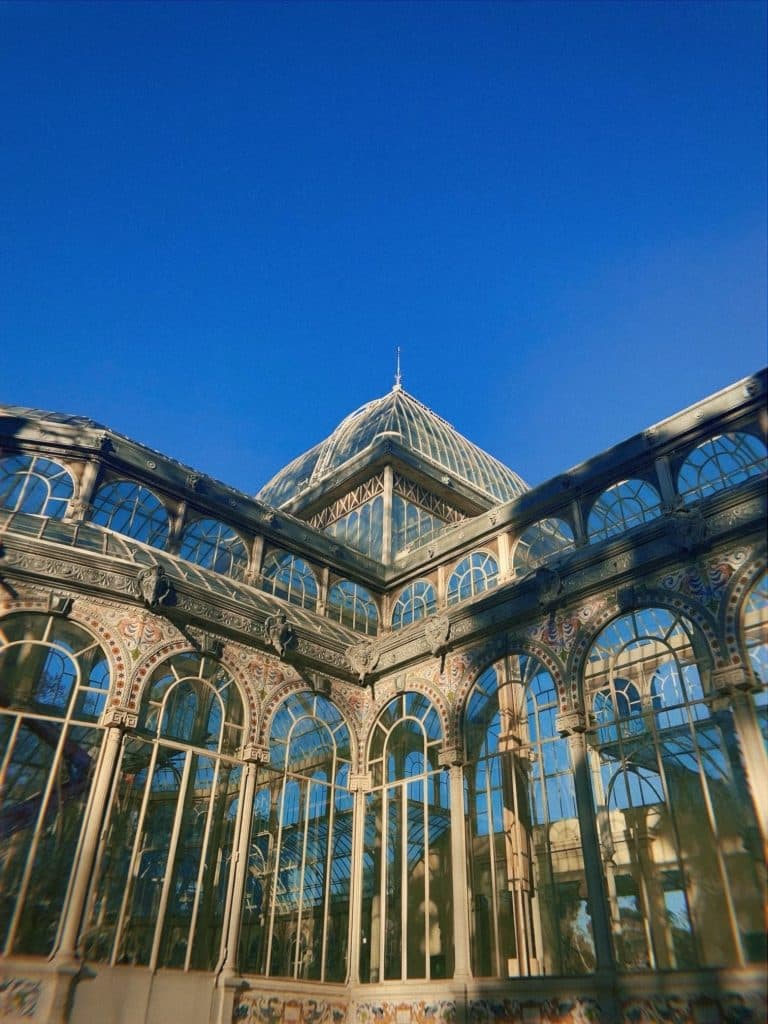
We also tried to go out to Madrid’s famous Crystal Palace in the Retiro Park, which is a Victorian-era addition but still part of the Bourbon legacy. It was closed, but we still got to enjoy the view from the outside and watch the ducks in the park’s pond.
Day Four: Toledo
We spent the afternoon walking to three former Moorish-style mosques that were converted into churches after the Reconquista reached Toledo in 1085: the Mezquita del Cristo de la Luz, Santo Tomè, and the Iglesia del Salvador. In the case of the Iglesia del Salvador, it was a Roman church, then a Visigoth one, and then an Umayyad mosque before becoming a church for San Salvador in the 12th century. I found Santo Tomè to be more interesting, though, because it is the home of the painting The Burial Of The Count of Orgaz by El Greco and the body of said Count, Don Gonzalo Ruiz.
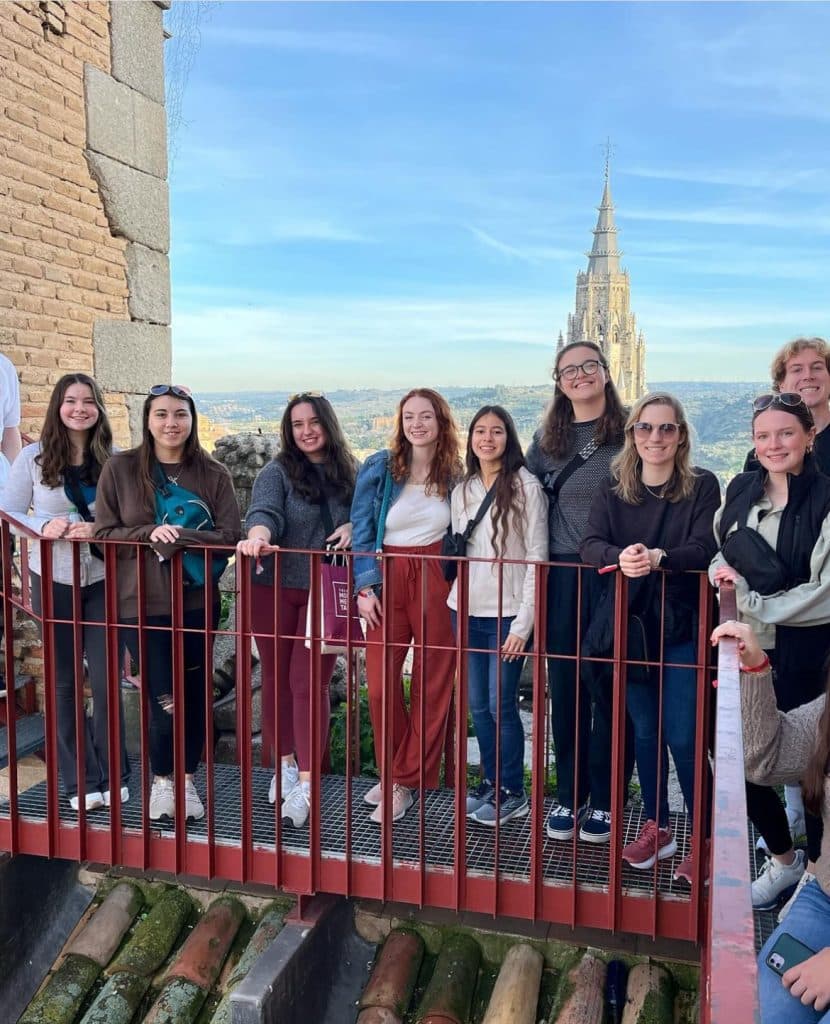
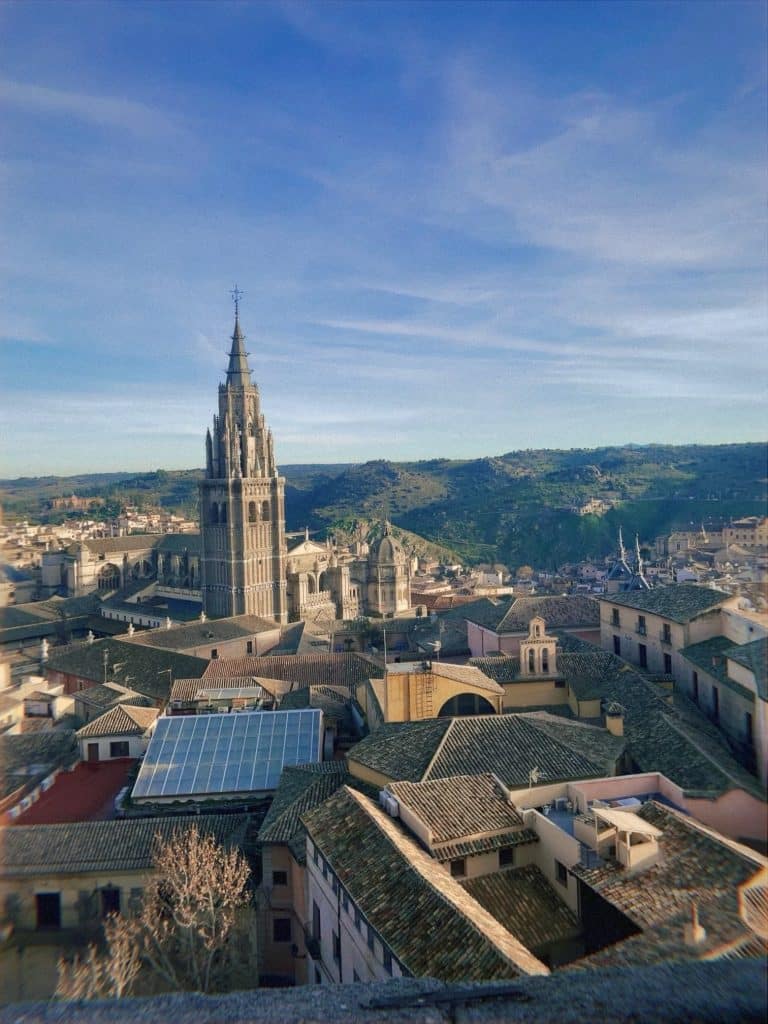
We also stopped by the Iglesia de los Jesuitas on a whim and got to see some incredible Baroque paintings and architecture. That church had stairs to the top of the tower where we got to enjoy an incredible view of Toledo’s skyline.
Day Five: Toledo
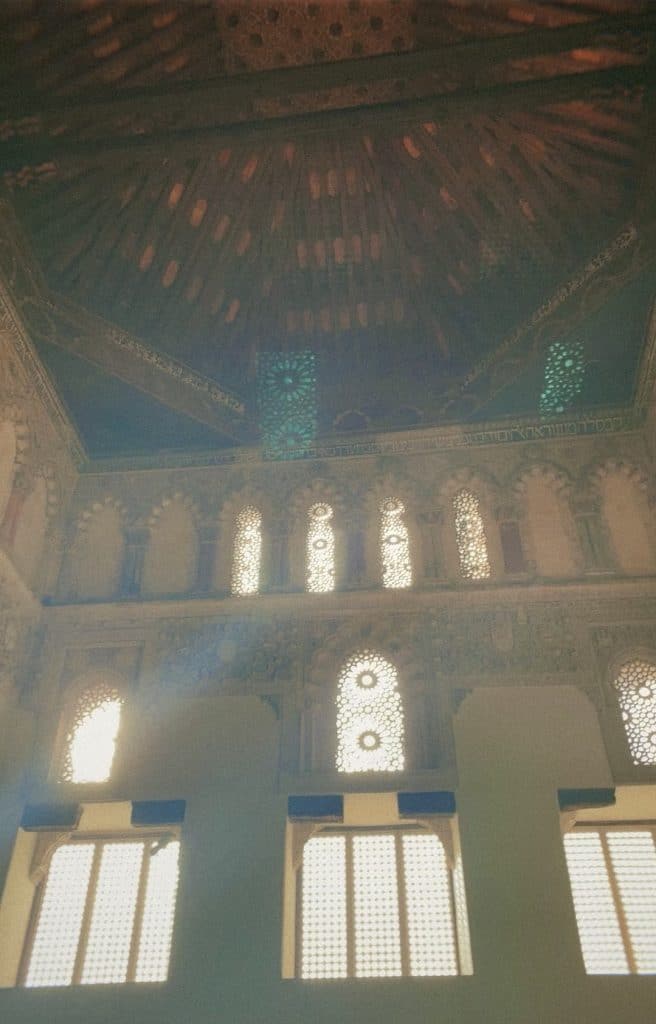
Similar to the fourth day, we walked to visit the Sinagoga del Tránsito, Santa María la Blanca, and San Juan de los Reyes in Toledo’s Jewish quarter. The first two are former Moorish-style synagogues that became churches after the Spanish Inquisition expelled Jewish people from the country in 1492, and have since become museums.
That afternoon, we ran into a toledano who happened to be one of Toledo’s famous gold artisans. He took us into his workshop and showed us the process by which he makes gold jewelry using a technique that originated in Damascus, Syria. All of Toledo’s gold artisans, so he told us, are proficient in a Renaissance style of jewelry making with features images of birds and flowers, and an Arabic style characterized by intricate geometric patterns.

Days Six, Seven, and Eight: Andalusia excursion
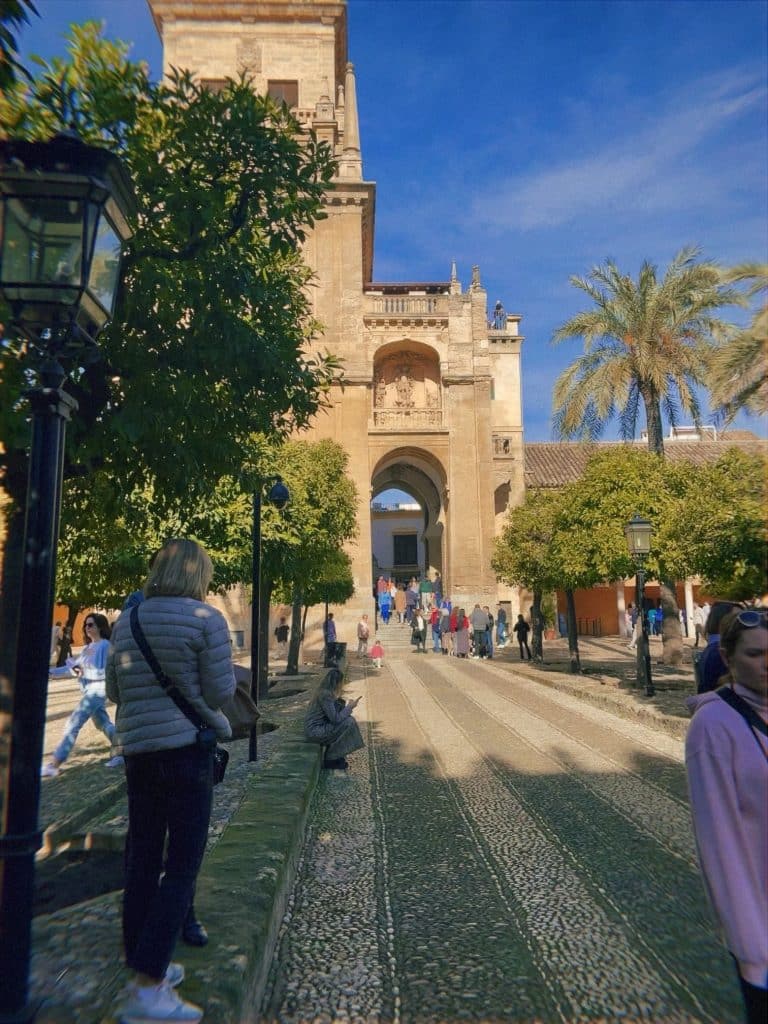
We loaded onto another bus before sunrise Friday morning to visit Córdoba’s famous Mezquita-Catedral. Like many of the sites we visited in Toledo, this was a mosque built during Muslim rule in 988 A.D. that was converted into a cathedral in the 13th century. Our tour guide was particularly interested in showing us evidence of Christians, Muslims, and Jews working side by side on the project and picking up design elements from one another.
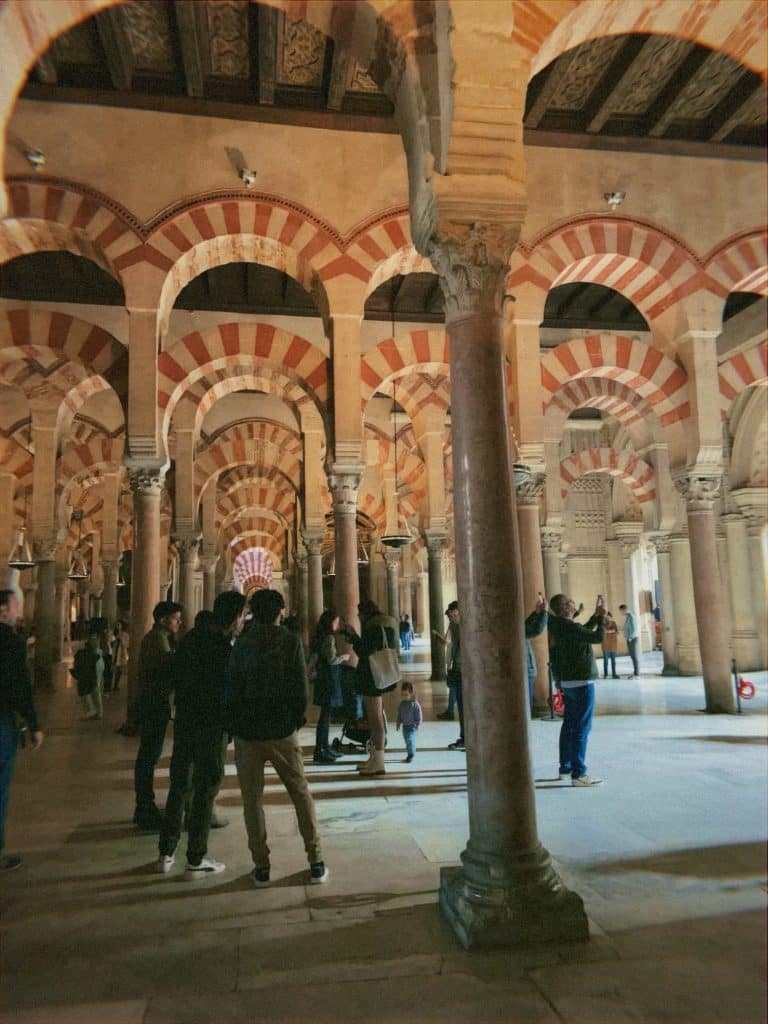
The cathedral section that was added on later was built over more than 200 years and incorporated a number of different architectural styles. This was a direct result of the expulsion of the Sephardic Jews from Spain, because Christians at the time were not permitted to lend money. The Spanish banking system collapsed after 1492 and all the funds for the cathedral had to be raised with taxes and donations. As a result, the cathedral has a section of late Gothic style, some classical Renaissance art, and a Baroque-style ceiling and choir section.
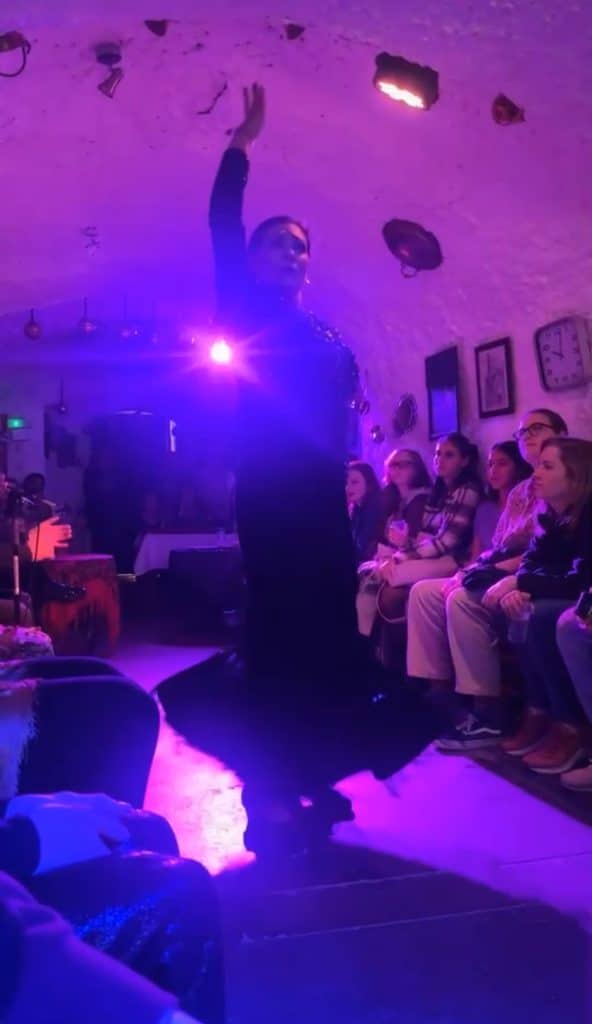
After our stop in Córdoba, we got back on the bus to Granada in time to catch a flamenco show in the city center. This very Spanish art form comes from marginalized communities in Andalusia, and specifically it contains elements of Romani, Jewish, and Moorish/Mudejar influence.
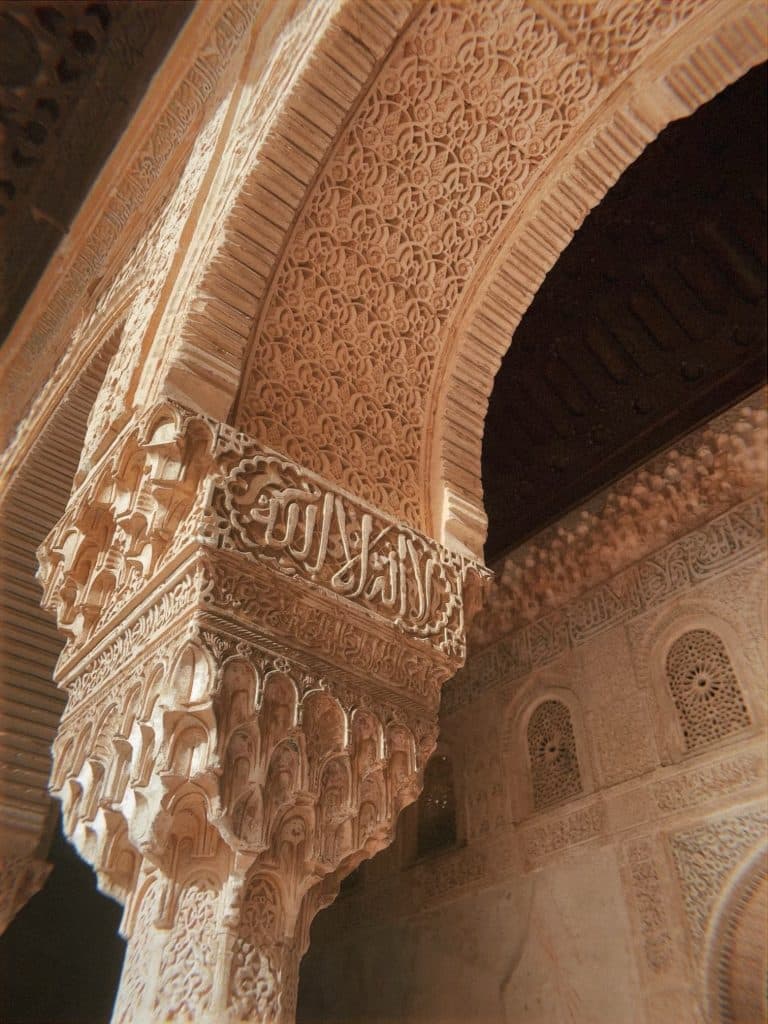
We spent Saturday morning touring the Alhambra in Granada. The palace was built in the Moorish style in the 13th century, and parts were redone or added in the Renaissance style after the Reconquista reached Granada in 1492. It’s one of the most popular tourist destinations in Spain because it is absolutely breathtaking, and is known for hosting operas in the spring when the gardens are in bloom.

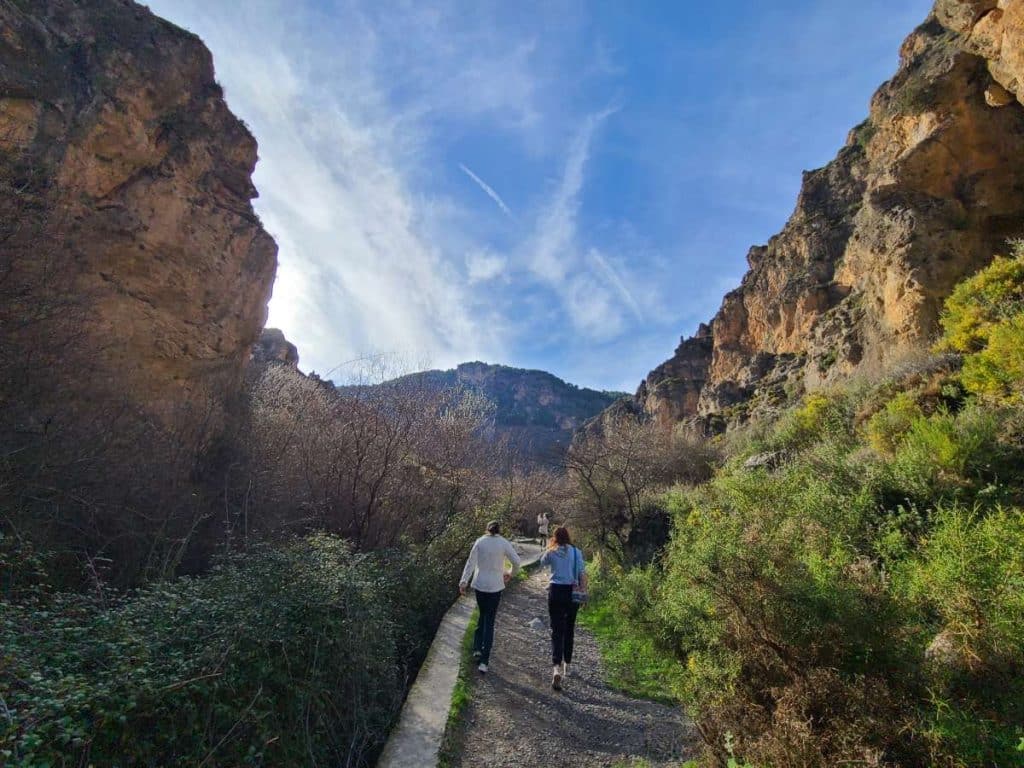
A small group of us woke up early Sunday morning to go hike the Cahorros de Monachil a little ways outside of Granada before catching the bus back to Toledo. The trail takes you up a portion of the Sierra Nevada mountain range, which contains the highest peak in Spain. We did not go all the way to the peak, but our trail took us past waterfalls, a river, and beautiful views of the mountain range.

Day Nine: Toledo
Now approaching the end of our trip, our class walked out to a few of the landmarks of Toledo that we had not yet visited. The Bisagra Gate is Toledo’s most famous entrance into the old part of the city. Though built in 1559, nearly 500 years after Toledo was recaptured by Christian forces and shortly before the expulsion of the moriscos, it incorporates Moorish and Mudéjar design elements. Similarly, the 14th-century Puerta Del Sol is primarily in the Romanesque style but includes Mudejar design elements. It has interwoven horseshoe arches in brick and utilized several different building materials together. This is even more interesting in this case because our student presenter shared that the gate was built by the Knights Hospitaller, a Catholic militant group that participated in the Crusades and other holy wars all around Europe and the Mediterranean.

I think all of us were heartbroken when we finally had to leave Toledo for the United States. Professor Soric and our hosts in Spain gave us the most unforgettable experience, and many of us have already made plans to return one day.