

Salvato’s Potatoes Serves Up Valuable Example for Exceptional Education Transitions
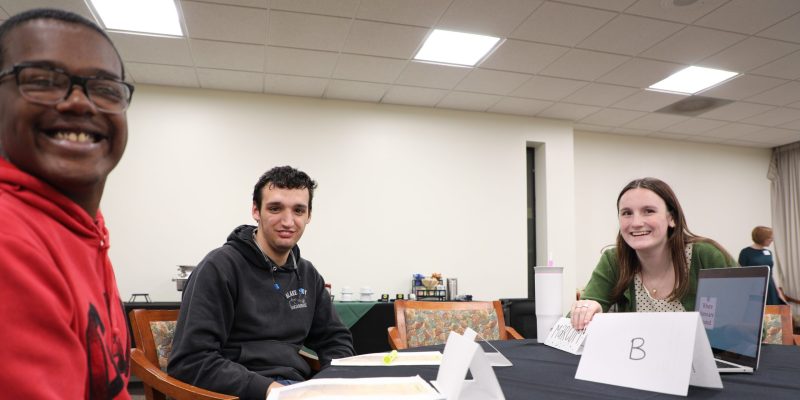
There was laughter and enthusiastic debate around the eight-top table in the Worsham Room in Estes Dining Hall as Tara Richio ‘26 led a group of high school students through an exercise simulating placing an order at a restaurant. Her pupils, students from the Adaptive Curriculum class taught by Sara Salvato at Mechanicsville High School, already know a little something about placing orders.
The Hanover County students were on campus as part of a teaching exchange focused on transition goals related to post-graduation employment and independent living. The Mechanicsville high schoolers presented their student-run business, Salvato’s Potatoes. The students bake potatoes, organize toppings, and deliver them to the school’s staff.
“For a lot of my kids, this is the last formal stop in their education,” Salvato explained. “My biggest thing is making sure that once they’re done with high school, I know they have a skill set to get a job.”
In turn, students from Dr. Amber Peacock’s EXED 357 course titled “Transition for Students and Teachers” delivered lessons that aligned with the high schoolers’ transition goals. Richio, an Elementary Education major and Exceptional Education minor, was one of six students who participated in the event.

While the lessons from RMC students were another chance for the high schoolers to hone life skills, like coping with emotions, understanding road signs, or reading the information on a receipt, it also gave the future educators hands-on practice in delivering a lesson plan. With a diverse set of students, each with their own needs, the exercise underlined the importance of creativity and flexibility.
“They’re going to teach this lesson four times in a row with different students who have different needs each time, so they have to adapt on the fly,” said Peacock.
Salvato comes from a restaurant family, the inspiration for Salvato’s Potatoes. The class serves their potatoes about once a month, but demand from other Hanover County schools has been increasing.
“These guys are all very proficient in packing boxes and don’t need adult help now,” Salvato commented.
“I think it’s important to understand their learning needs, this is what my students may experience in the future,” said Richio.
That lesson is important for all of the Education students in her class, some of whom are Exceptional Education majors, but all of whom will teach students with disabilities in their career.
“In my classes, we talk a lot about the importance of presuming competence,” Peacock explained. “Oftentimes, when people see individuals with disabilities, their assumption is ‘well, they probably can’t.’ That is not okay. If you assume a student can’t do something because of a disability, then you won’t teach them how to do it, and they won’t be able to do it. When teachers presume competence, they find creative ways to teach, overcome barriers, and provide the support students need to achieve their goals. That is what we are preparing our RMC teacher candidates to do.”