



Q&A: Telling Your Story with Karen Gulliford
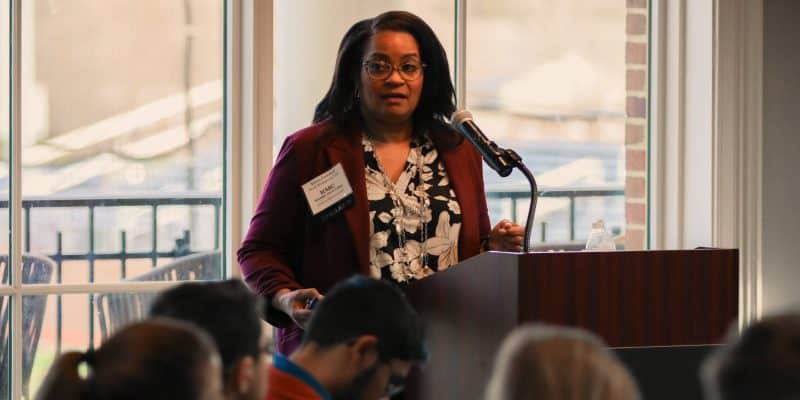
As part of the two-day career preparation Edge Boot Camp, students learn about crafting their personal stories for networking or interviews. This spring, the workshop was presented by Karen Gulliford, owner of Great Workplaces LLC, a human capital consulting business focused on developing leadership strength and building strong organizational cultures.
We sat down with Gulliford to learn more about how she advises students to use storytelling in their career search.
Why is it important for students, and anybody seeking a job, to be able to tell their story?
I’ve been in human resources, I’ve been a recruiter, I’ve interviewed thousands of people. I want to give students some structure on how to prepare for networking, just getting to know new people, and especially an actual job interview.
What I hope to do is help the students understand how stories connect with other people, and how connection provides an emotion, so that people will remember you and also want to help and support you along your career. We talked about all the different scenarios where you will be talking about yourself, and how to get comfortable with that. And also how to listen to other people’s stories and develop connections with others.
What are some ways college students can use their college experience in their stories?
It’s important to review some of your recent experiences in college, maybe some summer jobs you’ve had, maybe working in group projects in school, and how all of those experiences create stories and create ways of connecting with people and sharing about yourself.
You recommend a structure. Why is a structure helpful when interviewing?
Being prepared with some type of structure will prevent you from rambling. It’ll help you stay focused when you speak to people, it will help you be more impactful, and it will help you create that energy and connection.
What are some structures that students can use to tell their story?
One is the STAR method, which stands for Situation, Task, Action, Results. So, here’s how it started, here’s what happened, here’s what I had to do, then this is the pinnacle of the story: this is what I accomplished. Or maybe I failed, but this is what I learned.
We also discussed the Story Spine that Pixar uses as a formula for their movies. It begins with “once upon a time,” and then there is a chain of events that happen to produce some type of conflict. The story spine ends with triumph; the conflict ends in resolution, or a different direction, or bringing people together, or people finding each other again.
How does the Edge Boot Camp prepare students for interviews and other situations in their careers?
I think that students are eager to get some of the nerves out of the way; quite honestly, interviewing is nerve-racking. I’ve noticed that students embrace the time to really think about these things and to practice a little bit. They can take all the things they learned and take it right into the networking reception that’s part of the Boot Camp. I love the fact that they can apply lessons learned during my workshop during Boot Camp.
How will these skills carry on throughout students’ lives?
I think Randolph-Macon students are fantastic, and they are willing to learn and to be coached. And that’s a skill that they’re going to need through their careers—being open and willing to be taught and to continuously learn. I hope that we can build some confidence and some skills around things that they can take with them later in their career.