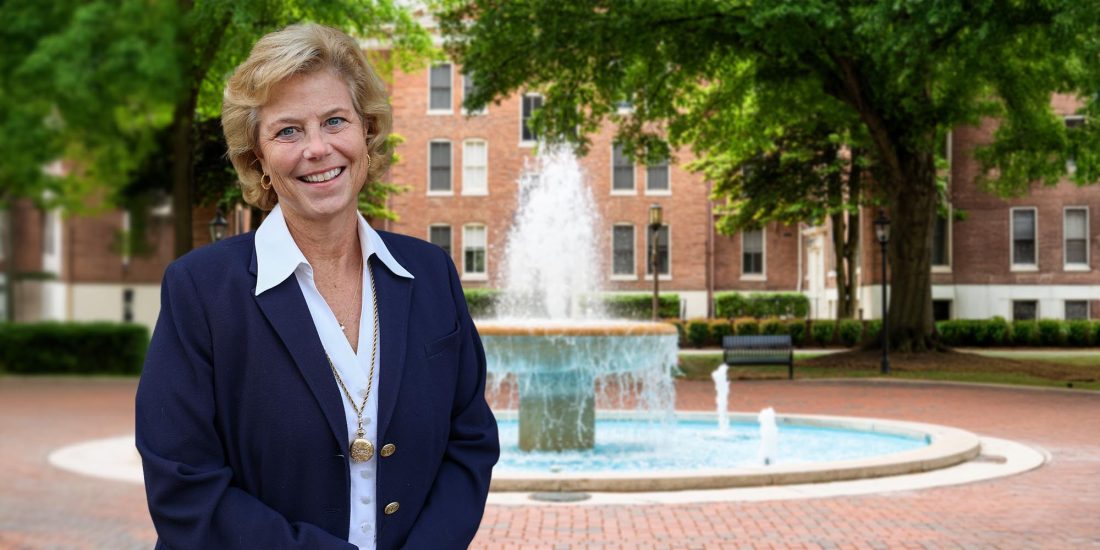




President Hill Featured as Chapter Author in National Collection on Community, Innovation, and Change

The writing of Randolph-Macon College President Dr. Michael E. Hill is featured in the newly released Rethinking Rural Volume II: Reflections on a Changing Community, a collection of essays from a wide range of thought leaders published on Sept. 18, 2025, through South Dakota Press.
Dr. Hill—one of eight distinguished authors from the fields of education, healthcare, philanthropy, tribal governance, and rural development—penned a chapter titled “Rural America: Unexpected Incubator for Broader Solutions.” The essay explores how the qualities of a rural community, like shared responsibility and problem-solving, and commitment to quality of life, create a perfect atmosphere to be a research-and-development lab for intractable problems and solutions.
“I am honored to be included in this important second volume of scholarly work examining the ways in which rural America plays a vibrant role in today’s world,” said Dr. Hill, who drew on his previous experience as the president of Chautauqua Institution. “My co-authors and I endeavored to shine a spotlight on the unique qualities of rural communities and the ways in which they provide a powerful resource to solve major issues in the nation and beyond.”
“While my own reflections lift up a great example from Chautauqua Institution, I look forward to the parallels we have at RMC to ask and answer similar questions as members of the community of Ashland, Hanover County, and the greater Richmond region.”
The Rethinking Rural as an initiative of the Rural Philanthropy Institute, an organization that fosters research, dialogue, and engagement at the intersection of rural America and the nonprofit sector. For this volume, authors were posed two questions: How would you describe rural America today? What do you imagine it will be like for the next generation? Their reflections highlight the transformative forces reshaping rural communities.