

Poetry Meets Protest in New English Course

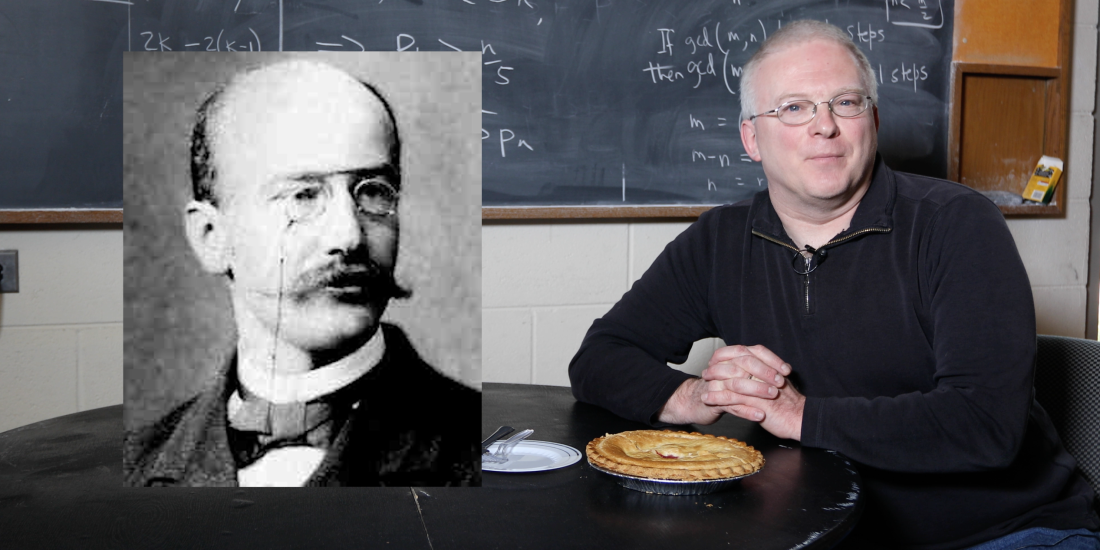
How do we use poetry to make something happen? That question was at the core of a class taught this spring semester by Professor of English Bob Volpicelli energetically titled “Poetry! Politics! Protest!”
The course, taught for the first time this term, studies contemporary poetry and its application to a range of activist causes. It is Volpicelli’s aim to illustrate that poetry is not a distant, old-fashioned discipline, but instead a medium that’s relevant to students’ lives and the causes they care about.
“My longstanding desire as a teacher has always been to connect the study of literature to what’s going on right now,” Volpicelli explained.
While the fully enrolled 300-level course has plenty of English majors, there are non-majors as well, students that Volpicelli says “enjoy writing and enjoy art, and who see both writing and art as a means to say something.”
The class has studied poems concerning the environment, racial justice, disability advocacy, and much more. Classes generally focus on several works related to one topic, followed by deep discussion.
One such work was Craig Santos Perez’s From Unincorporated Territory [åmot], winner of the 2023 National Book Award for Poetry. Perez is from Guam, a U.S. territory in the North Pacific, and his poems exist at a cultural crossroads. The personal book of poems touches on the legacy of colonialism, Guam’s status as a military outpost, a dying language of the native people (Chamoru), and an endangered species of bird, the Micronesian kingfisher.
Volpicelli points to a particular story in Perez’s book, in which he describes learning to weave fishnets from his grandfather, while also learning the story of his internment at a Japanese war camp during World War II, as emblematic of the course’s themes. “There is no personal story that’s not untouched by these big social and political issues,” Volpicelli remarked.
More than just reading Perez’s poems, the students had the opportunity to speak with Perez during a virtual Q&A session. When asked for advice for those who wanted to write, Perez emphasized the importance of making space for yourself to make something, opining that in a world that keeps people busy, being creative itself can be a political act.
In interdisciplinary fashion, students created unique visual representations of a poem of their choosing as a final project in the course. The exercise paid homage to the poetry tradition of “broadsides,” or large sheets with poems printed for public consumption. The projects showcased the students’ creativity but also challenged the reader to engage with the poem in an enhanced way.
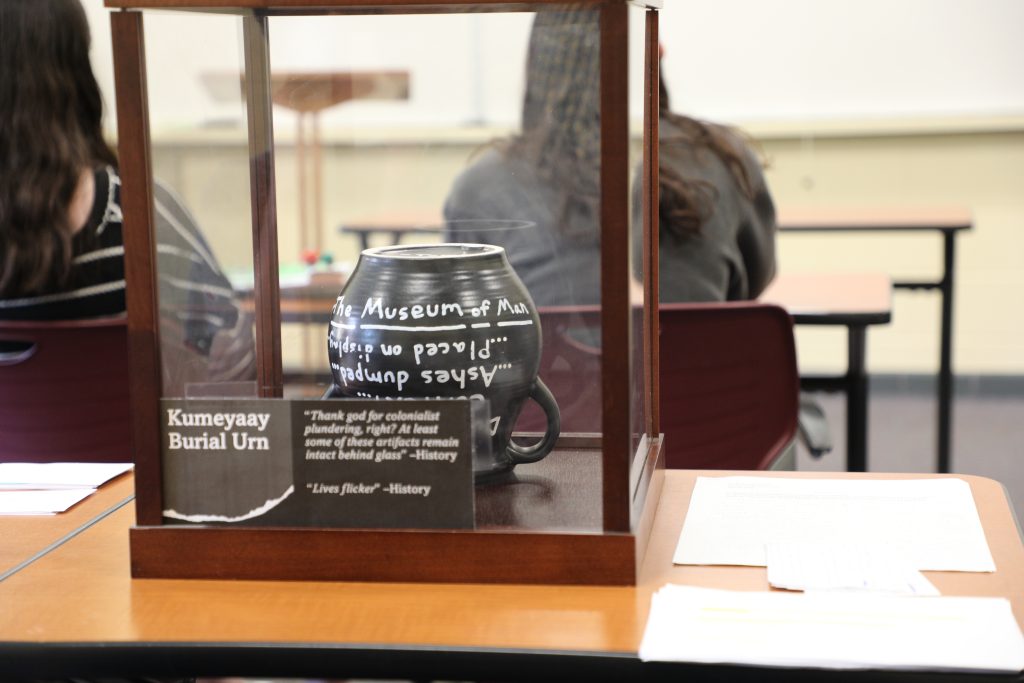
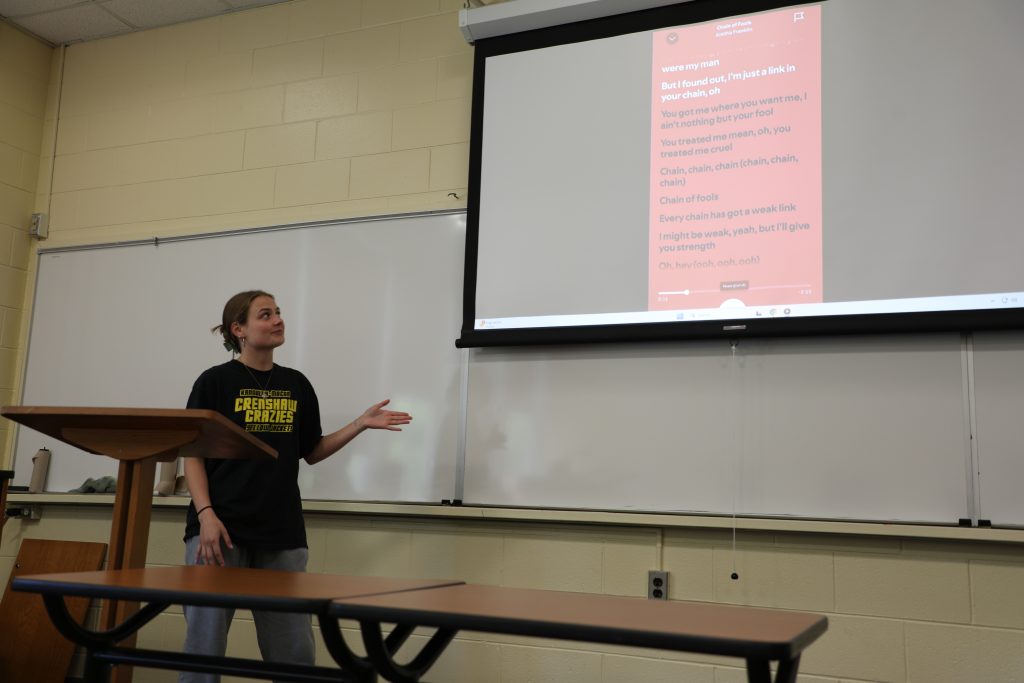
An overturned urn in a glass box, presented by Jason Sbertoli ‘26, provoked questions of the merits of archaeology against the spiritual wishes of indigenous people, asked in contemporary poet Tommy Pico’s writings. A video recording made by Gracen Luallin ‘26 and set to the Aretha Franklin anthem “Chain of Fools” highlighted the way another of Pico’s poems engaged with popular music and social media. Sophia Lambert ‘26’s hand-painted scene of various animals eating at a dinner table evoked Animal Farm-esque musings on which animals are noble enough for poetry, a question asked by Elizabeth Acevedo in a poem affectionately known as the “Rat Ode.”
Ultimately, the course, which Volpicelli plans to continue offering, works to give students the skills not only to analyze poetry, but to harness their own creativity to affect the causes that are important to them.
“We can bring things that we are really passionate about into the classroom and study them,” Volpicelli said. “And I think that art and creativity are really important avenues for all of this.”