

New Book Details RMC Alumnus’s Work to Preserve His Ancestors’ Remains and Legacy
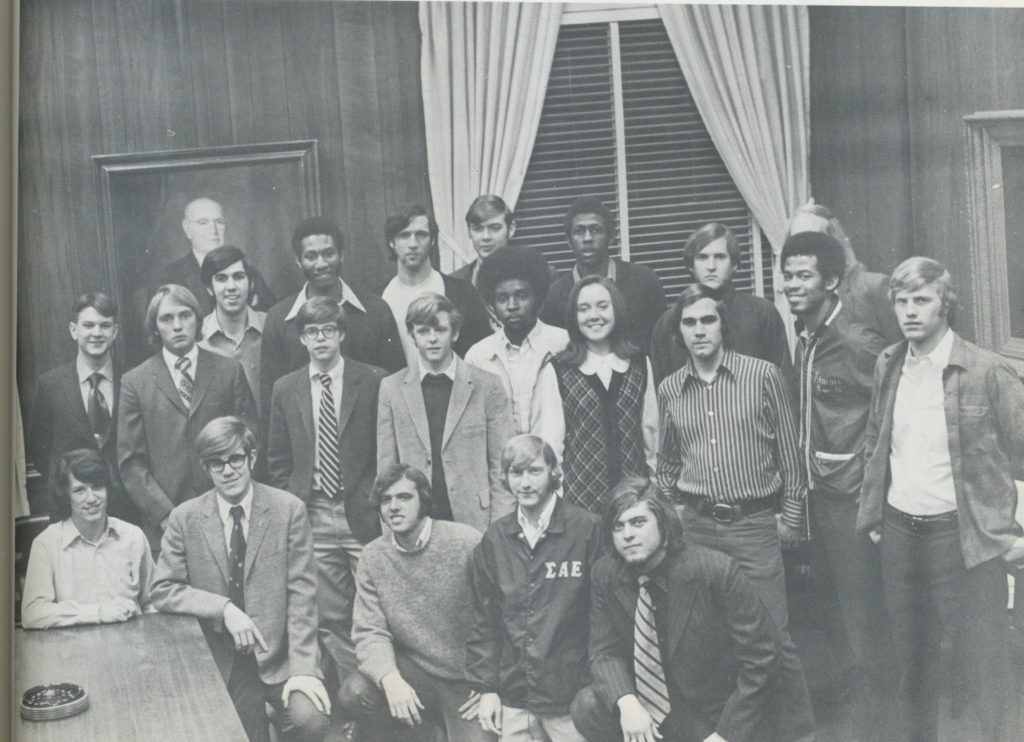
The late Dennis Howard ’72 was a larger-than-life figure, both figuratively and literally. A basketball player who stood well over six feet tall, Howard was the first Black four-year graduate of Randolph-Macon, following in the footsteps of H.A.P. Payne, who’d graduated after entering as a transfer. Howard made such an impression on his fellow students that he became president of Randolph-Macon’s student body.
Howard was also a man of conviction, and a book from author Tom Shoop illustrates this conviction with the tale of his remarkable quest. A Place Called Ilda (UVA Press, 2024) tells the story of a forgotten northern Virginia community called Ilda and Howard’s quest to make sure that the remains of his ancestors who lived there were preserved amidst a Virginia Department of Transportation (VDOT) road expansion project in the area.
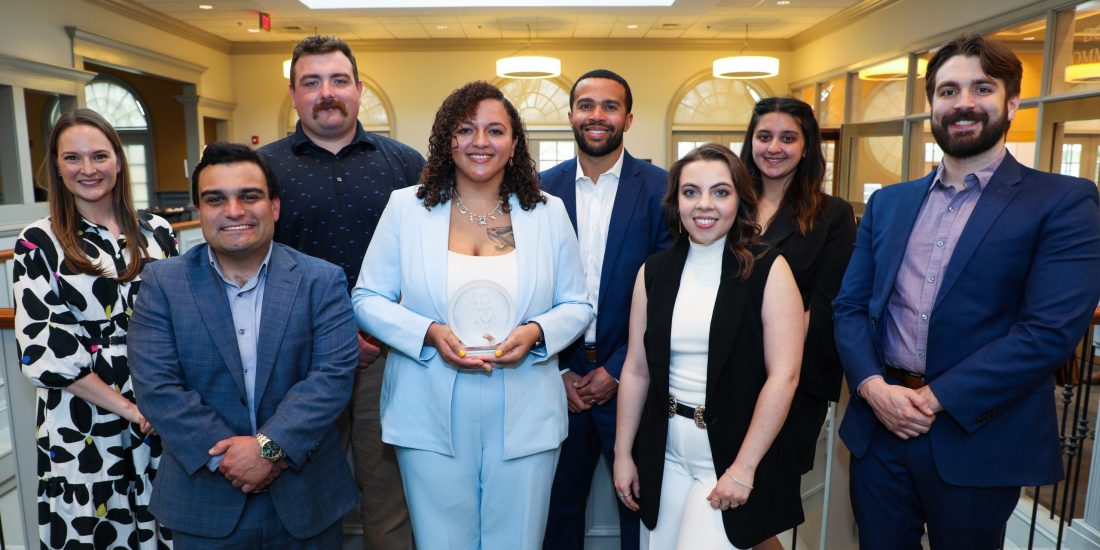
Shoop visited Randolph-Macon’s campus on Tuesday, February 18 to discuss the book at an event hosted by RMC’s Multicultural Alumni Association. There, he gave details of Howard’s life as well as commentary on the book’s origins and narrative.
Located at the now-sprawling intersection of Little River Turnpike and Guinea Road just east of Fairfax, Ilda grew around the blacksmith shop of Horace Gibson and Moses Parker, two formerly enslaved men who opened it just after the Civil War. It became a thriving mixed-race neighborhood with a black-owned business at its core, which was a rarity at the time. Gradually, the community faded as it became a whites-only development and an inhospitable place for its Black residents.
Howard, who was Gibson’s great-grandson, never lived in Ilda. However, in the early 2000s, when VDOT had plans to add a lane to Guinea Road, he knew the site of the project was an Ilda graveyard. A well-researched keeper of his family’s history, he spent months demanding an archaeological dig, which VDOT obliged, in Shoop’s words “to humor Dennis.” On the first day of the dig, remains of dozens of people were found.

“Dennis would show up at the site from time to time, unannounced, to verify they were being handled carefully and respectfully,” Shoop explained.
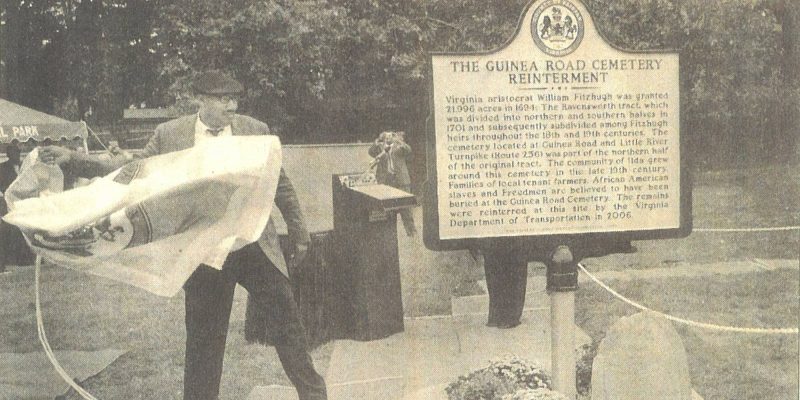
Instead of the remains being simply paved over, they were exhumed and interred at Pleasant Valley Memorial Park in 2006. At their original site on Guinea Road, a historical marker was installed to tell the story of Ilda and its residents.
“The fact that the marker is there at all is due to the efforts of Dennis Howard,” Shoop said.
Shoop was joined at the event by David Meyer ’74, the former mayor of Fairfax. “It’s one thing to correct a wrong, it’s another to change the way people think,” Meyer reflected to the assembled group. He explained how VDOT’s procedures have changed following Howard’s advocacy.
Also in attendance was Howard’s daughter, Shakira, who recalled accompanying her father on weekend trips assisting with research.
“It’s just nice to know that there’s other people that recognize how much work he put in, because I saw it firsthand,” she said.

Howard’s passion for advocacy has been passed down to his descendants. Shakira serves on the Board of Trustees for the Jermantown Cemetery, a burial ground for enslaved and freed African Americans. She’s gotten her son—Dennis’s grandson—Gabriel engaged in the work as well.
In reflecting on the arc of Howard’s fight and victory to honor his ancestors, Shoop noted that the story of Ilda is one that reflects many themes in American life.
“I don’t know exactly what fed Dennis’s drive and commitment to tell Ilda’s story and preserve its memory. But I believe that at least part of it was that he knew in his heart that Ilda’s story is America’s story,” Shoop said. “What happened at the crossroads of Guinea Road and Little River Turnpike can tell you an awful lot about how Fairfax County, Virginia as a whole, and ultimately the nation have changed and not changed.”
To read an excerpt of A Place Called Ilda, check out the latest issue of Randolph-Macon Today.