

Making Disability a Part of the Conversation with Dr. Kate MacDonald
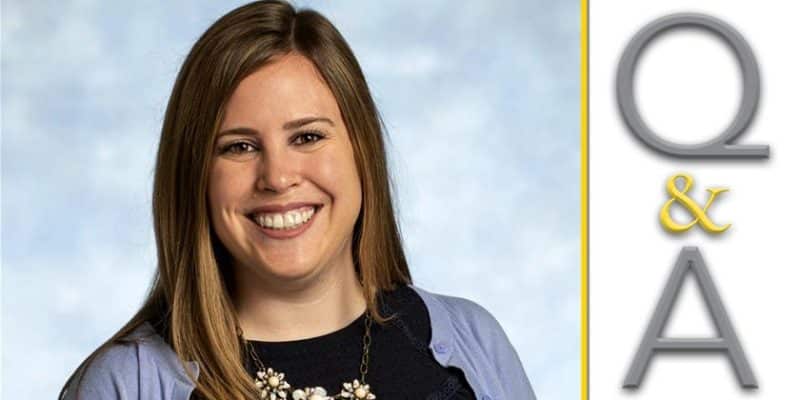
Every work day is different for Kate MacDonald, Director of RMC’s Office of Disability Services. If she’s not meeting with students to talk about how the College can accommodate their specific needs, she’s usually coordinating with the Higgins Academic Center (HAC) and other campus partners to promote campus-wide resources, helping oversee the testing area for students with assessment accommodations, supporting faculty members, advising prospective applicants on how to register with her office, and more. She even finds time to teach classes in RMC’s Education Department.
We caught up with Dr. MacDonald to learn more about Randolph-Macon’s Office of Disability Services and how her team is working to ensure disability is recognized as a vital part of community life and diversity.
Why did you choose to work in the field of higher education disability services, and what do you find most rewarding about it?
I worked in K-12 exceptional education prior to working in disability services in higher education, which I absolutely loved. Later, I decided I wanted to work with students who were already in or about to enter the college environment because I’ve always felt there’s something very special about that age. It’s generally the period of life during which students enter adulthood. They’re learning what they’re interested in and passionate about, and developing a stronger sense of self. I find it rewarding to work alongside college-aged students as they make important decisions and connections.
Describe your office’s guiding philosophy.
Our vision is to foster an inclusive campus climate. We want students with disabilities to be able to take full advantage of the College’s educational, residential, social, and cultural opportunities and have the opportunity to have as diverse a college experience as any other student. There are many ways we work to support that vision, including (but not limited to) speaking with students with documented disabilities about how their disabilities may impact them in a college setting, providing them with equal access to college programs and services, and making sure disability is part of the conversation during community planning.
What’s a common misconception people have about students with disabilities?
One of the most common misconceptions I encounter is that students with disabilities aren’t as academically capable as those without disabilities. Disability is not a factor in RMC’s admission process, and the College admits students without any knowledge of their disability status unless the student explicitly discloses that information. That means students with disabilities demonstrate the same levels of academic and extracurricular achievement as all admitted students. They pursue graduate school, accept stellar job opportunities, win national awards, make headlines for their athletic play, and generally excel in their pursuits. There’s no vast difference in achievement between students with disabilities and those without, nor are there always visible or behavioral markers to indicate that a student has or does not have a disability.
Another common misconception is that disability accommodations offer students an “unfair advantage.” In reality, disability accommodations are not provided to ensure student success, and are instead determined based on functional limitations resulting from a disability, accommodation reasonableness, and curriculum impact. Disability accommodations allow students with documented disabilities full access to the College’s academic programs and the same opportunity to succeed that all other students possess.
What’s one thing you wish more people knew about your office?
We encounter a fair number of students who express hesitations about registering with the Office of Disability Services because they don’t want other people to know they have a disability. We want students to understand that our office keeps the protection of students’ right to confidentiality at the center of everything we do. If a student doesn’t want faculty and staff members, or others outside the RMC community, to know they have a disability, we do not share that information. The only people who will know are the ones the student directly requests we share that information with. This also means that a student’s registration status with the Office of Disability Services does not appear on student transcripts, job or graduate school applications, etc.
Do you have any advice for students seeking accommodations through your office?
First, if you’re unsure if Disability Services can assist you, come talk to us! Meeting with the Office of Disability Services doesn’t mean you have to register with us or request accommodations. We want to provide as much information as possible so students can make an educated decision about their options. We give an honest look at what working with Disability Services may be like and let students decide for themselves. Some students, after speaking with us, decide they don’t want or need our services, and we respect those decisions. We’re here if you want to seek our assistance, but students with disabilities are by no means required to register with Disability Services.
Second, if you’re thinking of registering with Disability Services and requesting accommodations, make contact with us as soon as possible. We can do more for students if we know about their concerns and challenges in advance. But we can’t implement assessment accommodations for an exam that has already happened, for instance. Accommodations are not retroactive.
What strategies might students use to become better self-advocates for their disability in college?
Most people aren’t born with an innate ability to advocate for themselves. It’s a skill that takes practice and patience to learn. I always recommend that students start with an understanding of what mode of communication works best for them. Do you prefer to speak face-to-face or over the phone? Does it help you to write things out beforehand? If having a conversation is intimidating, are you more confident over email? Have you tried recording and listening to yourself speak before having an in-person conversation in order to practice?
Be upfront about your communication preferences as you initiate conversations about your disability, and don’t be afraid to rely on others for help. Identify people in your life—friends, parents, teachers, coaches—who understand you, and ask them for feedback about your communication style, strengths, and challenges.
You don’t need to go from zero to 100, either. Take baby steps. Maybe start with making an appointment for yourself if this is not something you have done before, or send an email to your faculty member about a question you have after class. Once you begin to build upon those small successes, you’ll see improvements in the way you advocate for yourself.