

Art History SURF Project Examines Narratives at Virginia Plantation Museums
Who controls a narrative? How does this question affect how a story is told and what context is included?
These critical questions were at the center of Allison Seiberling ’26’s Schapiro Undergraduate Research Fellowship (SURF) project on plantation museums in Virginia, in collaboration with art history professor and faculty mentor Dr. Evie Terrono.
Seiberling’s nine weeks of summer research focused on plantation museums, which are among the most popular venues of heritage tourism in the region. They range from the estates of former presidents like Mount Vernon and Monticello, to smaller, privately owned sites like the Tuckahoe and Shirley plantations. Seiberling and Terrono set out to examine the evolution of how these sites have addressed, interpreted, and communicated the stories of enslaved populations in relation to their plantation’s history.
“Slavery is something that was not always discussed,” Seiberling, an archaeology and art history double-major, explained. “Because it was uncomfortable and the people that were leading those discussions weren’t really interested in that history. They were more interested in preserving and memorializing Thomas Jefferson, George Washington, the founding fathers, and heroic figures like Patrick Henry.”
It was Patrick Henry’s home, Scotchtown, and a combination of Seiberling’s two majors, that led her to pursuing this line of research. Through an archaeology field work course, she worked on excavations at Scotchtown, just down the road from Randolph-Macon College. Through that experience, she connected with the Scotchtown staff and worked as an interpreter at the site last summer and throughout the 2023-2024 school year.
In discussing prospective topics for a SURF project, Terrono suggested the study of the diachronic shift in the narratives of plantation museums, and particularly the interpretation of the realities of enslavement at these sites. Participating in conversations about Scotchtown’s operations and their developing commitment to telling the stories of Henry’s enslaved people inspired Seiberling to approach this question from an art history lens.

“These are very challenging stories to tell,” Terrono said. “Particularly for sites that depend for their financial wellbeing on income from visitors, they had to step lightly. Whereas in the last 10 years, and in some cases since 2020, there is a greater interest—because of broader cultural and political shifts—in telling the stories of African American enslaved populations.”
Plantation museums were largely restored and organized as tourist destinations following World War I, but most were not run by museum professionals. Often, enthusiastic volunteers—principally women—carried the weight of historical interpretation. Some volunteers were descendants of the plantation owners themselves. Since the early 21st century, historians and art historians have integrated historical truths in their storytelling and trained site docents. Even at smaller plantations, there has been an increasing commitment in the last five years to the lives, accomplishments, and contributions of enslaved populations.
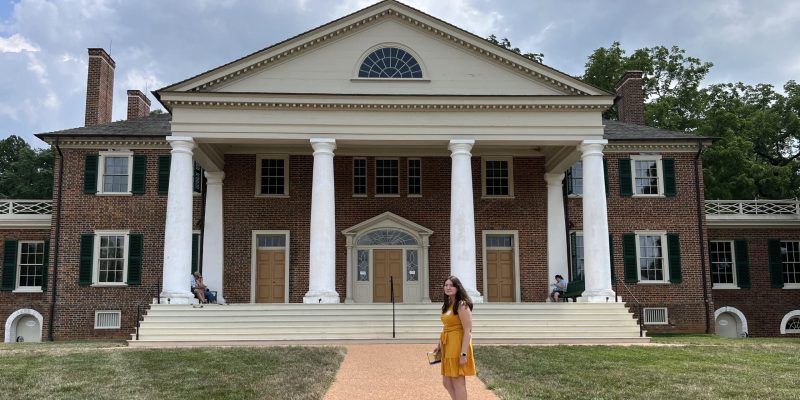
Seiberling conducted an extensive review of existing literature on the subject in addition to archival materials and conversations with historians at various sites. Of course, she and Terrono personally went on tours at as many of the plantation museums as they could: Scotchtown, Red Hill, Shirely, Berkeley, Tuckahoe, and Montpelier. They plan to continue working on this project with visits to Monticello, Mount Vernon, and others.
In addition to more complete storytelling about enslaved communities, Seiberling also focused on the inclusion of content and voices from the descendants of enslaved populations.
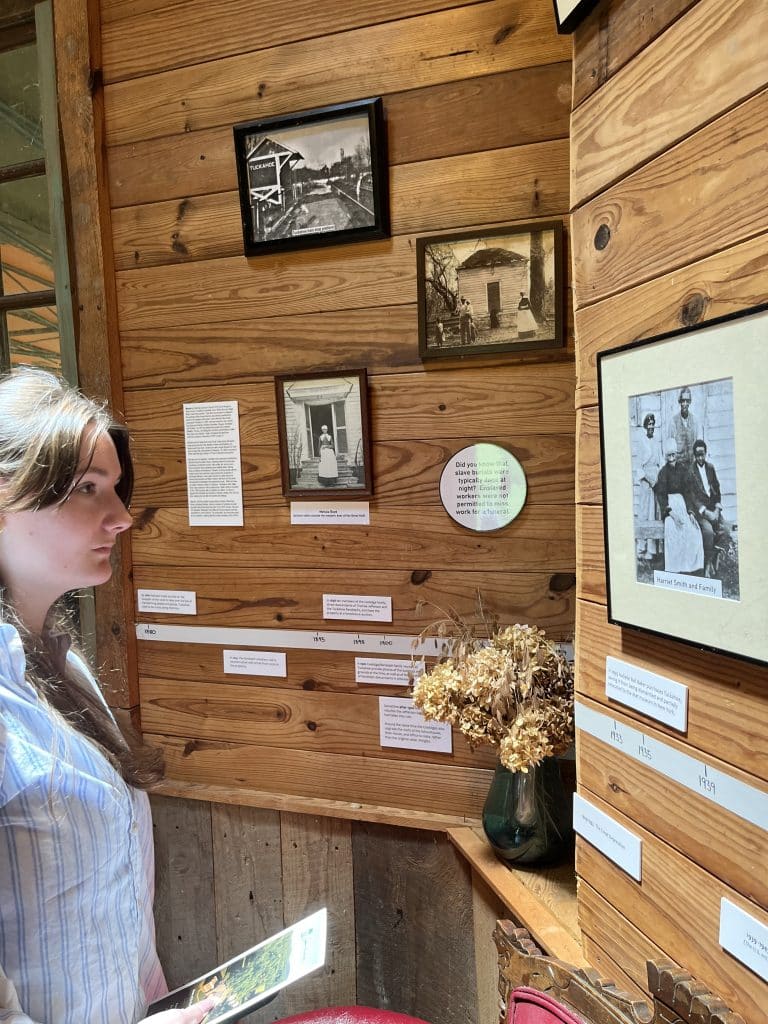
At James Madison’s Montpelier, the Montpelier Descendants Committee has been instrumental in reorienting the narrative and many are also featured in interactive panels that bring visitors face-to-face with the descendants and their ancestors.
Building a descendant community isn’t without challenges. In addition to the time and resources to track down and organize content, many descendants don’t want to rehash the pain and suffering of their ancestors. But involving these communities can have a profound impact, Seiberling said. “It’s more historically accurate. There’s more integrity there.”
The findings of Seiberling and Terrono’s research have the potential to impact the interpretive approaches at plantation museums.
“We consider this applied art history because it’s not only theoretical,” Terrono said. “It’s the kind of content that we can share with sites. And we’ve had several people say, ‘Oh, we would love to read what you write.’ So it engages with a community.”
Seiberling’s summer research has been directly related to her career goal: to be a curator at a historical site. In addition to conducting archival research, networking, and bolstering her resume for graduate school applications, this fall she will have the opportunity to present her work at the Southeastern College Art Association Conference, the second-largest conference for art history in the United States.