








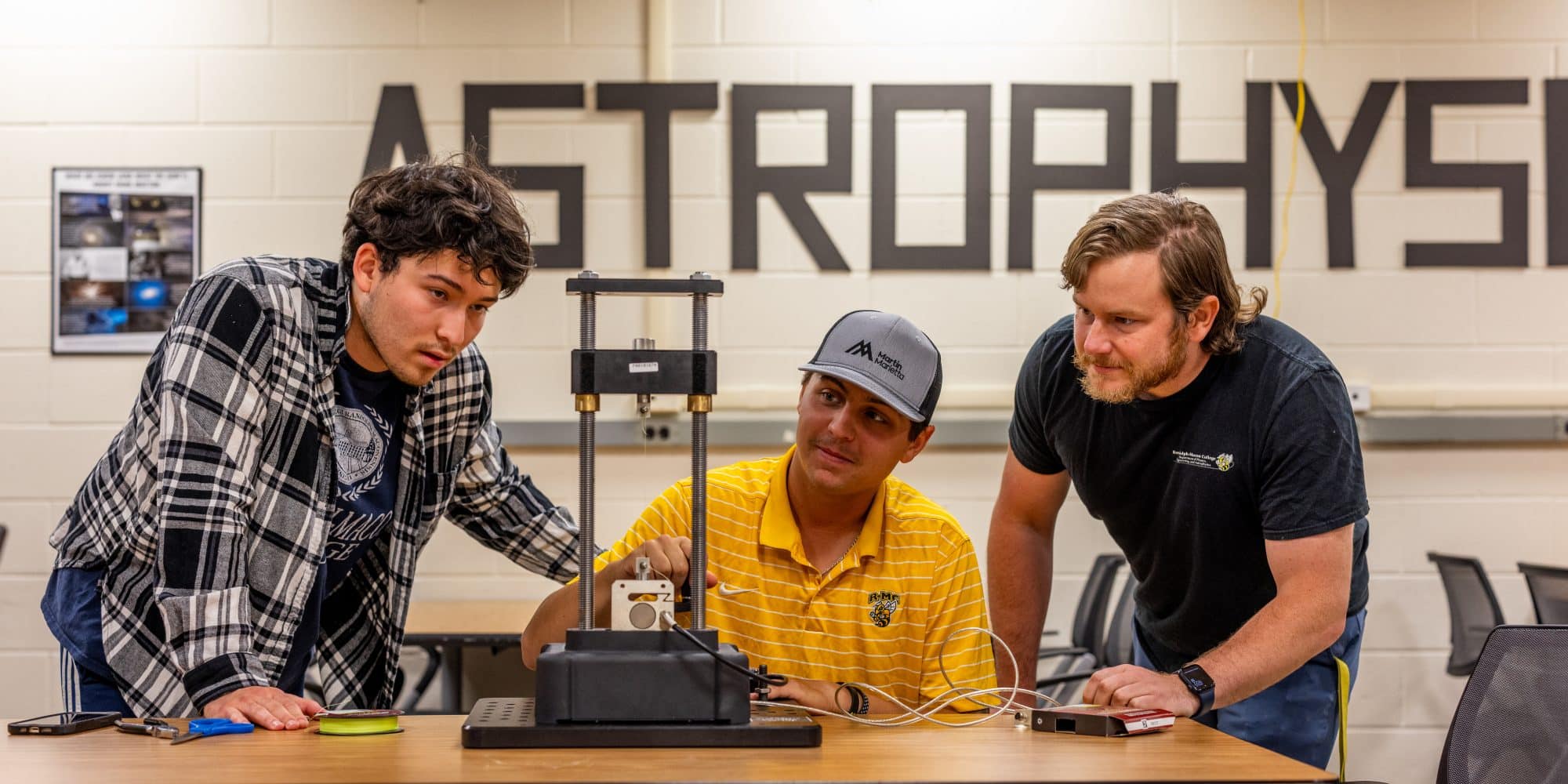
At RMC, you will master the skills to solve real-world problems and be ready for a career in civil, mechanical, aeronautical, or biomedical engineering. Our ABET-accredited engineering major covers the fundamentals of engineering mechanics through hands-on, project-based design in a small classroom setting. Work collaboratively with classmates and receive personalized attention from faculty. The result? Engineers who are leaders, communicators, and scientists too: ready to thrive in any part of the field.
Major Engineering
Engineering
up close In and Beyond the Engineering Classroom
Hands-on Research
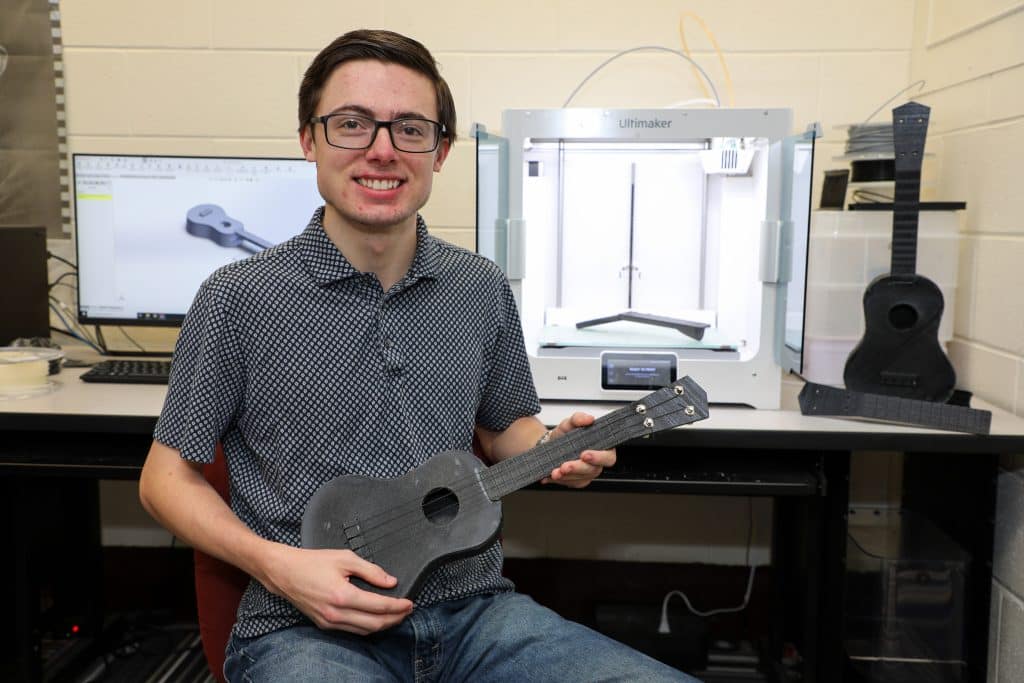
Through the Schapiro Undergraduate Research Fellowship (SURF), engineering majors can work directly with a faculty mentor to start solving the world’s problems today. Xander Birchfield ’25’s recent research sought to create a cost-effective 3D-printed ukulele, using nylon for its musical quality. Birchfield is focused on enhancing the instrument’s design, particularly strengthening the neck.
High-Impact Internships
Students who study engineering learn best in the field. Recent internships for majors in engineering and engineering physics include:
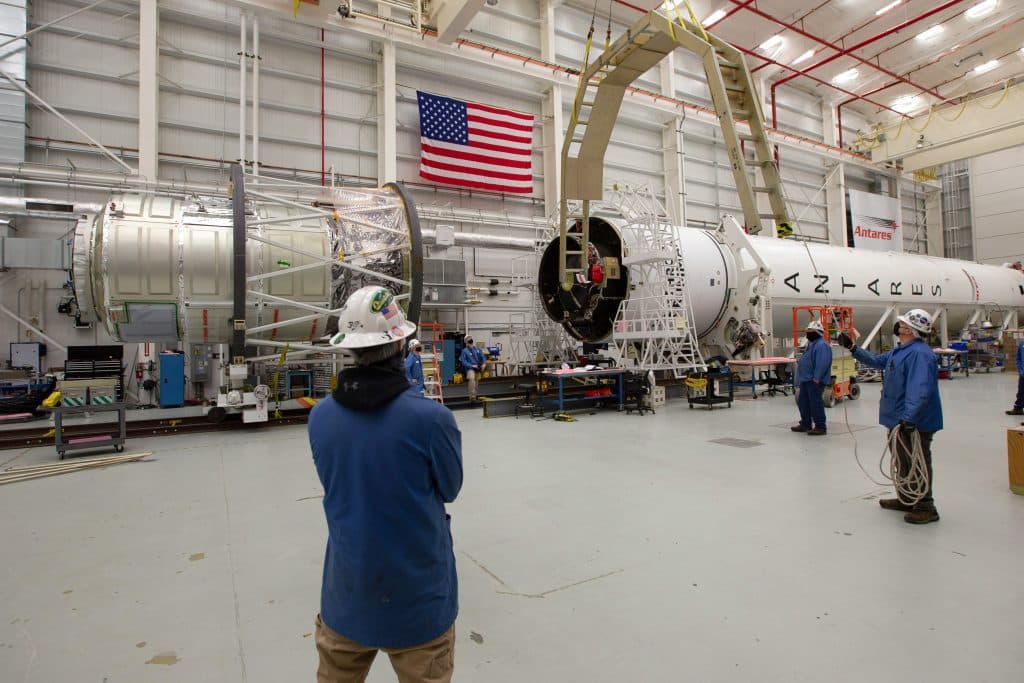
- NASA – Wallops Island Flight Facility (Rocket Launch)
- Federal Reserve Bank of Richmond, Currency Technology Office
- Stantec (Civil Engineering)
- Afton Chemical
- Naval Research Lab

advising and mentorship
Engineering majors at RMC enjoy a flexible program that was built to allow time for extracurricular activities including D3 athletics. Faculty work closely with coaches to ensure you’re set up to thrive on and off the field as a student-athlete. Faculty also work closely with students to prepare them for graduate school, a common next step for engineering majors.
-
1of just a few small, liberal arts colleges to offer an engineering degree
-
825,000the estimated number of engineering jobs currently unfilled due to a shortage of new talent
-
2024the year RMC earned ABET accreditation for the engineering program

Engineering
in full Courses You Won’t Want to Miss
(A very small sample)
EPHY 250
Engineering Mechanics: Statics
Learn the rigid-body mechanics for objects at rest or moving at constant velocity. Using a problem-solving approach, you’ll gain a thorough understanding of theories involving equilibrium, frame and truss analysis, friction, centroid and moments of inertia.
ENGR 280
CAE Design
Learn solid modeling and virtual prototyping; and develop visual thinking and communication skills with the assistance of computer modeling tools. Through hands-on virtual or physical projects, you’ll learn about creative design, the engineering design process, ethical design and the application of physical laws.
ENGR 331
Mechanical Systems Design
Study the principles of applied mechanics and the materials employed to design machine elements and mechanical systems. Apply state of stress, deformation and failure criterion to bearings, brakes, clutches, belt drives, gears, chains, springs and gear.
Opportunities Worth Grabbing
Popular activities and programs among engineering majors

Society of Physics Students
The premier club for students in Physics and related fields, liaising with the member societies of the American Institute of Physics
Sigma Pi Sigma
The Physics Honor Society
Macon Women Engineers
Student-run club, celebrating female engineers
From Here To What you can do with an Engineering or Engineering Physics degree from RMC.
Our first class of engineering majors graduated in 2023.
Mary O’Sullivan ’23

Ph.D. Candidate
Dolatshahi Systems Immunology Lab at UVA
“The close faculty mentorship you receive at Randolph-Macon College practically guarantees success post-graduation. The endless support and opportunities provided by R-MC faculty is what enabled me to have a robust undergraduate research experience that paved my path into graduate-level research at an R1 institution.”
Jaden Ellis ’24
Systems Engineer
Naval Surface Warfare Center – Dahlgren Division
Erin Lee ’22
Civil Environmental Engineer
US Army Corps of Engineers
Emma Tiernan ’19
Doctoral Candidate, Mechanical and Aerospace Engineering
University of Virginia

“Attending Randolph-Macon was by far one of the best decisions I have made thus far in my career. RMC’s liberal arts curriculum allowed me to explore all of my interests, not just those associated with my majors. I was able to take a break from the equations and laws within the sciences and explore the religious texts of Buddhism and Hinduism, debate issues experienced by the people of ancient Athens, and even carve my own drawings into linoleum for printmaking. The small class sizes at RMC gave me the opportunity to build meaningful relationships with my professors. RMC also provided many opportunities for me outside of the classroom. I was able to gain meaningful research knowledge by participating in SURF and perfected my interview skills during The Edge’s Career Boot Camp. Randolph-Macon as a whole set me up for success in graduate school and in the real world after graduation.”
Buzzworthy The Latest From RMC Engineering
News Story categories: Engineering
Academics
Engineering Physics
Dr. James McLeskey Installed as Inaugural Maria Wornom Rippe Professor in Engineering
Endowed professorships are the highest honor that Randolph-Macon can bestow upon a member of its faculty.

News Story categories: Engineering
Academics
Engineering Physics
Head of Engineering to Be Awarded Inaugural Professorship
Dr. James McLeskey will be installed as the inaugural Maria Wornom Rippe Professor in Engineering on Friday, Oct. 31.

News Story categories: Engineering
Economics, Business, and Accounting
Education
Randolph-Macon Named a 2025-2026 College of Distinction
The prestigious honor recognizes institutions that make a meaningful impact on students’ lives.
More to explore 55+ areas of study to discover at RMC


Get Ready Discover Engineering at RMC.
Loading…
Frequently Asked Questions: Engineering
What is engineering?
Modern engineering is the application of scientific knowledge and mathematics to design and improve devices and processes. Whether creating the world’s smallest surgical robot, designing an enormous industrial complex, making molecular-level changes to increase efficiency in agriculture, or optimizing air traffic control, engineers use STEM principles to solve complex and interesting problems.
Engineering is part science, part art, and part creativity. Engineers create while understanding the fundamental science that constrains their creations. A good engineer thinks critically and problem-solves, overcoming challenges with a combination of science and imagination.
At RMC, the engineering degree is a 120-credit bachelor of science program. This ABET-accredited program includes over 45 hours of engineering courses and over 30 hours of math and science courses beginning in fall of the freshman year. Students gain a comprehensive understanding of engineering mechanics before advancing to hands-on, project-based design and analysis courses that require the application of technical principles to real-world problems.
What is the benefit of studying engineering at a liberal arts institution?
While many engineering students are initially drawn to the field due to a love of math or technology, engineers must also be able to write and communicate effectively, consider ethics and social responsibilities, understand business, and live and work in teams. Students at a liberal arts college like RMC are subject to a well-rounded curriculum, as well as a school community with varied interests and outlooks. Exposure to varying viewpoints and academic subjects, including the social sciences, humanities, critical reading and writing, and foreign cultures and languages, helps prepare graduates for the real-life demands of a career in engineering.
At Randolph-Macon in particular, students benefit from small classes and personalized attention. Faculty take the time to get to know students and work with them to achieve their goals, whether that’s preparing for graduate school or balancing coursework with one of our intercollegiate athletics teams.
What is ABET engineering? Does ABET accreditation matter?
ABET (previously known as the Accreditation Board for Engineering and Technology) is the internationally recognized accreditor of college and university programs in applied science, computing, engineering, and technology. ABET is a federation of 32 professional and technical member societies.
More than 3,000 programs at 600+ institutions in the United States are accredited by ABET, including RMC’s engineering program. The voluntary accreditation process takes more than a year and ensures that the program requires its graduates to meet certain discipline-specific criteria that members of the profession have deemed important.
Much like nursing, chemistry, or accounting, discipline-specific accreditation is critical for ensuring that engineers have the requisite qualifications. More specifically:
- many engineering jobs require that the graduate hold a degree from an ABET-accredited program, and
- engineers wishing to obtain a Professional Engineer, or PE, certification must often start with a degree from an ABET-accredited institution. Continue reading for more information about the PE designation.
What does PE stand for in engineering?
PE stands for Professional Engineer, a professional certification granted at the state level to engineers who have achieved specific professional milestones:
- Earn a four-year degree in engineering from an accredited engineering program.*
- Pass the Fundamentals of Engineering (FE) exam to gain your “engineer in training” (EIT) designation.
- Complete four years of progressive EIT experience under the supervision of a Professional Engineer.
- Pass the Principles and Practice of Engineering (PE) exam.
A PE must additionally complete state-specific continuing education requirements to maintain their certification.
While a PE designation isn’t required for all engineering paths, those who achieve it earn more than just an elevated status and reputation; they also enable themselves to submit engineering plans and drawings to a public authority for approval, own or run an engineering firm, and more practical benefits.
*To gain the EIT certification with a bachelor’s degree, the Commonwealth of Virginia requires that the degree be from an ABET-accredited school. Otherwise, the candidate must complete at least two years of engineering employment before becoming an EIT.
Do you need a master’s for engineering?
Much like PE certification isn’t required for engineering, neither is a master’s. In fact, many get started in the engineering field (or even spend their entire careers) without an advanced degree. However, a master’s degree can qualify candidates for higher pay, more advanced roles, or increased specialization. Many engineers ultimately pursue a master’s or doctoral degree to increase their career opportunities.
Do I need to specialize in a type of engineering?
There are five primary disciplines within engineering–civil, mechanical, electrical, chemical, and industrial–with numerous secondary and sub-specializations. Since many engineering roles require specific expertise, most engineering jobs are designated within a specialty. What’s more, engineers pursuing the PE certification are required to select from a number of specifications on the PE exam.
Specialization allows for a deeper level of understanding within an (often narrowly targeted) area of interest and, therefore, the ability to explore and solve more complex and unique problems therein. RMC’s engineering major is particularly recommended for students interested in civil and mechanical engineering or related sub-fields such as aeronautical, biomedical, or environmental engineering.
Although specialization is the most common route for engineers, it is possible to pursue an engineering generalist role, especially in smaller companies or industries that require a broad range of skills. Engineers who take a generalist approach report benefits such as flexibility (across projects, departments, evolving/emerging technologies, and career paths, for example) and the ability to step into leadership roles that require big-picture thinking.
Where do engineers work?
The list of places that engineers work is as broad and varied as the discipline itself, and the nature and location of an engineer’s work are heavily related to their chosen specialty: Where an agricultural engineer may work in a lab examining ways to create biodegradable packing, a petroleum engineer may work out in the field supervising and drilling wells, and a software engineer may work in an office performing quality analysis.
Excluding employment at schools and hospitals, the U.S. Bureau of Labor Statistics reports that just over 6% of all American architecture and engineering jobs are in the public sector, with the remainder in the private sector. A vast majority of the engineers employed by the federal government work within the various branches of the military and by NASA. Private-sector engineering jobs span almost every industry, including but not limited to the following:
- Manufacturing: Mechanical engineers design engines, machines, and consumer products for companies in automotive, aerospace, or electronics manufacturing.
- Construction and Infrastructure: Civil engineers in private firms plan and design roads, bridges, buildings, and water systems.
- Technology/R&D: Electrical and electronics engineers work in telecommunications, robotics, and computer hardware companies.
- Energy Sector: Chemical engineers and petroleum engineers develop extraction processes, renewable energy technologies, and fuels for private energy companies.
Consulting and Engineering Services: Industrial engineers and environmental engineers often work for private consulting firms that serve manufacturing, logistics, and sustainability needs.
What jobs can you get with an engineering degree?
According to the Bureau of Labor Statistics, nearly one-third of individuals with an engineering degree work as engineers or architects, including roles like aerospace, biomedical, chemical, electrical, environmental, industrial, mechanical, and nuclear engineers, plus many more. Some examples are listed above.
Some other popular jobs for engineering degree holders include:
- Management occupations, especially in areas such as engineering management, computer and information systems, and industrial production.
- Computer and mathematical occupations that leverage an engineer’s STEM expertise.
- Sales occupations, especially sales engineer roles that require technical knowledge, plus other business and financial roles.
As mentioned above, the broad skillset acquired through an engineering degree is applicable to a large number of careers and industries. In fact, nearly a quarter of engineers pursue other occupations beyond those listed above.