






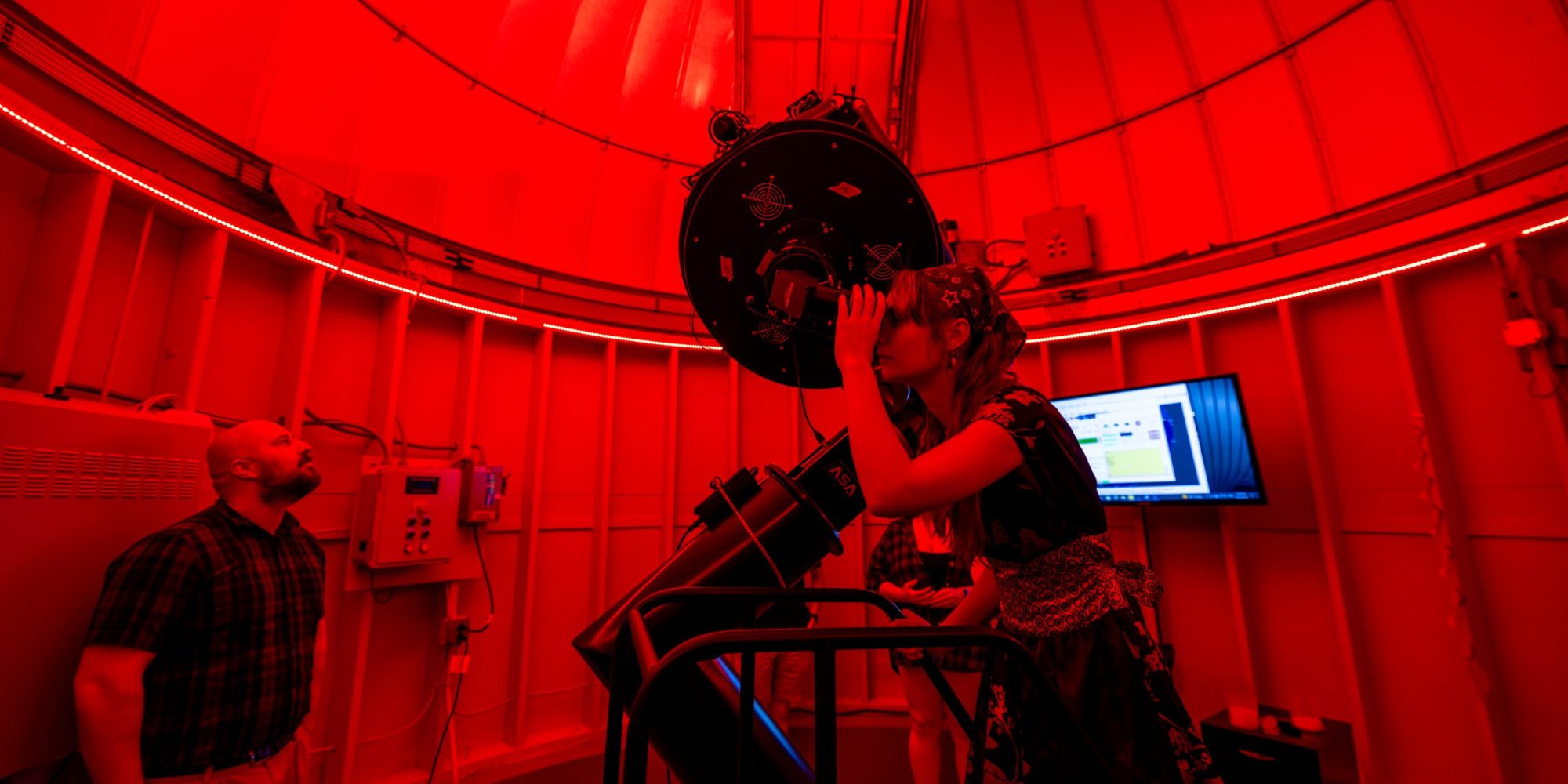
Explore the principles of physics that govern the cosmos, from black holes to supernovae, with a minor in astrophysics. This celestial degree is part astronomy, part physics, and Randolph-Macon offers the only degree like it in the region. You’ll have access to the entire universe through RMC’s Keeble Observatory, where students conduct research and lead public observing sessions for the community. Learn about fascinating cosmic phenomena from expert faculty, who will guide your study of the universe as well as help you find your path in life.
Minor Astrophysics
astrophysics
up close In and Beyond the Classroom
facilities
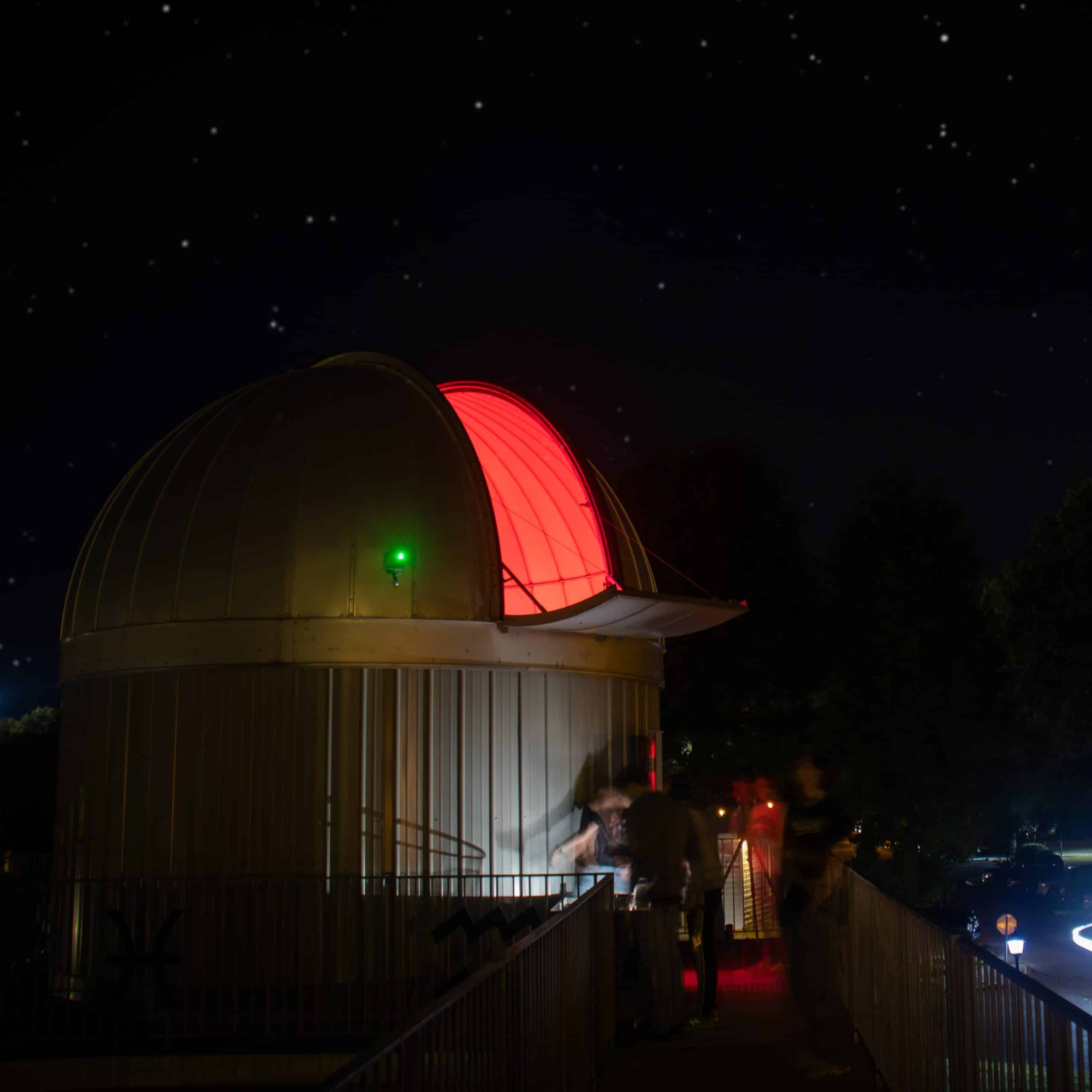
Randolph-Macon College students and the general public have been stargazing at the Keeble Observatory since 1963. In 2016, the observatory was upgraded and moved a few meters east of its original location. Today, this state-of-the-art facility houses a Ritchey-Chretien telescope with an impressive 40 cm primary mirror, making it the largest telescope from Washington D.C. south to the Blue Ridge Mountains.
Hands-on research
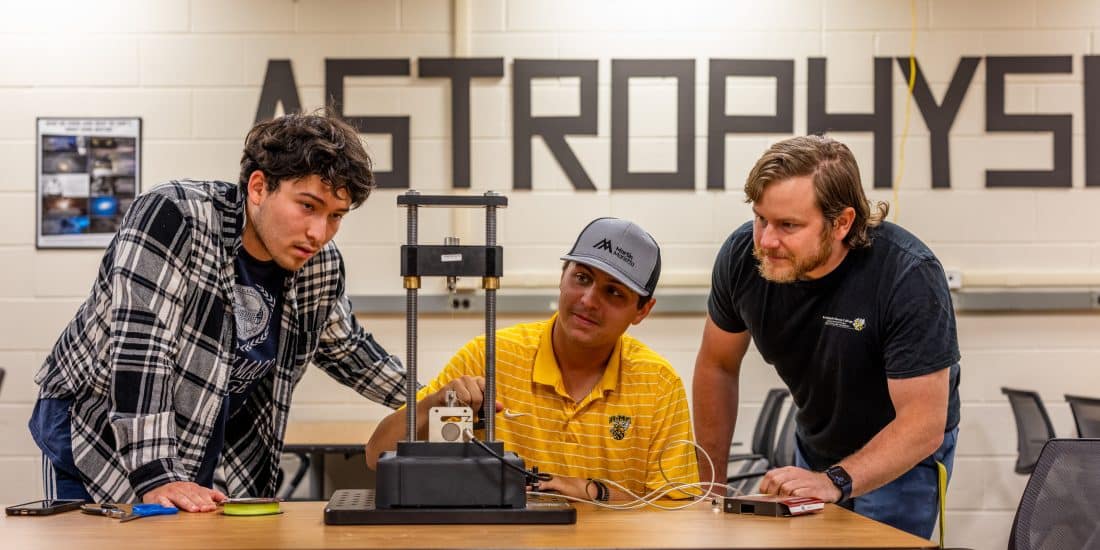
The universe is in your hands. As part of the observational astronomy course, you work directly with astronomical data, performing the same analysis as professional scientists. Students take charge from beginning to end, taking data from the Keeble Observatory directly, and performing data analysis using the computational tools of the field.
advising and mentorship
Though most commonly paired with a major in physics, any student can pursue a minor in astrophysics and work with faculty to extend their passion for the cosmos. Just ask Huma Jafree and Bekah Polen ’22 who worked with Dr. Rachele Dominguez and Dr. Deonna Woolard, on a senior research project called “The Rotation Curve of the Milky Way Galaxy as Evidence for Dark Matter.” Together, they published a peer-reviewed paper on the topic.
-
100Myears is the length of time the footprints from the Apollo moon landing will remain on the moon
-
1872the year the Keeble Observatory first opened at RMC
-
716revolutions per second made by the fastest-spinning neutron star

astrophysics
in full Courses You Won’t Want to Miss
(A very small sample)
phys 110
Physics of Light
This hands-on course focuses on laboratory investigations of light and travel to historical locations connected to the development of the theory of light. Learn about light and shadow, pigments and colors, mirrors and lenses, and wave particle duality.
Astr 321
Observational Astronomy Lab
Using the Keeble Observatory, learn the techniques of optical astronomy, including the use of astronomical coordinate systems, photography, photometry, and spectroscopy.
ASTR 235
Historical and Philosophical Foundations of AstronomY
Beginning with early creation myths and several non-western traditions, examine the interaction of astronomical concepts in a cultural context and explore the rise of “modern science” through the Copernican and Newtonian revolutions, and the 20th century developments of relativity and quantum mechanics.
Opportunities Worth Grabbing
Popular activities and programs among astrophysics minors
society of physics students
The premier club for students in Physics and related fields, liaising with the member societies of the American Institute of Physics
Sigma Pi Sigma
The Physics Honors Society
From Here To What you can do with an Astrophysics minor from RMC.
bekah polen ’22
Doctoral Candidate, Physics
Duke University
Hayley Williamson-Dove ’13
Researcher
Swedish Institute for Space Physics
Sasha Campana ’23
Scientist
Naval Surface Warfare Center Dahlgren Division
Kate Rueff Phillips ’07
Senior Associate
Storbeck Search
buzzworthy The Latest From RMC Astrophysics
News Story categories: Astrophysics
Student Life
What to Expect during the Solar Eclipse
Randolph-Macon astrophysics students and science faculty will host a solar eclipse viewing party from 2-4 p.m. on Monday, April 8 at the soccer field adjacent to Nunnally Field.

News Story categories: Astrophysics
Faculty
Physics
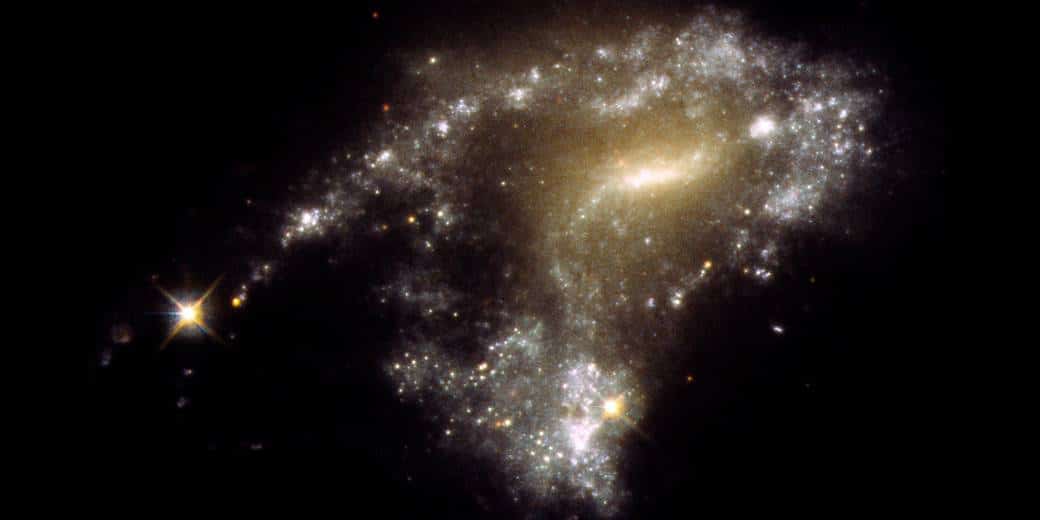
Galaxy Collisions Create New Stars, According to Paper by RMC Astrophysicist Using NASA’s Hubble Telescope
Professor Michael Rodruck examined “string of pearl” features believed to be created by galaxies interacting.
News Story categories: Astrophysics
Engineering
Mathematics
RMC Students Present Research at 2022 Physics Congress
As the Society of Physics Students (SPS) celebrated its 100th anniversary at the 2022 Physics Congress, five students from Randolph-Macon’s…
More to explore 55+ areas of study to discover at RMC


Get Ready Discover Astrophysics at RMC.
Loading…