






As a behavioral neuroscience major or minor at RMC, you will explore the interaction of behavior with brain pathways, nervous systems and the hormonal system. In the lab and in the classroom, you have unparalleled opportunities to work closely with faculty mentors to conduct and present your own research, giving you the competitive edge in one of the fastest growing scientific fields. An interdisciplinary program, the study of behavioral neuroscience; prepares students for careers in medicine and health sciences, scientific research, government, education, and more.
Major/Minor Behavioral Neuroscience
behavioral neuroscience
up close In and Beyond the Classroom

Hands-on Research
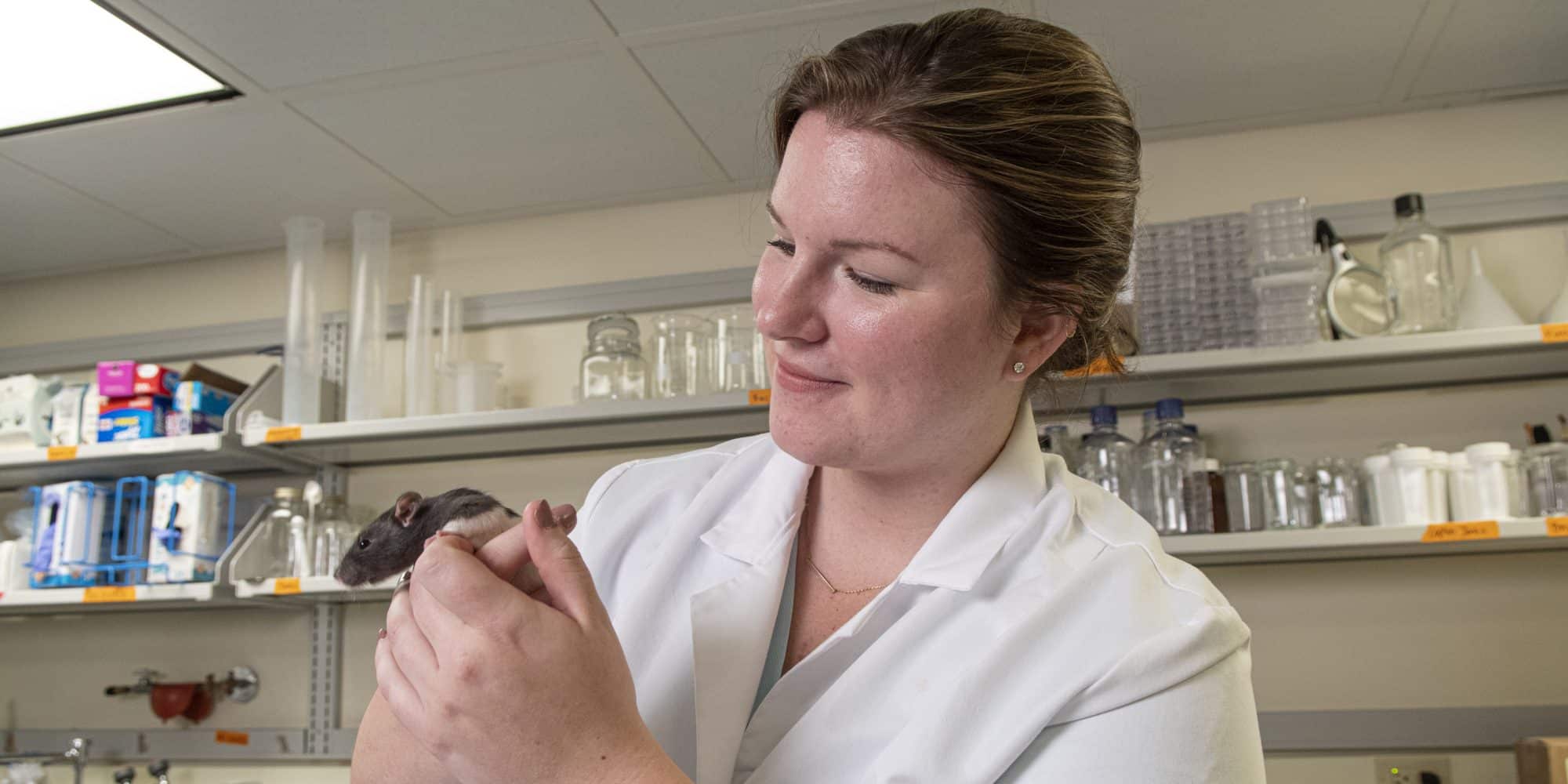
Alex Chapman ’23 worked with faculty mentor, Dr. Massimo Bardi, to study whether social play could mitigate the toxic effects of chronic, unpredictable stress in animals. Her original research found that play, and environmental enrichment, increased the expression of a beneficial resilience factor in the brains of the animals she studied. Alex presented her research at the International Behavioral Neuroscience annual meeting in Summer 2022 in Glasgow, Scotland after winning a competitive travel award from the society.
high-impact internships
RMC internships include a variety of options that reflect the many career opportunities in the field of behavioral neuroscience. RMC students have interned at:
- Center for Neurorehabilitation Services
- The VCU Institute for Drug and Alcohol Studies
- Mental Health Association of Fauquier County
- Neuropsychological Services of Virginia
- Speech Connections Rehabilitation Center
- Healing Sounds: Music & Art Therapy

– Chelsea Daniels, former intern at the Center for Neurorehabilitation Services in Richmond, Virginia
facilities
Our excellent academic and student research preparation explains why behavioral neuroscience majors at RMC have excellent placement success in medical and doctoral graduate programs. These hands-on programs take place at:
- The RMC laboratory animal research (mice and rats) neuroscience lab on campus
- Our satellite primate lab in Miami, FL
Advising and Mentorship
Small classes and the one-on-one research opportunities that abound in Randolph-Macon’s behavioral neuroscience program are thanks to engaged faculty (never TAs!), who teach 100% of the courses in the program. Celebrated scholars in their own right, they help guide majors and minors through their academic journey and, indeed, well beyond.
-
1of only two neuroscience programs in liberal arts colleges in Virginia
-
10weeks can be spent conducting undergraduate behavioral neuroscience research as part of the Shapiro Undergraduate Research Fellowship
-
13%the fast rate neuroscience jobs are growing each year

behavioral neuroscience
in full Courses You Won’t Want to Miss
(A very small sample)
NSCI 120
This Emotional Life
Explore neuroscience research on emotional regulation and learn how we can improve our social relationships, learn to cope with problems like stress and anxiety, and become more positive and resilient individuals.
PSYC 321
Clinical Neuroscience
Learn the neurobiology of mental disorders such as depression and schizophrenia, as well as psychoneuroimmunology, stress and coping, nervous system repair/recovery, and the therapeutic potential for self-directed neuroplasticity.
PSYC 325
Psychopharmacology
Study the actions of drugs and their effects on living organisms; and learn how drugs interact with proteins in the brain to initiate psychological and behavioral responses.
Opportunities Worth Grabbing
Popular activities and programs among behavioral neuroscience majors

Neuroscience club
Nu Rho Psi Honorary in Neuroscience
Psi Chi Honorary in Psychology
Tri Beta Honorary in Biology
From Here To What you can do with a Behavioral Neuroscience degree from RMC

Syreen Goulmamine ’19 M.P.H.
Science Programs Manager
Society for Women’s Health Research
“My RMC experience taught me that success in my career journey is not just about what I learn in the classroom, but also about the relationships I build and the experiences I have. The dedicated professors, staff, and alumni at RMC provided me with the support and guidance to not only excel as a collegian, but also to develop important professional and life skills. Specifically, my lasting relationships with professors both within and outside of my majors have left a lasting impact and really speak to the liberal arts education we receive at RMC.”
Sabra Klein ’92 Ph.d.
Professor, Department of Molecular Microbiology and Immunology
Co-Director, Center for Women’s Health, Sex, and Gender Research
Johns Hopkins School of Public Health
Erica Glasper Andrews ’02 PH.D.
Associate Professor, Department of Neuroscience
Ohio State University College of Medicine
Steven Neal ’18 M.D.
Psychiatry Resident
National Institutes of Health and University of Virginia School of Medicine
Ian Browning ’20
Student, Doctor of Physical Therapy program
Old Dominion University
Emily Kirk Sullivan ’16 PH.D.
Post Doctoral Scholar, Alcohol Studies
University of North Carolina at Chapel Hill
buzzworthy The Latest From RMC Behavioral Neuroscience
News Story categories: Behavioral Neuroscience
Academics
Art History
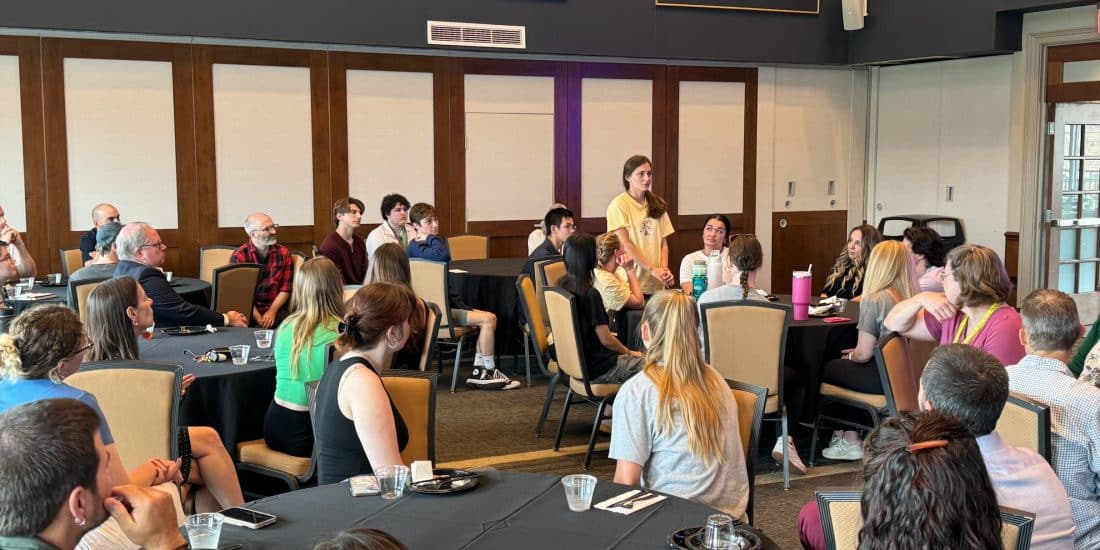
Summer of Undergraduate Research Culminates in SURF Symposium
Students shared findings from their research, covering a broad range of topics, in both oral and poster presentations.

News Story categories: Behavioral Neuroscience
Academics
Art History
SURF Kicks Off Summer Undergraduate Research
Under the guidance of faculty mentors, 27 student participants will conduct original research during the nine weeks of SURF.
News Story categories: Behavioral Neuroscience
Accounting
Environmental Studies
Randolph-Macon Honors Retiring Faculty Members with Bruce M. Unger Awards
Six faculty members who represent a combined 167 years of service at RMC will be honored at Commencement.
More to explore 55+ areas of study to discover at RMC

Get Ready Discover Behavioral Neuroscience at RMC.
Loading…
Frequently Asked Questions: Behavioral Neuroscience
What is neuroscience?
The official definition of neuroscience from the National Institutes of Health’s Neuroscience Information Framework is quite simple—neuroscience is the branch of science that deals with the study of the nervous system. Of course, studying the nervous system is a complex and ever-evolving endeavor that incorporates disciplines like biology, psychology, and chemistry.
Neuroscience sees the brain as more than just an organ; as part of the greater nervous system, the brain enables complex functions like perception, cognition, and emotion. BrainFacts.org, a publication of the Society for Neuroscience, outlines eight core concepts of neurology:
- The brain is the body’s most complex organ.
- Neurons communicate using both electrical and chemical signals.
- Genetically determined circuits are the foundation of the nervous system.
- Life experiences change the nervous system.
- Intelligence arises as the brain reasons, plans, and solves problems.
- The brain makes it possible to communicate knowledge through language.
- The human brain endows us with a natural curiosity to understand how the world works.
- Fundamental discoveries promote healthy living and the treatment of disease.
Is behavioral neuroscience the same as neuroscience?
Behavioral neuroscience is a specialized subset of neuroscience. Where neuroscience looks more broadly at the fundamental properties of the nervous system and how they work, behavioral neuroscience examines the biological bases of behavior and psychological functioning, and their application to experimental and therapeutic research problems.
What is the relationship between the brain and behavior? What is the impact of behavior and environment on the brain’s functions? Behavioral neuroscience explores questions like these by examining topics including learning and memory, cognitive processes, emotional regulation, and more.
In addition to theoretical work, behavioral neuroscience seeks to understand and solve real-world problems related to the nervous system. For example, the National Institute of Mental Health’s Section on Behavioral Neuroscience puts much of its research toward finding molecular and genetic strategies to restore normal executive function in individuals with reduced cognitive abilities due to impairments caused by neurodegenerative disorders and chronic mental illnesses like Alzheimers, schizophrenia, etc.
What can you do with a neuroscience degree?
Career website Indeed.com provides an excellent overview of the various careers available to neuroscience majors. Those who choose to work as a neuroscientist will most often work in a lab, academic institution, or health care facility. Many neuroscience majors also go on to careers in medicine and health-related professions in related fields. Neuroscientists may also work in fields like law, government, consulting, global health, and consumer product research. You may choose to pursue a more specialized area of neuroscience, such as cellular/molecular, cognitive/behavioral, developmental, computational, clinical, neurogenerics, or neurophysiology.
In addition to neuroscientists, many graduates find their skills translate well to jobs like
- Machine learning engineering
- Neurology
- Biostatistics
- Pharmaceutical science
- Teaching
Many neuroscience majors choose to pursue graduate degrees to further their knowledge and suitability for various career options.
What is the salary of a neuroscientist?
The U.S. Bureau of Labor Statistics considers neuroscientists under the broader umbrella of “Medical Scientists”, with current median annual wages of just over $100,000 per year. As with any career, salary can vary greatly based on factors like industry, location, level of schooling or experience, etc. As of May 2023, the BLS reported the following median salaries for various industries as follows:
- Research and development in the physical, engineering, and life science: $111,610
- Pharmaceutical and medicine manufacturing: $109,680
- Medical and diagnostic laboratories: $106,620
- Hospitals (state, local, and private): $97,910
- Colleges, universities, and professional schools: $75,420
What is the difference between behavioral neuroscience and psychology?
Although they are highly related, behavioral neuroscience and psychology are considered separate disciplines because of their differing foci and methodologies. Where behavioral neuroscience concentrates on the biological or physical aspects of the mind, psychology deals with the more abstract realm of the mental.
For example, when approaching a problem related to mental illness, behavioral neuroscientists might turn to brain imaging or electrophysiology to explain certain behaviors and find potential causes and treatments. A psychologist, on the other hand, will take a more behavioral focus, administering psychological evaluations and testing to diagnose issues and provide care in the form of psychotherapy (talk therapy).
There is significant overlap between the two fields, and behavioral neuroscientists and psychologists often work together towards the common goal of understanding human behaviors and resolving cognitive and behavioral problems. In fact, the American Psychological Association publishes several journals and newsletters focused on behavioral neuroscience, and has two divisions dedicated towards their overlapping areas of study–the Society for Behavioral Neuroscience and Comparative Psychology and the Society for Clinical Neuropsychology.
Randolph-Macon College houses the two sciences within the same department, and several of our behavioral neuroscience courses are cross-listed as psychology courses in our course catalog. All Psychology majors are required to take at least one neuroscience course, and all Neuroscience Majors begin their path with PSYC 200 Introduction to Psychology and PSYC201 Research Methods. Since these fields are so related, all students in the department start with gaining the basic tools and skills for advanced study in each major.