








Uncover the inner workings of crime and the criminal justice system with a major or minor in criminology. The hands-on curriculum tackles current-day issues and policies, like prison reform, social justice, and human trafficking. You’ll learn to think critically about causes and effects of criminality; and develop evidence-based conclusions as you examine your own assumptions about crime and criminals and consider how they were formed. With active learning at its heart, criminology courses at RMC help you develop the important writing, speaking, research, and critical thinking skills you need to be successful in a variety of fields.

Major/Minor Criminology
Criminology
up close In and Beyond the Classroom

hands-on Learning
As a criminology major or minor, you get your hands dirty. Through field studies, service-learning trips, and community-based project coursework, you will have the opportunity to apply what you are learning in the classroom out in the real-world.
In Professor Denise Bissler’s Human Trafficking course, students apply course material by learning from the real community agencies doing work in this difficult area. This kind of learning is made possible by RMC’s low student-to-faculty ratios that allow for conversational, seminar-style classes, with lots of opportunities for group projects, presentations, and peer teaching.
High-Impact Internships
Start making a difference today. Recent RMC criminology internships include a variety of options related to crime, law and corrections including:
- Hanover County Sheriff’s Department
- Hanover County Court
- Probation and Parole, Ashland; Henrico; Charlottesville
- REAL LIFE Reentry Program
- Victim Services Unit, Department of Corrections
- Local law offices

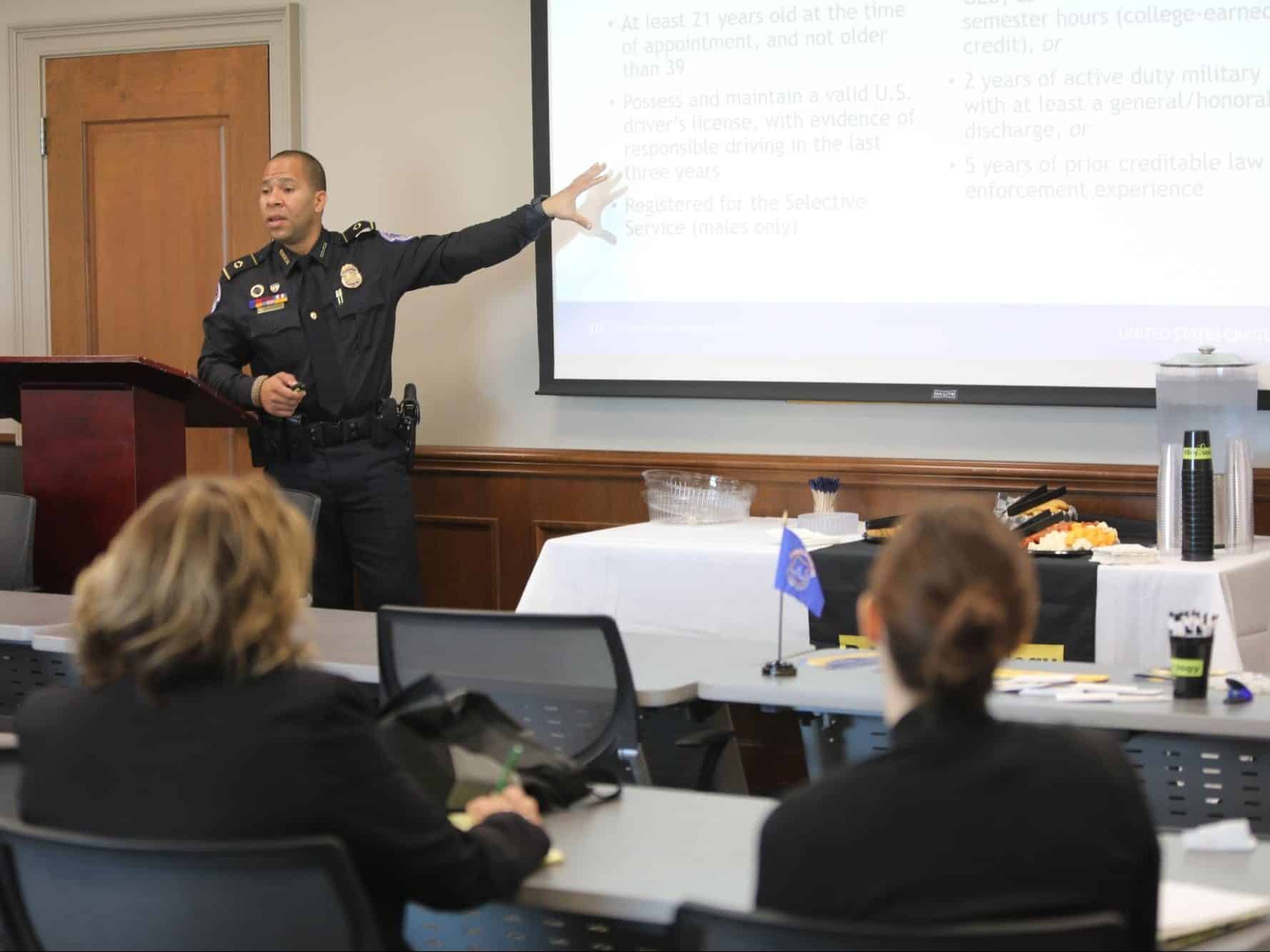
Advising and mentorship
Our award-winning criminology professors work closely with you throughout your undergraduate experience, to identify and then achieve career and graduate school goals. With future-focused events like the Criminology Speaker Series, you’ll learn from experts in the field of criminal justice and hear about their personal experiences working in the criminal justice system.
-
#2ranked criminology degree program in Virginia (College Factual)
-
#3award-winning criminology faculty
-
$68,235average annual wage for criminologist
Criminology
in full Courses You Won’t Want to Miss
(A very small sample)
CRIM 224
Deviant Behavior and Social Control
Study behavior that violates norms and mechanisms of social control (e.g., law enforcement, courts, prison, and probation) and the implications of these for social policy.
CRIM 334
A Time to Kill and Kill Again: What Makes a Serial Killer Tick
Explore the nature of multiple murders, the social construction of serial killing, types of multiple murder, and the variety of theoretical explanations for multiple homicide. Sociologically analyze problems of media construction, profiling, and correcting the behavior of multiple murderers.
CRIM 373
neighborhoods and crime
Take a close look at the patterns of crime in various neighborhoods by digging in to real data. Learn to use GIS mapping software to create crime maps that offer a visual representation of how crime impacts our communities.
Opportunities Worth Grabbing
Popular activities and programs among criminology majors

CRIMINAL JUSTICE CAREER FAIRS
alpha phi sigma
Criminal Justice Honor Society
criminal interest Association
Study sessions, fundraisers, speakers and movie nights
crim SPEAKER SERIES
Yearly series of 8-10 professionals, on how to pursue careers in the field
From Here To What you can do with a Criminology degree from RMC.

Camden Stramanak ’20
Product Manager
United Energy Products
“Randolph Macon has prepared me in unimaginable ways for my current role as a project manager at UEP. The classes I took as a criminology major helped me with my writing and person to person interaction tremendously, through papers and in-class discussions. I am a better employee because of Randolph Macon’s curriculum.”
Liz Jacobs DIEHR ’20
Richmond Family Law and Criminal Defense Attorney
Kamryn Steinruck ’21
Student
Medical Social Worker with Bon Secours Mercy Health
buzzworthy The latest from RMC Criminology
News Story categories: Criminology
Academics
Sociology and Anthropology
Netherlands Day by Day: A January Term I’ll Never Forget
Emma Skelton ’26 details her experience taking the “Human Rights: Culture and Conflict” travel course in the Netherlands.

News Story categories: Criminology
Academics
Classics
RMC Recognizes Faculty with Prestigious Awards
President Robert R. Lindgren and Provost Alisa J. Rosenthal announced the winners of the College’s most distinguished awards for faculty.

News Story categories: Criminology
Academics
Classics
J-Term in the Classroom: Students Immersed in Unique Coursework
The four-week period of coursework here on campus opened new doors with an intensive focus on unique topics that are often taught only in January term.

More to explore 55+ areas of study to discover at RMC



Get Ready Discover Criminology at RMC.
Take the first step toward your Criminology degree by contacting us.
Loading…
Frequently Asked Questions: Criminology
What is criminology?
Criminology is a subset of sociology that studies social structures and response vis-a-vis crime, criminality, and punishment. It is a science that seeks to understand the personal and societal influences that drive people to commit crimes, with a goal of minimizing crime through effective prevention and rehabilitation strategies. Sociology draws on many different disciplines, such as psychology, research and data analysis, public policy and law, to gather and analyze qualitative and quantitative data, create and scrutinize theories about crime and punishment, and implement programs and policies to help reduce instances of crime.
What can you do with a criminology degree?
A career in criminology can look very different depending on how you choose to apply it. For example, you might use your degree to pursue a research, policy, or teaching role. More hands-on applications of criminology may include working directly with victims and/or (ex-)offenders in fields like law, law enforcement, corrections, and case management.
Some criminologists choose to specialize in a specific area, such as crime within particular groups (juvenile, specific races or socioeconomic groups, etc.), or fields like environmental law or international policy. A criminology degree at RMC includes the option of taking an elective course through our chemistry, environmental science, political science, psychology, sociology, or Spanish departments, allowing students to gain greater understanding in more targeted areas of interest.
Criminology majors may also go on to law school.
What does a criminologist do?
As noted above, there are many different paths a criminology major might take after achieving their degree. Graduates pursuing a career as a criminologist can expect their day-to-day activities to center on the primary goal of understanding and reducing crime. Some of these might include:
- researching the reasons why people commit crime.
- advising policy makers in the justice and policing systems.
- analyzing data from surveys and intelligence to spot trends.
- working on crime reduction and rehabilitation programs.
- recommending ways to improve the effectiveness of court sentences.
- speaking to offenders and ex-offenders in prisons and probation services.
- attending conferences and presenting research findings.
- teaching students at a college or university.
What jobs can you get with a criminology degree?
Most criminologists work primarily in offices, such as government agencies, law firms, policy boards, legislative committees, and universities. However, some criminology roles are more field-based. Here are some examples of roles often pursued by criminology majors:
- Local or state law enforcement (police officer, detective, etc.)
- Federal law enforcement (FBI, DEA, Secret Service, etc.)
- Correctional or probation officer
- Victim advocate or case manager
- Juvenile correctional/diversion program manager
- Security or investigative work
- Local/national/international policy advisor
- Researcher/data analyst
- Teacher/professor
Many criminology majors also go on to law school.
What is the difference between criminology and criminal justice?
Criminology and criminal justice are overlapping disciplines, both of which deal with the subject of crime. This helps explain why criminology and criminal justice graduates often pursue the same types of jobs. Where criminology focuses on crime as a socially-constructed concept, especially social factors that cause and deter crime, criminal justice studies the systems supporting law enforcement and the administration of criminal penalties. This includes topics such as policing, the courts and law, and corrections.
While an understanding of both topics is important in either field, they work towards different goals. For example, where criminal justice focuses on the process and implementation of the criminal justice system, criminology might examine its outcomes and recommend process improvements to help reduce crime and recidivism.
Can I complete a criminology internship? What resources are available to do so?
Yes, RMC’s criminology major requirements include a field study or internship, and our distinguished criminology faculty helps students secure positions that will help them advance their academic and career interests. We work with law offices, law enforcement, victims services, corrections, policy-makers, etc. to place students in internships in fields that interest them for their future careers.
How long does it take to achieve a criminology major at RMC?
Most criminology majors at Randolph-Macon College complete their major-specific coursework over the course of two academic years. In addition to the collegiate requirements that are compulsory for all RMC graduates, the criminology major includes 11 courses totaling 34 credit hours:
- Three 200-level courses covering the foundational aspects of criminology
- Two 300-level courses focused on theory and methods
- A field study or internship
- A capstone course on juvenile delinquency
- Four elective courses, at least three of which have a CRIM prefix
Please review the criminology major requirements for additional information.